
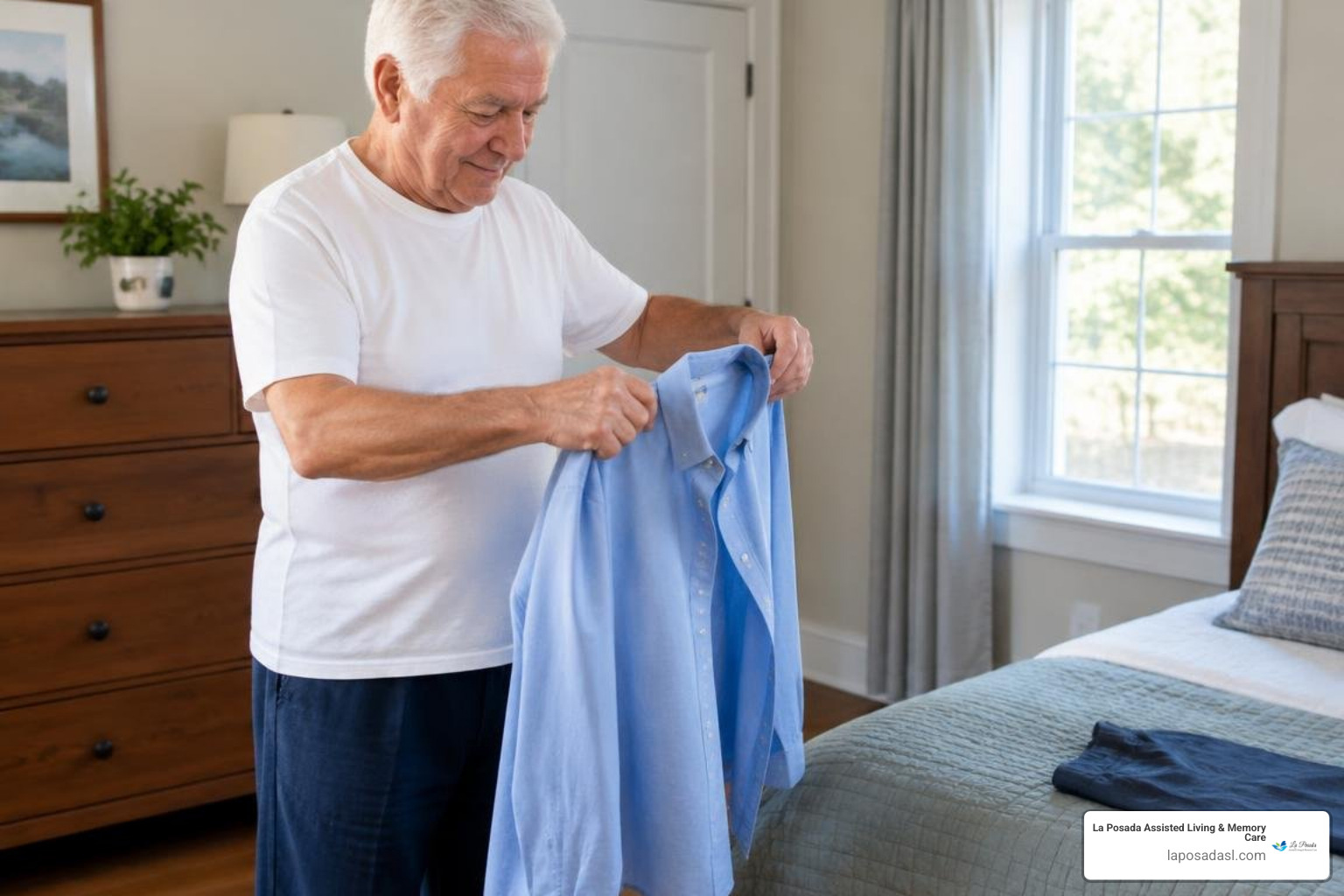
What Activities of Daily Living Tell You About a Senior's Needs
Activities of daily living (ADLs) are basic self-care tasks, such as bathing, dressing, eating, using the toilet, and moving from a bed to a chair. Instrumental activities of daily living (IADLs) are tasks that help someone live independently, such as preparing meals, shopping, managing money, and taking medication correctly.
If your parent starts struggling with these tasks, note what has changed and where they need help. A healthcare provider can assess their abilities and help you plan support that protects both safety and independence. Trouble with IADLs may appear before trouble with basic self-care, especially when memory is changing. But there is no single path: the right care depends on the person, not their age alone.
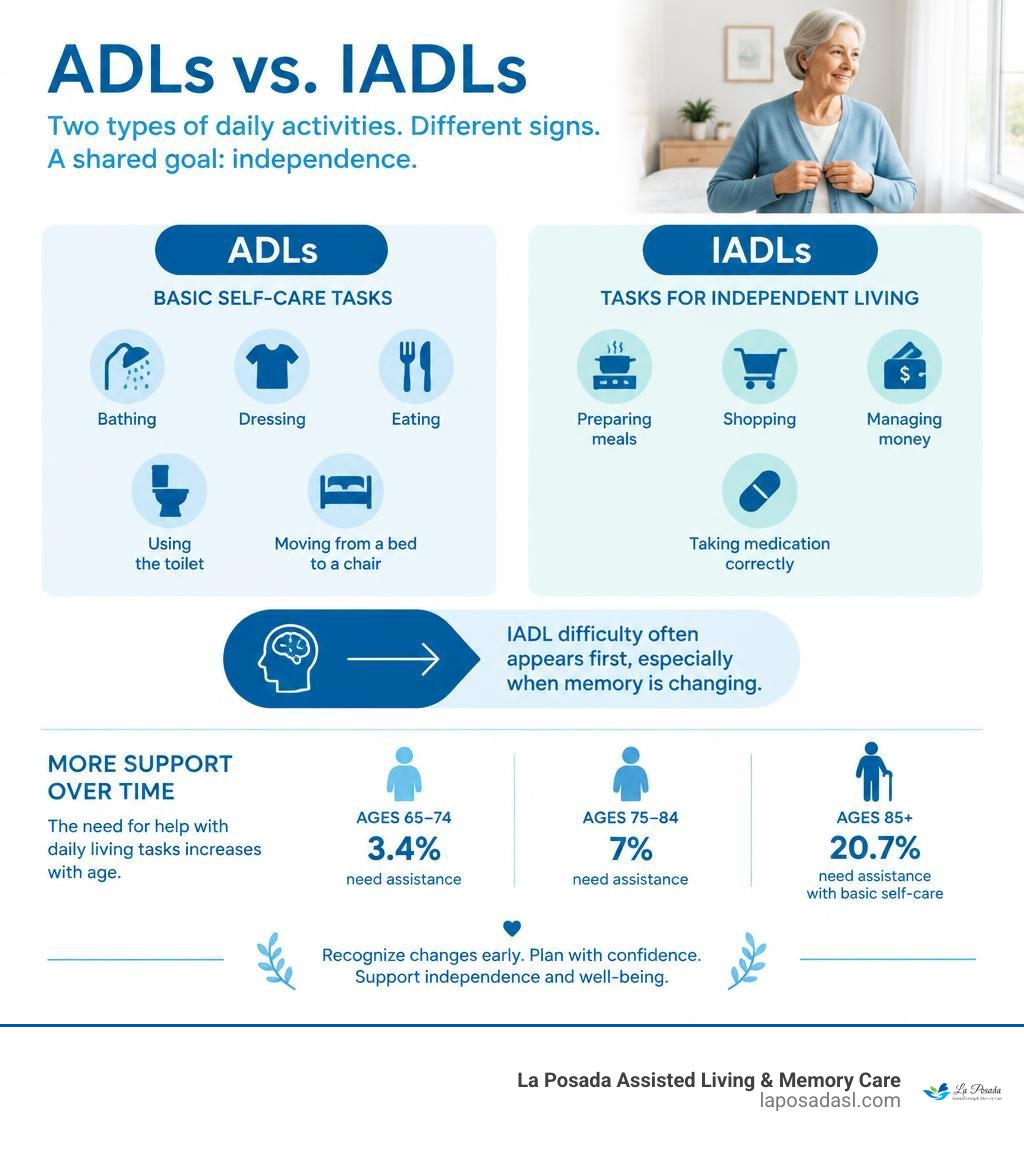
Understanding functional needs across various life stages provides valuable context for families. Demographic data shows that fewer than one-fifth of older adults between ages 65 and 74 need assistance with daily living tasks (around 3.4%). That figure rises to approximately 7% for adults aged 75 to 84. By age 85 and older, roughly 20.7% of seniors require direct assistance with basic self-care, and most individuals over 85 benefit from some level of support with daily routines.
Recognizing functional shifts early allows families to plan proactively, protect emotional wellbeing, and ensure older adults continue to thrive in safe, nurturing environments.
Understanding Activities of Daily Living for Seniors: ADLs vs. IADLs
Clinicians and senior care professionals categorize daily activities into two main groups: basic activities of daily living (ADLs) and instrumental activities of daily living (IADLs). Evaluating both categories provides a complete picture of an individual's physical capabilities, cognitive health, and community readiness.
| Category | Primary Focus | Key Examples | Typical First Signs of Difficulty |
|---|---|---|---|
| Basic ADLs (BADLs) | Fundamental physical self-care essential for survival | Bathing, dressing, grooming, eating, toileting, transferring (mobility) | Wearing mismatched clothes, unwashed hair, difficulty standing from low chairs |
| Instrumental ADLs (IADLs) | Complex organizational tasks for independent community living | Cooking, managing finances, shopping, taking medications, housekeeping, driving | Unopened bills, missed pill doses, spoiled food in refrigerator, scorched pans |
Core Differences Between Basic and Instrumental Daily Tasks
Basic ADLs represent the fundamental self-care tasks necessary for physical survival. These actions involve motor function, range of motion, and balance:
- Bathing and Grooming: Washing the body, brushing teeth, trimming nails, and shaving.
- Dressing: Selecting season-appropriate clothing and managing fasteners such as buttons, zippers, and laces.
- Toileting: Getting on and off the toilet safely, cleaning oneself, and maintaining continence.
- Transferring and Mobility: Moving from a bed to a chair, standing up, walking, and climbing steps.
- Eating: The physical act of bringing food from plate to mouth and swallowing safely.
Instrumental ADLs demand higher-level executive cognitive function alongside physical capability:
- Medication Oversight: Remembering complex dosing schedules, refilling prescriptions, and organizing pillboxes.
- Financial Management: Paying household bills on time, balancing checkbooks, and avoiding financial scams.
- Meal Preparation: Planning balanced meals, handling kitchen appliances safely, and maintaining food freshness.
- Housekeeping & Laundry: Operating washing machines, vacuuming, dusting, and changing bed linens.
- Transportation Access: Driving safely, arranging rides, or navigating public transit.
Why Functional Independence Matters for Quality of Life and Care Eligibility
Functional assessments do more than measure personal routines—they provide critical clinical benchmarks. A sudden or progressive decline in daily function can predict elevated fall risks, acute hospitalizations, and secondary physical deconditioning.
Furthermore, ADL and IADL scores directly determine eligibility for various support programs. Long-term care insurance policies frequently require a policyholder to need assistance with at least two basic ADLs before benefits activate. State Medicaid waiver programs, Veterans Affairs (VA) Aid and Attendance benefits, and Social Security disability determinations all rely on standardized functional assessments to allocate caregiving subsidies and clinical services.
Common Causes and Clinical Signs of Functional Decline

Functional decline rarely happens without underlying drivers. Identifying the root causes helps healthcare providers design targeted interventions, therapies, or living arrangements that preserve dignity.
Common clinical factors include:
- Musculoskeletal Conditions: Osteoarthritis, spinal stenosis, and age-related muscle loss (sarcopenia) cause stiffness, joint pain, and reduced strength.
- Neurological Changes: Stroke recovery, Parkinson’s disease, and neuropathies impair fine motor coordination, gait speed, and reflex responses.
- Cognitive Decline: Mild cognitive impairment (MCI), Alzheimer’s disease, and vascular dementia disrupt planning, sequencing, and focus.
- Sensory Loss: Untreated vision or hearing loss increases hesitation, disorientation, and fall risks.
- Medication Side Effects & Acute Illness: Polypharmacy, sedative interactions, severe urinary tract infections (UTIs), and hospital-acquired deconditioning can cause sudden functional drops.
The Progression from Independence to Total Dependence
Care teams categorize support needs along a standardized functional continuum:
- Independent Status: The individual completes all self-care and community tasks safely without help or supervision.
- Standby / Supervision Assistance: The senior can perform physical actions but requires verbal reminders, setup assistance, or nearby spotting for safety.
- Moderate Assistance: Physical help is required for 25% to 50% of the task (e.g., pulling up pants, lifting feet into the shower).
- Maximal Assistance: The senior provides less than 50% of the effort; caregivers perform the majority of physical actions.
- Total Dependence: The senior cannot assist, requiring comprehensive hands-on care for safety and hygiene.
Understanding these gradations helps families align expectations with appropriate resources, similar to functional scoring systems used worldwide, such as Japanese functional health perspectives.
Functional Assessment Tools for Activities of Daily Living for Seniors
Healthcare professionals employ objective clinical screening tools to measure activities of daily living for seniors:
- Katz Index of Independence in ADLs: Evaluates six basic functions (bathing, dressing, toileting, transferring, continence, and feeding) on a 0 to 6 scale, where 6 represents full independence and 0 indicates total dependence.
- Lawton Instrumental Activities of Daily Living Scale: Assesses eight complex domains (telephone use, shopping, food prep, housekeeping, laundry, transportation, medication, finances) scored from 0 (dependent) to 8 (high functioning).
- Barthel Index: A 100-point scale commonly utilized in physical rehabilitation and hospital discharge planning to evaluate mobility and self-care progress.
- Functional Independence Measure (FIM) & Kohlman Evaluation (KELS): In-depth multidisciplinary assessments combining cognitive problem-solving observation with physical self-care performance.
Strategies and Daily Exercises to Maintain Senior Independence
Maintaining independence begins with regular movement, supportive environments, and lifestyle modifications. Research shows that up to 50% of age-related physical decline stems from inactivity rather than biological aging alone.

Practical Exercises to Preserve Activities of Daily Living for Seniors
Functional fitness targets everyday motion patterns. Seniors can maintain functional independence by reviewing practical tips for staying active when frail and exploring curated functional exercises for healthy aging:
- Sit-to-Stand Movements: Strengthen quadriceps and glutes to ease rising from chairs, sofas, and toilets without arm assistance.
- Farmer’s Carry: Walking 10 to 15 feet while carrying light hand weights builds grip strength, postural stability, and core endurance for carrying groceries.
- Tibialis Anterior Raises: Performing seated or standing toe raises builds ankle dorsiflexion, helping clear door thresholds and reducing tripping risks.
- Multidirectional Towel Squeezes: Squeezing a rolled washcloth in various wrist positions strengthens hands and fingers for opening medicine bottles, turnstiles, and jars.
- Controlled Articular Rotations (CARs): Slow, circular shoulder and hip rotations maintain joint range of motion for reaching high cabinets and putting on coats.
Adapting Daily Tasks for Cognitive Decline and Dementia
For seniors navigating memory loss, complex tasks can quickly become overwhelming. Adapting routines using person-centered approaches restores confidence and eases daily frustrations:
- Task Segmentation: Break complex routines into single, actionable steps. Instead of asking a loved one to "get dressed," hand them their shirt first, followed by their pants.
- Visual Cues & Labeling: Label kitchen drawers with clear pictures or text, and place color-contrasting tape on toilet seats or shower steps.
- Sensory Stimulation: Incorporate soothing background music, natural lighting, and tactile elements during bathing or meal times to reduce agitation.
- Assistive Technology & Adaptive Tools: Leverage weighted utensils, long-handled shoehorns, and lever-style door handles.
Caregivers seeking practical activities and adaptations can consult the meaningful activities handbook for dementia alongside proven assistive solutions for daily living choices.
Care Options and Support Systems for Seniors Needing Daily Assistance
When daily self-care tasks become difficult or unsafe to manage alone, exploring supportive senior living options provides relief for both seniors and their families:
- Respite Care: Short-term stays offer primary family caregivers necessary rest, travel flexibility, or recovery time following hospital procedures, while giving seniors access to professional round-the-clock support.
- Assisted Living Communities: Designed for seniors needing assistance with ADLs like medication management, personal grooming, and bathing, while encouraging active social engagement, wellness dining, and personal independence.
- Dedicated Memory Care: Specialized environments featuring secure layouts, structured sensory programs, and trained staff who understand the unique communication and behavioral needs of those living with Alzheimer's and related dementias.
Frequently Asked Questions About Daily Living Activities
What is the primary difference between ADLs and IADLs?
Basic ADLs focus on essential, physical self-care tasks necessary for daily survival (bathing, eating, dressing, transferring, toileting). IADLs encompass complex executive skills required for independent community living (cooking, managing personal finances, driving, medication oversight, and housekeeping).
Which assessment tool is most commonly used to measure ADLs?
The Katz Index of Independence in Activities of Daily Living is the most widely recognized clinical tool. It evaluates six core functional domains on a simple scoring scale, helping physicians, care planners, and insurance carriers establish appropriate care levels.
When should family members consider professional assistance for a loved one?
Families should seek professional support when noticing repeated safety concerns, unexplained weight loss, poor personal hygiene, medication mistakes, frequent falls, or when family caregiving begins causing severe burnout or health strain.
Conclusion
Proactively evaluating daily functional capabilities allows families to make thoughtful, informed decisions before an avoidable crisis occurs. By addressing physical changes with dignity, personalized routines, and thoughtful living adaptations, seniors can continue experiencing rich, purposeful lives.
At La Posada Assisted Living & Memory Care, our family-owned, community-focused environment in Whittier, CA provides compassionate, 24-hour personalized care. We honor every resident’s individuality through holistic wellness programs for the body, mind, and spirit—ensuring your loved one receives the support they need with the warmth, respect, and independence they deserve.