

Adult Day Care vs Assisted Living: The Difference That Matters Most
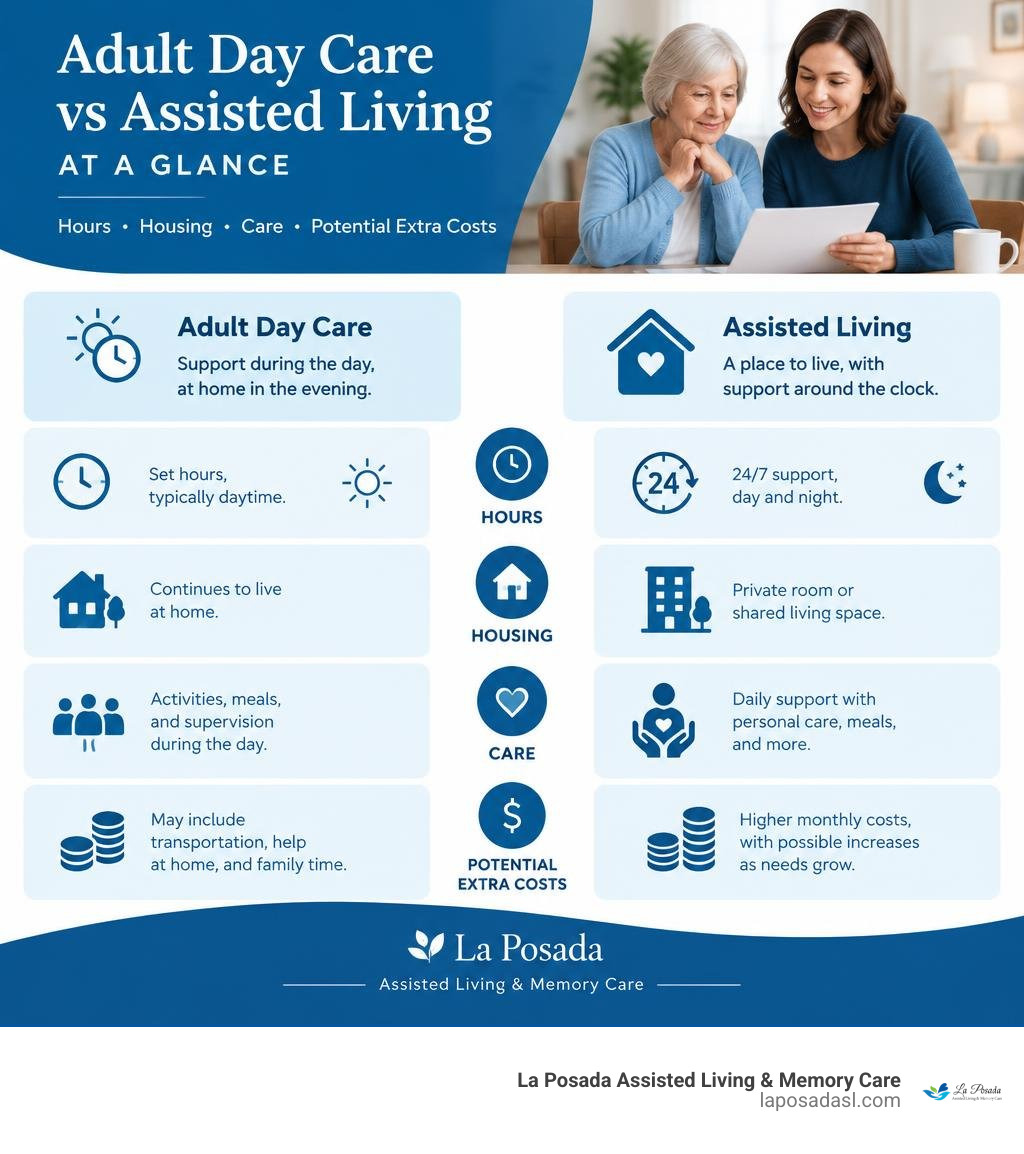
When comparing adult day care vs assisted living, start with one question: Who will help your parent at night? Adult day care offers activities, meals, and supervision during set hours while your parent continues to live at home. Assisted living provides a place to live, daily support, and staff available around the clock.
Day care may cost less upfront, but add transportation, help at home, and the time family members spend providing care. Assisted living costs more each month, and fees may rise as care needs grow. If your parent needs overnight supervision or frequent help with daily tasks, compare the total cost and care coverage, not just the advertised price.
Across the country, an estimated 44 million Americans provide unpaid care to an aging family member. While caring for a parent is an act of deep devotion, it can take a heavy toll. Many families reach a point where aging in place without outside help is no longer safe or sustainable. Navigating the long-term care continuum often brings families to a critical crossroads: choosing between community-based adult day services and residential assisted living.
Understanding how these care models function, what they cost, and the hidden expenses attached to each can help you make an informed, confident decision for your family.
Defining the Options: Care Models, Services, and Daily Schedules
To make an accurate comparison, we must first look at how each care setting operates day to day. While both options provide personal care assistance and social engagement, they serve very different structural roles in an older adult's life.
What Is Adult Day Care and How Does It Support Aging in Place?
Adult day care is a community-based service designed to provide daytime supervision, social interaction, and therapeutic care for older adults who continue living at home. These programs are an essential tool for families who want to keep a loved one at home for as long as possible while avoiding caregiver burnout.
Adult day programs generally fall into two categories:
- Social Day Care Programs: Focus on recreational activities, peer companionship, nutrition, exercise, and basic supervision.
- Adult Day Health Care (ADHC): Provides intensive medical monitoring, physical and occupational therapy, medication management, and health tracking delivered by licensed nurses and therapists.
A typical day includes morning check-ins, vital sign tracking, planned group recreation (such as art, music therapy, or light exercise), nutritious group meals, and cognitive stimulation exercises. Clinical research shows that adult day care programs can significantly reduce caregiver stress, improve chronic disease management, and delay institutional placement (Oliver & Foster, 2013).
What Is Assisted Living and What Services Does It Provide?
Assisted living is a residential long-term care solution offering housing, personal care assistance, and 24-hour staffing. Unlike adult day centers, assisted living communities become the resident's full-time home.
According to the National Institute on Aging guide to long-term care, residential communities offer a comprehensive environment for older adults who can no longer safely live on their own but do not require a higher level of medical care.
Services in assisted living typically include:
- Private or semi-private apartment-style accommodations
- Three chef-prepared daily meals and snacks
- 24-hour on-site caregiver and emergency response teams
- Assistance with activities of daily living (ADLs) such as bathing, dressing, grooming, and mobility
- Housekeeping, laundry, and building maintenance services
- Scheduled social events, fitness programs, and community outings
- Medication management and wellness monitoring
Adult Day Care vs Assisted Living: Key Differences in Care, Cost, and Lifestyle
The decision between adult day care and assisted living comes down to three main factors: hours of coverage, residential independence, and total budget. As highlighted in NCOA research on alternatives to assisted living, exploring every option on the care continuum helps families choose the level of support that matches their loved one's specific functional needs.
| Feature | Adult Day Care | Assisted Living |
|---|---|---|
| Living Arrangement | Lives at home; visits center during daytime hours | Full-time residential community apartment |
| Hours of Care | Daytime only (typically 4–8 hours/day, Mon–Fri) | 24 hours a day, 7 days a week, 365 days a year |
| Caregiver Requirement | Requires family/in-home caregiver for nights & weekends | Professional staff manages all daily and nightly needs |
| ADL Assistance | Light to moderate assistance during program hours | Comprehensive help with bathing, dressing, hygiene, transfers |
| Medical Support | Medication oversight; vital signs in ADHC models | Medication administration, wellness oversight, emergency response |
| Median Monthly Cost | $1,800 – $2,400 (full-time attendance) | $5,350 – $6,200 (base monthly rent & basic care) |
| Housing & Meals | Daytime meals/snacks only; home expenses remain | Complete housing, utilities, maintenance, all daily meals |
Adult Day Care vs Assisted Living: Who Is the Ideal Candidate for Each?

Every older adult has a unique medical history, cognitive profile, and social personality. Matching those attributes to the right setting ensures safety without prematurely stripping away independence.
Who Benefits Most from Adult Day Care?
- Seniors Living with Active Family Caregivers: Ideal when family members work during business hours or need daytime respite.
- Individuals Needing 0 to 1 ADL Assistance: Seniors who can manage most physical tasks independently but require structured social stimulation.
- Early-Stage Dementia Participants: Older adults with mild cognitive impairment who thrive in structured social environments and do not exhibit evening agitation or wandering.
- Seniors at Risk of Isolation: Those who live with family but spend long daytime hours alone without engagement.
Who Benefits Most from Assisted Living?
- Individuals Requiring Assistance with 2 to 3+ ADLs: Seniors needing daily, hands-on support for bathing, dressing, toileting, or safe transfers.
- Seniors Living Alone with Declining Safety: Older adults facing frequent falls, missed medications, nutritional neglect, or home safety hazards.
- Seniors with Nighttime Needs: Individuals who experience sundowning, nocturnal confusion, nighttime wandering, or require overnight bathroom assistance.
- Families Facing Extreme Caregiver Burnout: Family units where round-the-clock supervision is compromising the health and wellbeing of the caregiver.
Transition Timeline: Navigating Adult Day Care vs. Assisted Living as Needs Change
Care needs are dynamic, not static. Many families use adult day services as an effective bridge before transitioning into residential care.
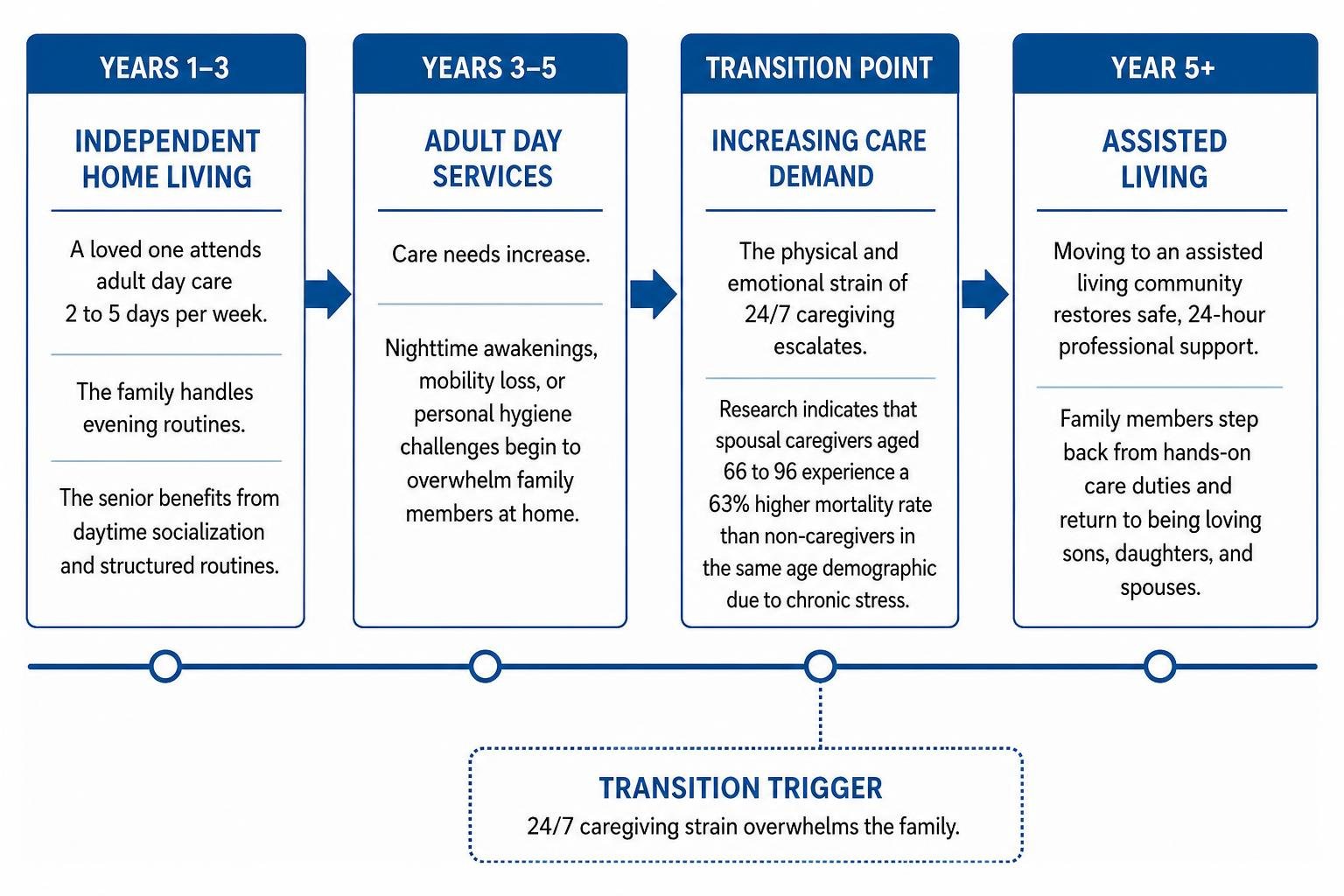
- Years 1–3 (Early Care Needs): A loved one attends adult day care 2 to 5 days per week. The family handles evening routines, and the senior benefits from daytime socialization and structured routines.
- Years 3–5 (Increasing Physical or Cognitive Decline): Care needs increase. Nighttime awakenings, mobility loss, or personal hygiene challenges begin to overwhelm family members at home.
- Transition Point: The physical and emotional strain of 24/7 caregiving escalates. Notably, research indicates that spousal caregivers aged 66 to 96 experience a 63% higher mortality rate than non-caregivers in the same age demographic due to chronic stress.
- Year 5+ (Residential Assisted Living): Moving to an assisted living community restores safe, 24-hour professional support, allowing family members to step back from hands-on care duties and return to being loving sons, daughters, and spouses.
Comparing the True Costs and Hidden Fees of Both Options
When evaluating long-term care finances, looking strictly at base rates can be misleading. Families must account for the full spectrum of living expenses and incidental costs.

The Cost Breakdown of Adult Day Care
Nationally, adult day care costs range from $80 to $120 per day, with a national median of approximately $95 per day (or roughly $2,060 to $2,167 per month for full-time weekday attendance).
Hidden and Ancillary Costs of Adult Day Care:
- Ongoing Home Living Expenses: Mortgage/rent, property taxes, homeowners insurance, home maintenance, and utilities continue unchanged.
- Evening and Weekend Food Costs: Day care only covers daytime lunches and snacks; family groceries remain a separate expense.
- Specialized Transportation Fees: Center-provided shuttle services may charge additional mileage or zone fees.
- Lost Caregiver Income: If family members must reduce work hours to manage mornings, evenings, and weekends, lost wages represent a significant indirect cost.
The Cost Breakdown of Assisted Living
The national median cost of assisted living is approximately $5,350 to $5,900 per month (with averages reaching $6,200 per month depending on region and year). While this number appears significantly higher than day care, it bundles nearly all living and care expenses into a single monthly fee.
Hidden and Additional Fees to Anticipate in Assisted Living:
- Community Entrance Fees: A one-time non-refundable move-in fee, typically ranging from $1,500 to $5,000.
- Tiered Care Levels: Base monthly rent generally covers housing, meals, housekeeping, and basic supervision. As a resident requires more hands-on assistance with dressing, incontinence, or mobility, communities add tiered care charges (typically $300 to $1,500/month per level).
- Medication Administration Fees: Monthly charges for staff to store, manage, and dispense daily prescription regimens.
- Personal Supplies and Incontinence Products: Wipes, briefs, and specialized personal care supplies are billed separately.
Payment Options and Financial Assistance
Neither adult day care nor assisted living room-and-board is covered by standard Medicare. However, several alternative funding sources exist:
- Private Pay: Personal savings, retirement accounts, pension income, and proceeds from home sales.
- Long-Term Care Insurance: Depending on policy triggers (typically requiring help with 2+ ADLs or cognitive impairment), policies often reimburse both adult day care daily rates and assisted living monthly costs.
- Veterans Benefits (Aid and Attendance): Wartime veterans and surviving spouses with physical care needs may qualify for monthly pension supplements to pay for care.
- Medicaid HCBS Waivers & PACE: Many states offer Home and Community-Based Services (HCBS) waivers or Programs of All-Inclusive Care for the Elderly (PACE) to cover adult day services or the personal care portion of assisted living.
Questions Families Should Ask When Touring Facilities
Touring options in person provides clarity that brochures cannot match. Use this checklist during your visits:
Questions for Adult Day Care Centers
- What is the direct staff-to-participant ratio during peak program hours?
- What specific dementia training and behavioral redirection credentials do staff members hold?
- Are licensed nurses (RN/LPN) on site at all times, or only on call?
- What does a typical daily schedule look like, and how do you accommodate varied mobility levels?
- Do you offer trial days so my loved one can experience the environment before enrolling?
- What is your exact protocol if a participant becomes agitated, wanders, or resists care?
- Are transportation services door-to-door, and are vehicles wheelchair-accessible?
Questions for Assisted Living Communities
- What is your base monthly rate, and what specific services does it include?
- How do you assess levels of care, and what triggers an increase in monthly care fees?
- What is the caregiver-to-resident ratio during the day, evening, and overnight shifts?
- How are emergency calls handled overnight, and how quickly do caregivers respond?
- What are your licensing limits—at what point would a resident need a higher level of care?
- Can you accommodate evolving memory care needs if cognitive decline advances?
- What culinary options are available for specialized dietary requirements?
Frequently Asked Questions About Adult Day Care and Assisted Living
Does Medicare or Medicaid pay for adult day care or assisted living?
Original Medicare (Parts A and B) does not pay for custodial long-term care, whether provided at an adult day center or in an assisted living community. It covers only short-term skilled medical care, physical therapy, and physician services.
However, some Medicare Advantage plans offer limited supplemental adult day benefits. Medicaid programs vary by state; while Medicaid does not pay for assisted living room and board, state Home and Community-Based Services (HCBS) waivers and PACE programs often cover adult day health services or personal care assistance for qualifying individuals.
Can an older adult with dementia benefit from adult day care?
Yes. Many adult day centers offer specialized memory care programming designed specifically for seniors with Alzheimer's disease or other forms of dementia. These programs provide structured cognitive exercises, music therapy, sensory stimulation, and secure spaces that prevent wandering.
Day care works best for individuals in early-to-moderate stages of dementia who can still comfortably participate in small group settings without experiencing intense behavioral distress.
When is it time to move from adult day care to assisted living?
A move to assisted living is usually warranted when care needs extend beyond daytime hours. Clear indicators include:
- Frequent nighttime wandering, confusion, or sundowning
- Increased fall risks during evening or early morning hours
- The need for hands-on assistance with multiple ADLs (bathing, transferring, continence care)
- Caregiver exhaustion, illness, or depression resulting from 24/7 care demands
- Safety hazards at home, such as leaving stoves on or mismanaging medications
Conclusion: Making the Right Care Choice for Your Loved One
Choosing between adult day care and assisted living is not about finding the "better" service—it is about finding the right match for your loved one's care requirements and your family's daily reality.
If your loved one requires daytime supervision and social engagement while living safely with supportive family members, adult day care offers a wonderful, budget-friendly solution that helps delay residential placement. However, when care needs expand into the evening hours, mobility declines, or family caregivers face unmanageable stress, moving to an assisted living community provides the continuous support, safety, and peace of mind your family deserves.
At La Posada Assisted Living & Memory Care in Whittier, CA, we understand the emotional weight of these decisions. Our family-owned community is dedicated to providing compassionate, 24-hour personalized care in a warm, welcoming environment. Through our holistic wellness programs, personalized service plans, and vibrant social community, we ensure every resident experiences dignity, joy, and comprehensive support. Reach out to our team today to tour our community and find the care path that best serves your family.
Medical References
Oliver RE, Foster M. "Adult day care: an important long-term care alternative & potential cost saver.." Missouri medicine, 2013. PMCID PMC6179827.