

Assisted Living Cost Transparency Starts With an Itemized Price
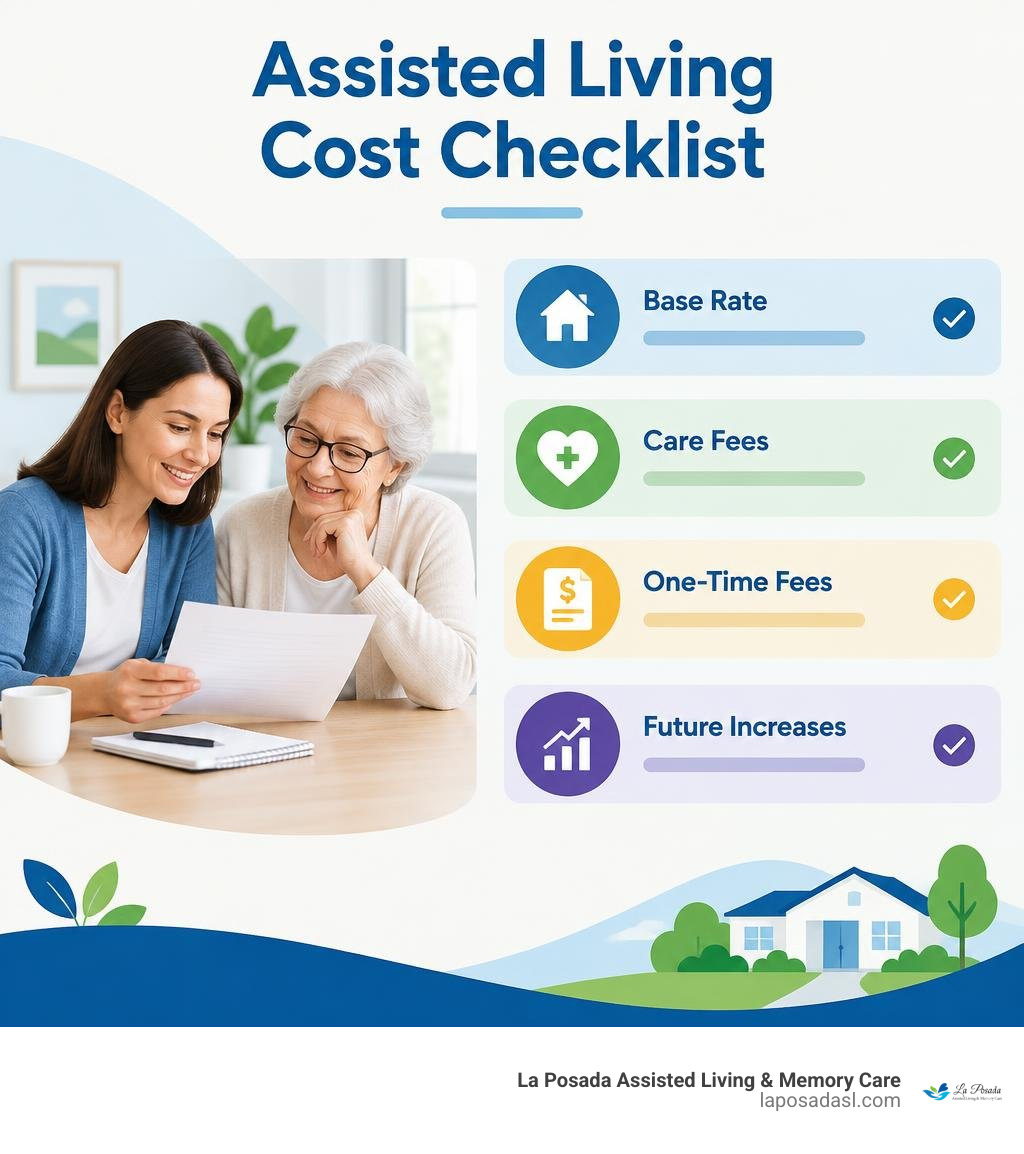
Assisted living cost transparency means knowing what you will pay now and what could change later. Before choosing a community, ask for a written estimate that separates the base rate from care charges, one-time fees, and possible price increases. Make sure it reflects your parent's needs, including supervision and help with medication. Then compare the total monthly cost, not just the advertised rate.
A clear price breakdown makes it easier to plan your family budget and judge whether the care is the right fit. This guide explains which costs to ask about and how to spot gaps before you sign.
Understanding Current Senior Care Costs and Regional Price Disparities
Navigating elder care finances can feel overwhelming when pricing structures vary from one city to the next. Every day across the country, roughly 10,000 Baby Boomers turn 65, and research shows that 7 out of 10 people will eventually require some form of long-term support. Yet, understanding the actual expenses involved remains one of the largest hurdles for families.

National Median Benchmarks and Recent Cost Increases
Senior living expenses continue to shift due to broader economic trends, labor market dynamics, and inflation. In recent years, median rates nationwide have adjusted upward across residential care settings:
- Assisted Living Communities: The national median monthly rate reached $6,200 per month ($74,400 annually), reflecting a 5% increase year-over-year. Independent market surveys place typical annual baselines between $65,028 and $74,400.
- Memory Care Programs: Specialized cognitive care averages $6,690 per month ($80,280 annually), with complex needs commanding higher rates.
Because of these rising figures, industry data reveals that affordability has become the leading concern for families seeking senior care. When exploring these baseline figures, industry reports highlight how upfront financial clarity directly reduces anxiety during the decision-making process.
State-by-State Price Variations and Local Market Trends
Long-term care rates differ substantially by state and region. Differences in real estate values, state regulatory mandates, and local labor markets create distinct pricing environments:
- Lower-Cost States: States such as Mississippi (~$4,369/month) and Alabama (~$4,425/month) sit well below national medians.
- Mid-Range States: States like Texas (~$5,666/month) reflect broader national averages.
- Higher-Cost States: Urban regions in California (~$7,000/month), Alaska (~$9,882/month), and Hawaii (~$12,096/month) see higher median costs driven by real estate overhead and staffing expenses.
Recognizing these geographic benchmarks helps you establish a realistic financial baseline before touring communities.
Why Assisted Living Cost Transparency Is Essential for Families
A clear financial roadmap is essential because the average length of stay in an assisted living community is roughly 22 months. That translates to an average baseline investment of $136,400 or more. Research indicates that 80% of older adults with modest assets could exhaust their savings without careful long-term budgeting.

Unpacking Base Rates versus Itemized Care Services
One common point of confusion is what an advertised price actually covers. In many communities, pricing splits into two distinct categories:
- Base Rent (Housing & Hospitality): This charge typically covers the physical apartment, scheduled maintenance, utilities, regular housekeeping, dynamic activity programming, and daily meal plans.
- Care Services (Activities of Daily Living - ADLs): Assistance with bathing, dressing, grooming, mobility, incontinence care, and medication management are often calculated separately.
When communities bundle these items ambiguously, families risk unexpected mid-year billing changes. In contrast, true transparency means receiving a written summary showing your exact base housing charge alongside itemized care requirements.
Hidden Fees, Assessment Surcharges, and Tiered Care Models
To avoid surprises, look closely at how a community structures its ongoing service charges:
- Community / Move-In Fees: Many communities charge a one-time administrative fee at move-in (often ranging from $1,500 to $5,000) to cover room turnover and health assessments.
- Tiered Care vs. A La Carte: Tiered models bundle care into levels (e.g., Level 1 through Level 5), where moving up a level increases the monthly fee by a fixed amount. A la carte models charge per service or minute of assistance.
- Medication Administration Fees: Distributing and monitoring prescriptions frequently carries a dedicated monthly surcharge based on frequency and complexity.
- Reassessment Adjustments: Clinical assessments after a hospital visit or change in condition can change care levels. Knowing reassessment policies in advance prevents unexpected financial shocks.
Comparing Care Options: Assisted Living, Memory Care, and Respite Care
Finding the right balance between cost and personal care begins with matching services to your loved one's specific stage of life. Our assisted living neighborhood in Whittier, CA provides a warm, family-owned setting with 24-hour individualized support plans.
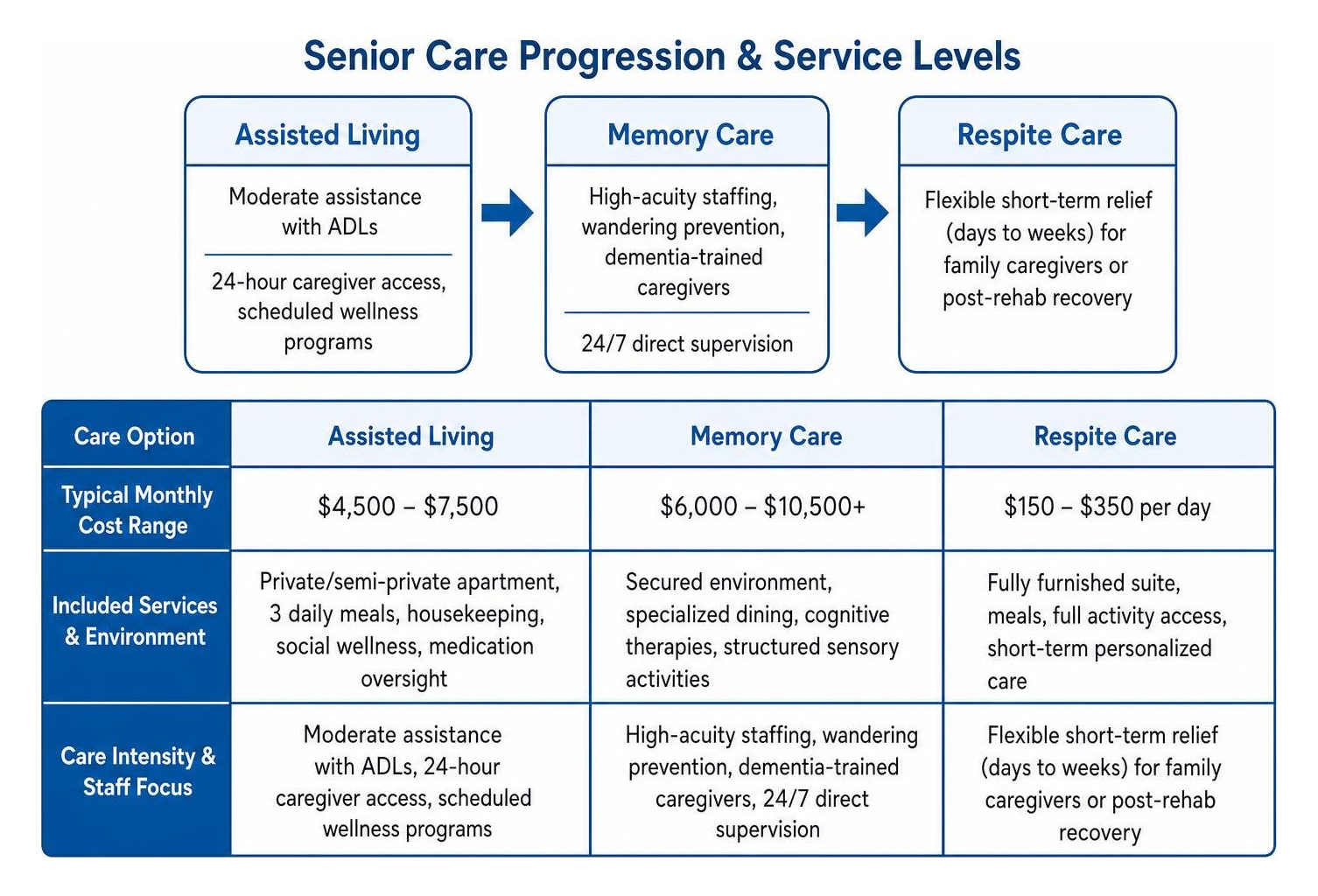
| Care Option | Typical Monthly Cost Range | Included Services & Environment | Care Intensity & Staff Focus |
|---|---|---|---|
| Assisted Living | $4,500 – $7,500 | Private/semi-private apartment, 3 daily meals, housekeeping, social wellness, medication oversight | Moderate assistance with ADLs, 24-hour caregiver access, scheduled wellness programs |
| Memory Care | $6,000 – $10,500+ | Secured environment, specialized dining, cognitive therapies, structured sensory activities | High-acuity staffing, wandering prevention, dementia-trained caregivers, 24/7 direct supervision |
| Respite Care | $150 – $350 per day | Fully furnished suite, meals, full activity access, short-term personalized care | Flexible short-term relief (days to weeks) for family caregivers or post-rehab recovery |
Cost Comparison: Assisted Living, Memory Care, and Respite Care
While assisted living supports daily independence, memory care requires secured layouts and lower staff-to-resident ratios to maintain safety for individuals living with Alzheimer's disease or other forms of dementia. Because roughly 40% of residential care residents experience cognitive decline, specialized memory neighborhoods provide sensory engagement and behavioral support that require higher operational investment.
Short-term respite stays allow families to evaluate a community's environment, dining, and daily care without committing to a long-term contract.
Federal and State Efforts to Improve Assisted Living Cost Transparency
Because assisted living is regulated at the state level rather than through unified federal oversight, consumer disclosure standards vary across the country. Legislative leaders have actively investigated pricing clarity; for instance, you can read the Senate Special Committee on Aging oversight inquiry exploring base rates, hidden fees, and safety reporting.
Additionally, states like Maryland and Wisconsin maintain public web portals publishing facility pricing data. You can review broader regulatory frameworks through this guide on federal and state assisted living regulations.
Strategic Financial Planning: Payment Options and True Community Value
Planning for senior care involves combining personal assets, insurance policies, and benefit programs into a sustainable budget.
Funding Options: Private Assets, Long-Term Care Insurance, and VA Benefits
- Private Pay & Real Estate: Many families fund residential care through retirement accounts, pensions, or proceeds from selling a family home.
- Long-Term Care Insurance (LTCI): Traditional policies often reimburse a fixed daily or monthly benefit once a resident requires assistance with two or more Activities of Daily Living (ADLs).
- VA Aid and Attendance Benefit: Eligible wartime veterans and surviving spouses may receive substantial monthly tax-free pension enhancements to help pay for assisted living care.
- Medicaid & HCBS Waivers: While traditional Medicare does not pay for custodial room and board, certain state-specific Medicaid Home and Community-Based Services (HCBS) waivers provide supplemental care support for qualifying low-income seniors.
Achieving Transparency in Quality and Staffing
True value extends beyond the bottom-line price. When evaluating senior living communities, look at how pricing connects to daily care quality, safety, and community culture:
- Direct-Care Staff Ratios: What is the caregiver-to-resident ratio during day and night shifts?
- Staff Retention & Training: How long has the care team been in place, and what dementia or emergency training do they receive?
- Holistic Wellness Programming: Does the calendar offer programs that stimulate the mind, body, and spirit?
- Transparent Communication: Does leadership proactively share inspection reports, assessment criteria, and fee schedules?
Key Questions to Ask on a Community Tour
- Is the quoted rate all-inclusive, tiered, or fee-for-service?
- What specific services trigger an automatic care level increase?
- What are the historical annual percentage rate increases over the last 3 years?
- What is the policy regarding refunding advance rent if a resident transitions to a hospital or higher care level?
Frequently Asked Questions About Assisted Living Pricing
What is typically included in an assisted living base rate?
A standard base rate generally covers housing accommodations, regular utility services (water, electricity, heating/cooling), three daily meals, weekly housekeeping, linen service, property maintenance, and social activity calendars. Personal care support (like hands-on bathing or medication administration) is usually calculated as an added care tier.
Does Medicare cover monthly assisted living costs?
No. Medicare is designed for short-term acute medical treatments and rehabilitation therapies after qualifying hospital stays. It does not cover ongoing non-medical custodial care, room, or board in assisted living communities.
How can families protect against unexpected care fee increases?
Request a complete, written fee schedule during your initial tour. Review the resident agreement for clauses regarding annual cost-of-living adjustments, notice periods for price increases (typically 30 to 60 days), and the specific clinical criteria used during care reassessments.
Conclusion
Choosing a senior living community is one of the most important emotional and financial decisions your family will make. Upfront financial transparency ensures that your family can focus on what matters most: your loved one's comfort, dignity, and daily happiness.
At La Posada Assisted Living & Memory Care in Whittier, CA, our family-owned approach focuses on transparent partnerships, compassionate 24-hour care, and holistic wellness programs that nurture body, mind, and spirit. Clear, honest pricing allows you to plan your family's future with complete confidence.