

What Does Assisted Living Cost in 2026?
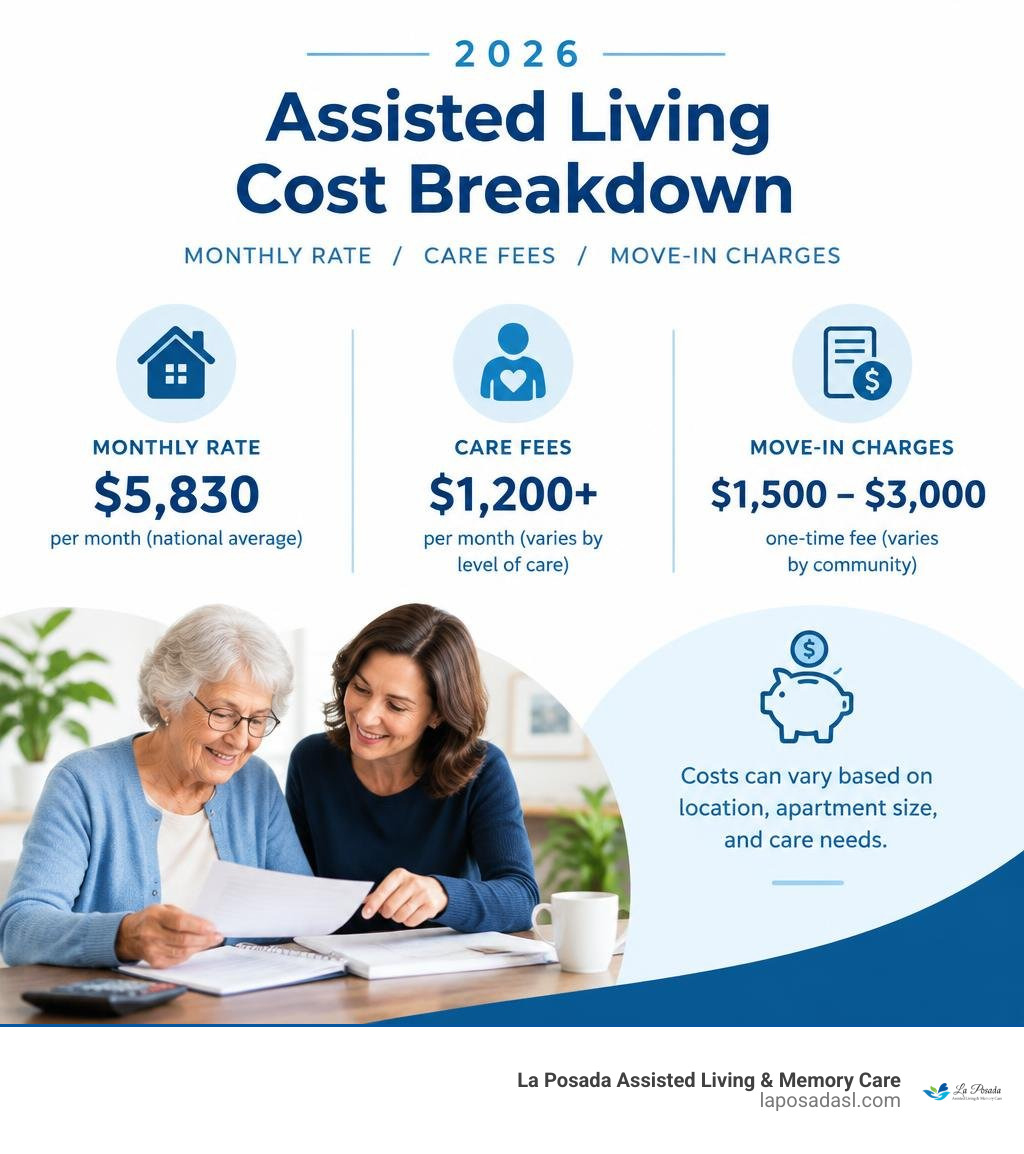
Assisted living costs average about $5,830 per month nationally. A separate 2026 estimate puts the median at $6,313 per month, or $75,756 per year. These figures are starting points, not quotes: location, apartment size, and care needs can change the bill.
If your parent needs help with medication or more hands-on care, ask each community for a written monthly estimate that includes care fees and any one-time move-in charge. That gives you a clearer number to budget for and a fair way to compare options.
Understanding Assisted Living Costs: National Averages and State Variations
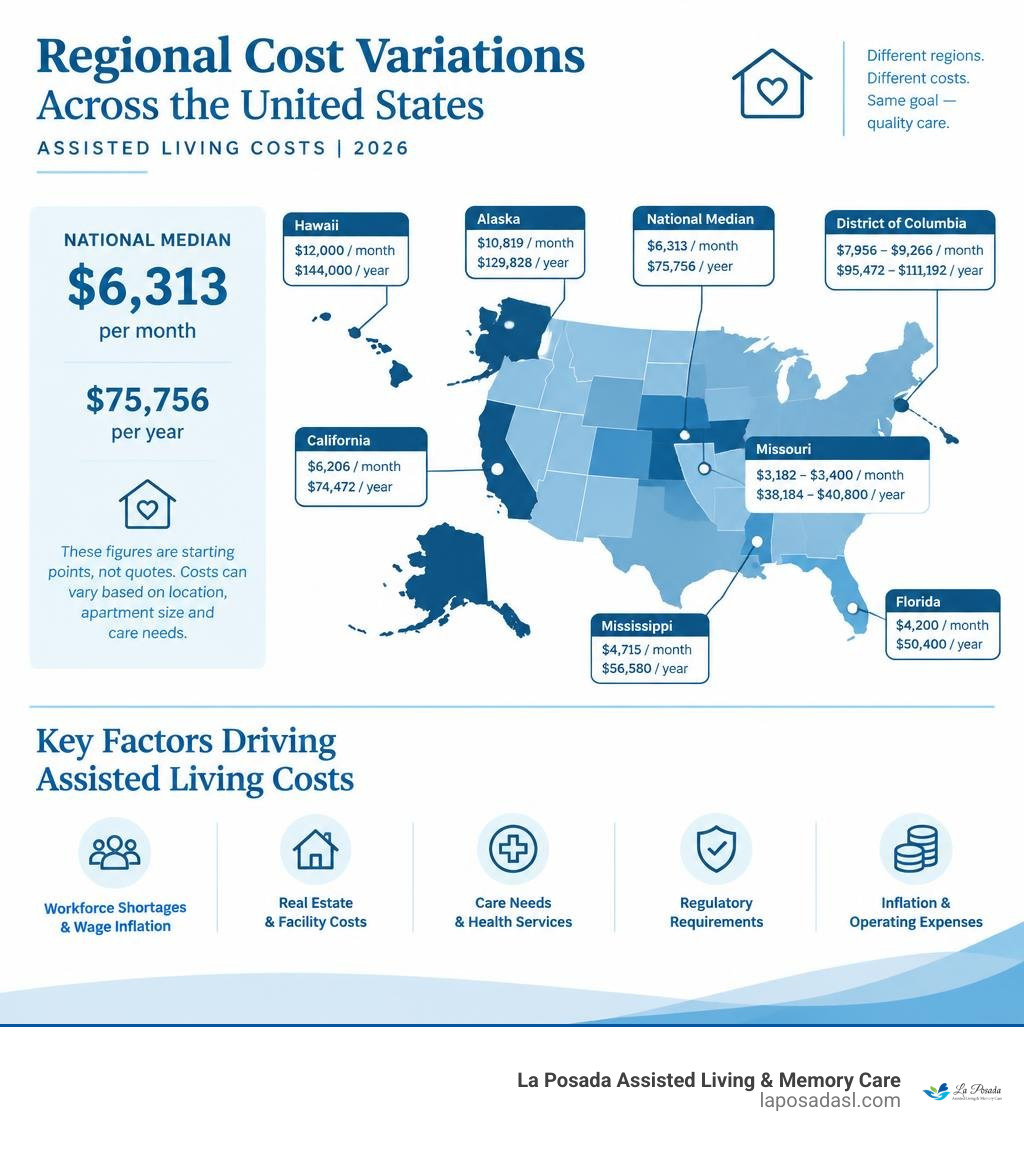
When evaluating residential senior living, location is one of the single largest variables shaping your monthly budget. Across the country, typical rates range between $4,000 and nearly $8,000 per month for standard private apartments. Over the past several decades, rates have steadily climbed; between 2004 and 2018 alone, annual expenses rose 67% (from $28,800 to $48,000 per year), and the industry continues to see a roughly 5% year-over-year increase.
To help you compare figures across the United States, reviewing a detailed state-by-state cost breakdown provides vital regional context.
| State / Region | Median Monthly Cost | Estimated Annual Cost | Primary Cost Considerations |
|---|---|---|---|
| National Median | $6,313 | $75,756 | Baseline benchmark across all floor plans and care tiers |
| Hawaii | $12,000 | $144,000 | High real estate values, import expenses, and competitive labor |
| Alaska | $10,819 | $129,828 | Remote logistics, heating demands, and staffing overhead |
| District of Columbia | $7,956–$9,266 | $95,472–$111,192 | Metropolitan land costs and high regional licensing standards |
| California | $6,206 | $74,472 | Diverse regional pricing; urban coastal areas exceed interior valleys |
| Florida | $4,200 | $50,400 | Broad supply of communities; ranges from $3,500 to $5,500 monthly |
| Missouri | $3,182–$3,400 | $38,184–$40,800 | Lower operational overhead and affordable regional real estate |
| Mississippi | $4,715 | $56,580 | Consistently ranks among the lowest baseline operational rates |
Because pricing structures reflect broader regional economics, consulting an updated national care pricing report helps families track shifting medians across metropolitan statistical areas.
Key Factors Driving Assisted Living Costs
Why do senior care rates increase year after year? The answer lies in several structural operational expenses:
- Workforce Shortages & Wage Inflation: Senior living communities rely on skilled, compassionate caregivers, certified nursing assistants (CNAs), nurses, and hospitality personnel. Reviewing historical data on rising fees shows that rising baseline wages and overtime pay directly impact provider budgets.
- Specialized Care & Higher Resident Acuity: Seniors are choosing to move into communities later in life. This means residents often arrive needing advanced physical assistance and clinical oversight, requiring higher caregiver-to-resident ratios.
- Regulatory Compliance and Operations: State licensing regulations mandate ongoing staff training, building safety standards, and strict health protocols. As documented in labor shortage trends, facilities must consistently invest in retention and competitive packages to maintain dependable teams.
Most and Least Expensive States
The financial variance between states can exceed $7,000 every month. Hawaii ($12,000/month) and Alaska ($10,819/month) represent the top tier of national expenses due to geographic isolation and high operational costs. Similarly, metropolitan urban centers like the District of Columbia frequently command premium rates.
Conversely, Midwestern and Southeastern states offer far lower averages. Mississippi averages approximately $4,715 per month, while Missouri ranks among the most budget-friendly states nationwide with medians around $3,182 to $3,400 per month. In retirement destinations like Florida, high competition keeps the statewide median near $4,200 per month, though luxury coastal residences can exceed $6,000.
What Is Included in Monthly Senior Living Fees?
Understanding what your monthly check covers prevents surprises down the road. In most communities, the base rate functions like an all-in-one residential budget, combining rent, food, maintenance, and basic physical assistance.

Base Services and Amenities
A well-rounded residential package covers daily lifestyle necessities, ensuring your loved one lives comfortably without juggling separate utility bills or home maintenance tasks:
- Housing & Utilities: Private or companion apartment suites, complete with water, electricity, heating, air conditioning, and full building maintenance.
- Nutritious Dining: Three chef-prepared meals daily, plus healthy snacks and accommodations for special dietary requirements.
- Assistance with Activities of Daily Living (ADLs): Discreet, respectful support with bathing, dressing, personal hygiene, and transferring.
- Housekeeping & Linen Services: Weekly deep cleaning, trash removal, and fresh laundering of bed linens and bath towels.
- Scheduled Transportation: Group outings to local shopping centers, cultural attractions, and scheduled rides to medical appointments.
- Enriching Life Activities: Daily social, educational, and fitness programs designed to engage the mind, body, and spirit.
Additional Community and Care Fees
While base rates cover fundamental housing and hospitality, most communities charge separate fees for optional services or specialized clinical administration:
- Community / Move-In Fee: A one-time administrative and apartment refurbishment charge paid upon admission, with a national median of approximately $3,000.
- Medication Management: Tiered fees for nurse oversight, blister-pack handling, administration, and reordering coordination.
- Ancillary Services: On-site beauty salon and barber services, guest dining meals, private physical therapy, and specialized phone or cable packages.
- Pet Fees: Small monthly pet rents or non-refundable cleaning deposits for approved companion animals.
Assisted Living Pricing Models: All-Inclusive vs. Tiered and A La Carte
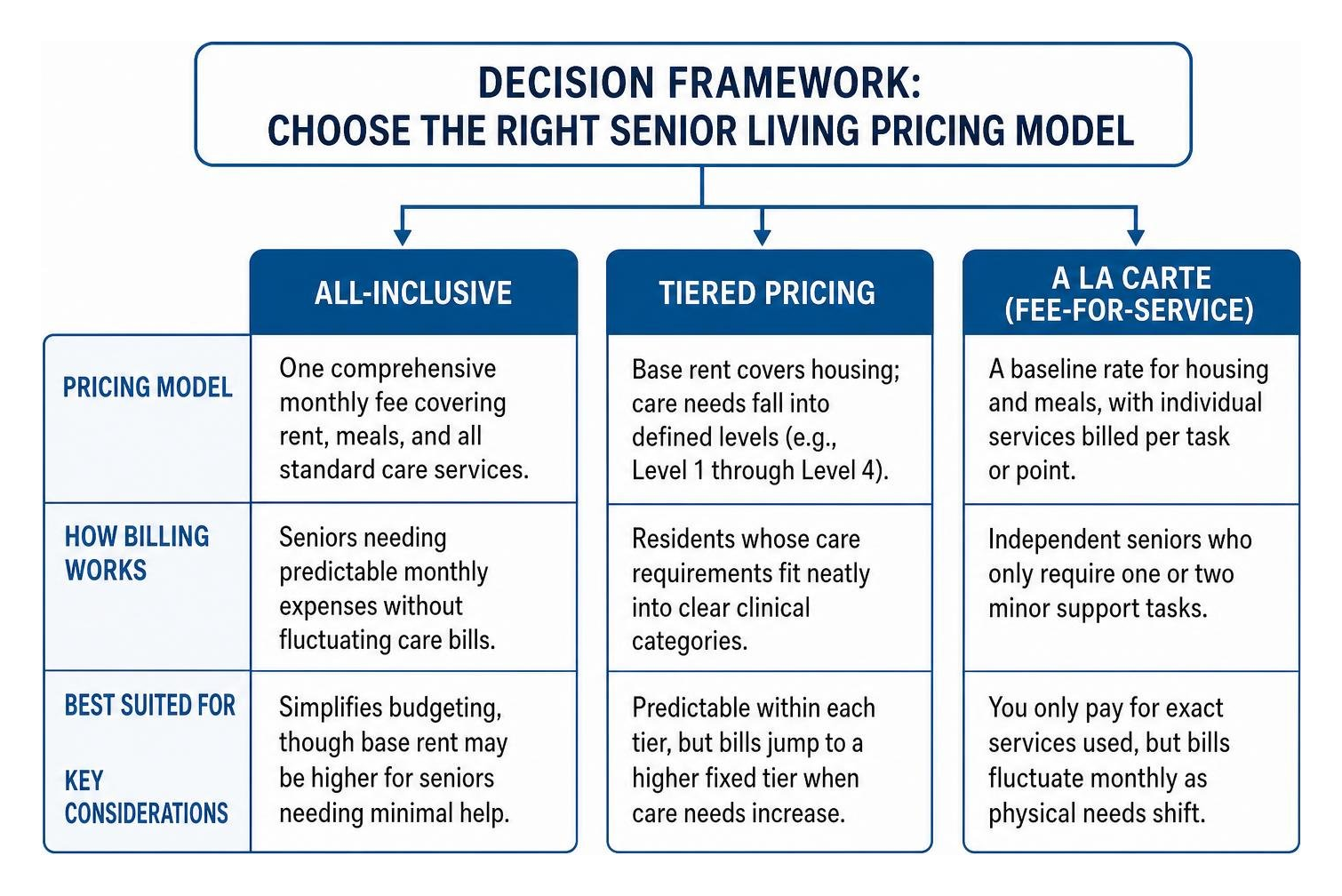
Every senior living provider structures billing differently. Knowing how a community charges for extra care allows you to forecast long-term expenses as health needs change over time.
| Pricing Model | How Billing Works | Best Suited For | Key Considerations |
|---|---|---|---|
| All-Inclusive | One comprehensive monthly fee covering rent, meals, and all standard care services. | Seniors needing predictable monthly expenses without fluctuating care bills. | Simplifies budgeting, though base rent may be higher for seniors needing minimal help. |
| Tiered Pricing | Base rent covers housing; care needs fall into defined levels (e.g., Level 1 through Level 4). | Residents whose care requirements fit neatly into clear clinical categories. | Predictable within each tier, but bills jump to a higher fixed tier when care needs increase. |
| A La Carte (Fee-for-Service) | A baseline rate for housing and meals, with individual services billed per task or point. | Independent seniors who only require one or two minor support tasks. | You only pay for exact services used, but bills fluctuate monthly as physical needs shift. |
How Pricing Structures Impact Total Assisted Living Costs
Choosing the right structure depends on how quickly your loved one's needs might change. In an a la carte or points-based community, an unexpected recovery from an illness or a minor fall can quickly add hundreds of dollars in itemized assistance fees to that month's statement. Conversely, tiered pricing offers clear rate milestones, though transitioning between levels requires regular clinical reassessments.
Second-Person Fees and Couples Pricing
When a couple moves into a community together, they rarely need to pay double the apartment rent. Instead, providers generally charge the standard base apartment rate plus a second-person fee (averaging roughly $1,200 per month). This secondary fee covers additional meal plans, housekeeping, activity programming, and community maintenance for the spouse, offering substantial savings compared to maintaining two private suites or aging in place independently.
Comparing Assisted Living and Memory Care Costs
As cognitive conditions such as Alzheimer's disease or other dementias progress, seniors require environments specifically designed for their safety and emotional well-being.
| Living Option | National Monthly Median | Level of Staffing & Care | Primary Focus |
|---|---|---|---|
| Independent Living | $3,000–$3,800 | Hospitality staff; no clinical care | Active lifestyle, maintenance-free housing, social events |
| Assisted Living | $5,830–$6,313 | 24-hour caregiver access; ADL support | Personal independence, daily assistance, medication help |
| Memory Care | $6,999–$7,500 | High staff ratios; dementia-certified team | Secured environments, structured routines, cognitive support |
| Nursing Home (Skilled) | $9,581–$10,798 | 24/7 licensed nursing & medical oversight | Complex clinical care, rehabilitation, post-acute recovery |
Memory Care Costs
Memory care neighborhoods require higher staffing ratios, specialized architectural security features (such as secure outdoor courtyards and keypad access), and specialized sensory programming. Because of these intensive clinical requirements, memory care typically costs 10% to 25% more than standard assisted living, reflecting the continuous supervision necessary to ensure resident safety and reduce anxiety.
How to Fund and Budget for Assisted Living
Given that the national median length of stay in an assisted living community is approximately 22 months—representing an average total investment of roughly $128,260—families utilize several financial channels to cover these expenses.

Private Pay and Home Equity
The vast majority of senior living stays are funded through private family resources:
- Home Sales: Liquidating a primary residence often unlocks the substantial equity needed to fund long-term residential care for multiple years.
- Bridge Loans: Short-term eldercare bridge loans provide immediate liquidity to cover move-in fees and initial monthly rent while families finalize the sale of real estate.
- Retirement Assets & Pensions: Monthly Social Security income, corporate pensions, 401(k) distributions, and personal savings serve as the ongoing foundation for monthly billing.
- Tax Deductions: Portions of monthly assisted living fees that cover medical and personal care services may qualify as tax-deductible medical expenses under IRS guidelines. Speak with your certified tax advisor to evaluate your family's eligibility.
Insurance, Medicaid Waivers, and Veterans Benefits
Public and private benefit programs can significantly offset out-of-pocket care costs:
- Long-Term Care (LTC) Insurance: Traditional policies typically pay a designated daily or monthly benefit once a physician certifies that a policyholder requires assistance with at least two ADLs.
- VA Aid and Attendance Benefit: Eligible wartime veterans and surviving spouses can receive tax-free monthly pension supplements to help pay for assisted living and personal care support.
- Medicaid HCBS Waivers: While standard Medicaid does not pay for room and board in private assisted living settings, many states offer Home and Community-Based Services (HCBS) waivers that help cover care services for financially qualifying seniors (keep in mind that waiting lists often apply).
- Life Insurance Conversions: Certain life insurance policies can be converted into life settlement accounts or long-term care benefit plans, providing immediate monthly payments directly to licensed care communities.
Frequently Asked Questions About Assisted Living
How do assisted living costs compare with memory care?
Assisted living is designed for seniors needing assistance with everyday physical routines (such as bathing, dressing, and meals) while maintaining independence. Memory care includes all assisted living services plus 24-hour secured monitoring, specialized dementia activities, and higher caregiver ratios. Because of this intensive staffing, memory care generally costs $1,000 to $1,500 more per month than standard assisted living.
Does Medicare cover monthly assisted living fees?
No, Medicare does not pay for custodial senior living, room and board, or long-term residential care. Medicare only covers short-term, medically necessary skilled care, such as physical therapy, home health visits ordered by a physician, or short-term rehabilitative stays in a skilled nursing facility following a qualifying hospital admission.
What happens when care needs increase over time?
When a resident's physical or cognitive needs change, the community's wellness team conducts a thorough reassessment. In tiered or a la carte pricing environments, the monthly rate adjusts to reflect the additional support services required. If a resident develops advanced memory impairment, the family can smoothly coordinate a transition into an adjacent memory care neighborhood without changing facilities.
Conclusion
Navigating senior living expenses requires balancing clear financial planning with high-quality, compassionate care. By understanding state-by-state variations, reviewing pricing models, and identifying hidden fees before signing a residency agreement, you can build a predictable long-term budget that protects your family's peace of mind.
At La Posada Assisted Living & Memory Care in Whittier, CA, our family-owned community believes in total pricing transparency and individualized attention. We provide personalized, 24-hour care that nurtures the mind, body, and spirit in a warm, neighborhood environment. Contact our compassionate team today to tour our assisted living community and discover how we can support your loved one's independence and well-being.