
Finding Assisted Living That Supports Independence
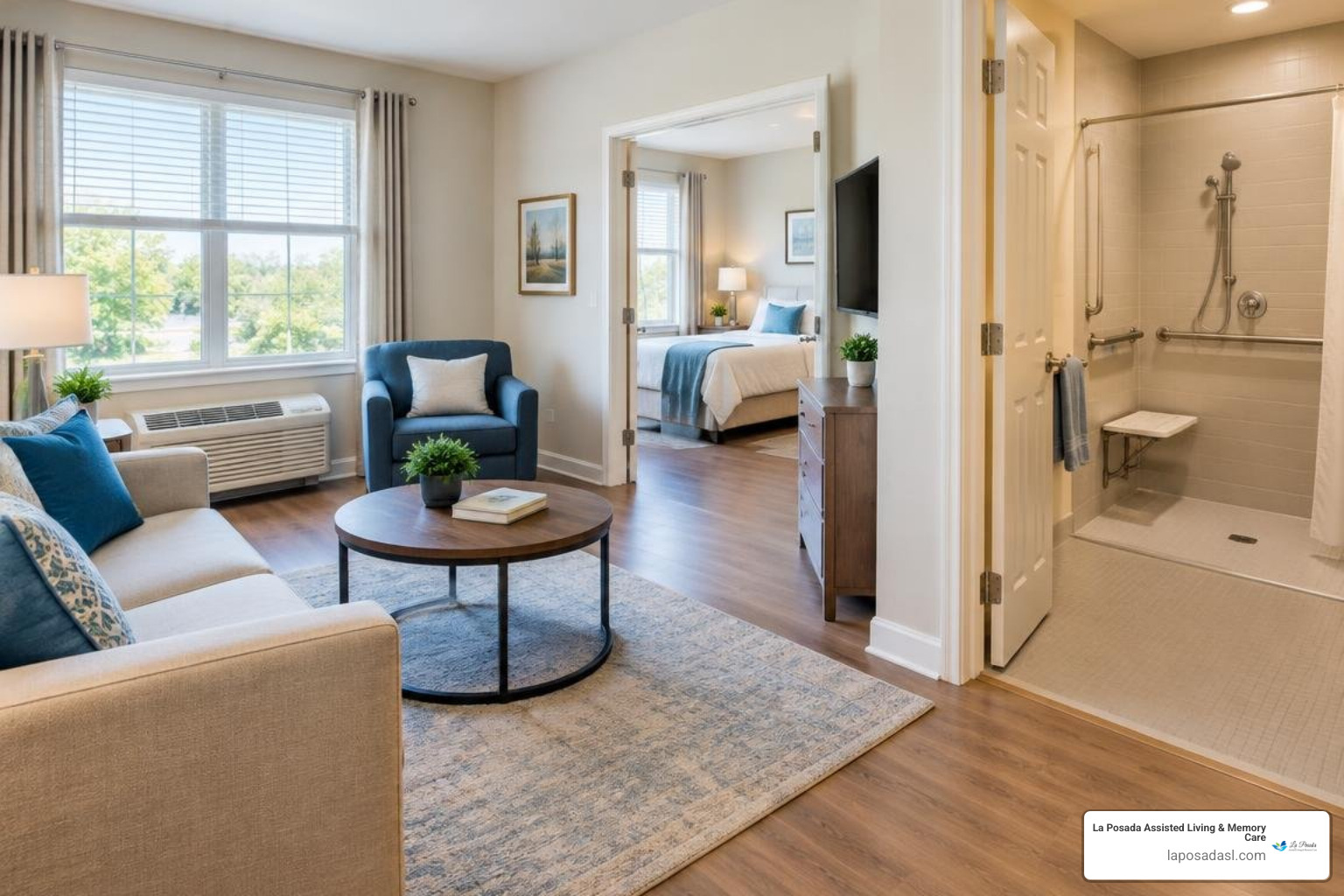
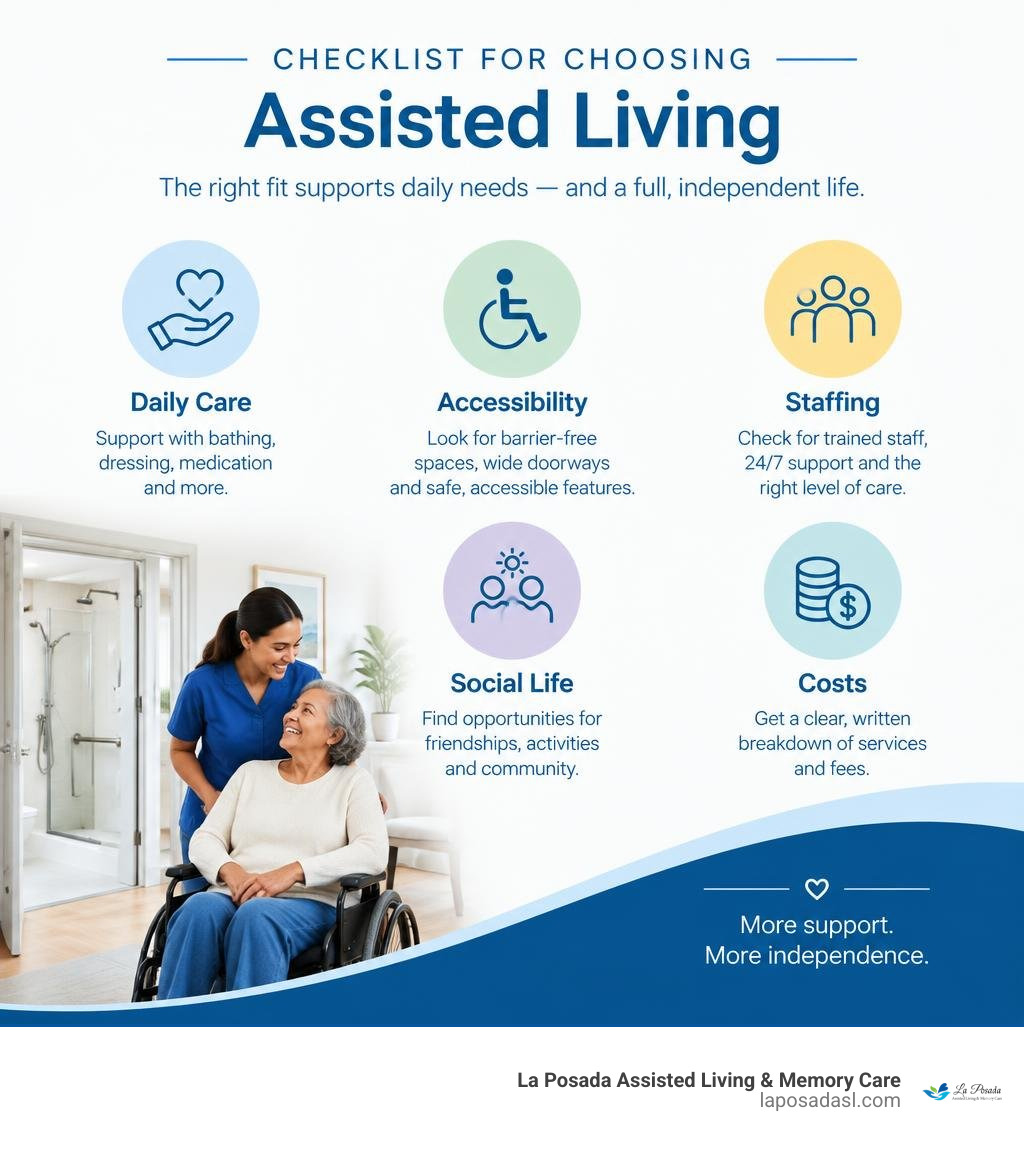
Assisted living for disabled adults can provide help with daily tasks while giving residents room to make their own choices. Start by looking for a community that can meet the person's specific needs, not just one that lists "accessible rooms." Ask about help with bathing and dressing, medication support, overnight staffing, accessible transportation, and ways to join social activities.
The right fit should make daily life easier without taking away independence. Tour the space, explain what support is needed on a typical day and at night, and ask for a written account of the services and costs. If your parent needs ongoing skilled nursing care, check whether the community can provide it or whether another setting would be safer.
According to global research from the International Labour Organization, about one billion people—one-seventh of the world population—live with a disability. In the United States, roughly one in four adults has a disability, while in the UK, 22% of the population is disabled (rising to 42% for those over state pension age). In Canada, 22.3% of individuals over age 15 report living with a disability, and nearly one in five Australians shares this lived experience.
Despite these shared numbers, finding a supportive, empowering home remains deeply personal. At La Posada Assisted Living & Memory Care in Whittier, California, we believe that high-quality residential care is not about limiting someone's routine—it is about removing structural hurdles so residents can live fully and joyfully.
Understanding the Models and Language of Assisted Living for Disabled Adults
How a community approaches daily support depends on its underlying philosophy of disability. Historically, residential facilities operated strictly under the medical model of disability. This framework views a disability as an individual physical or cognitive deficit that needs to be "cured," managed, or clinically supervised. When a residential community operates solely on this model, life can quickly feel institutional, with rigid schedules that prioritize clinical tasks over personal choice.
In contrast, the social model of disability makes a vital distinction: a physical, sensory, or neurological impairment is simply a bodily variation, whereas disability is created by societal barriers, inaccessible architecture, and exclusionary attitudes.
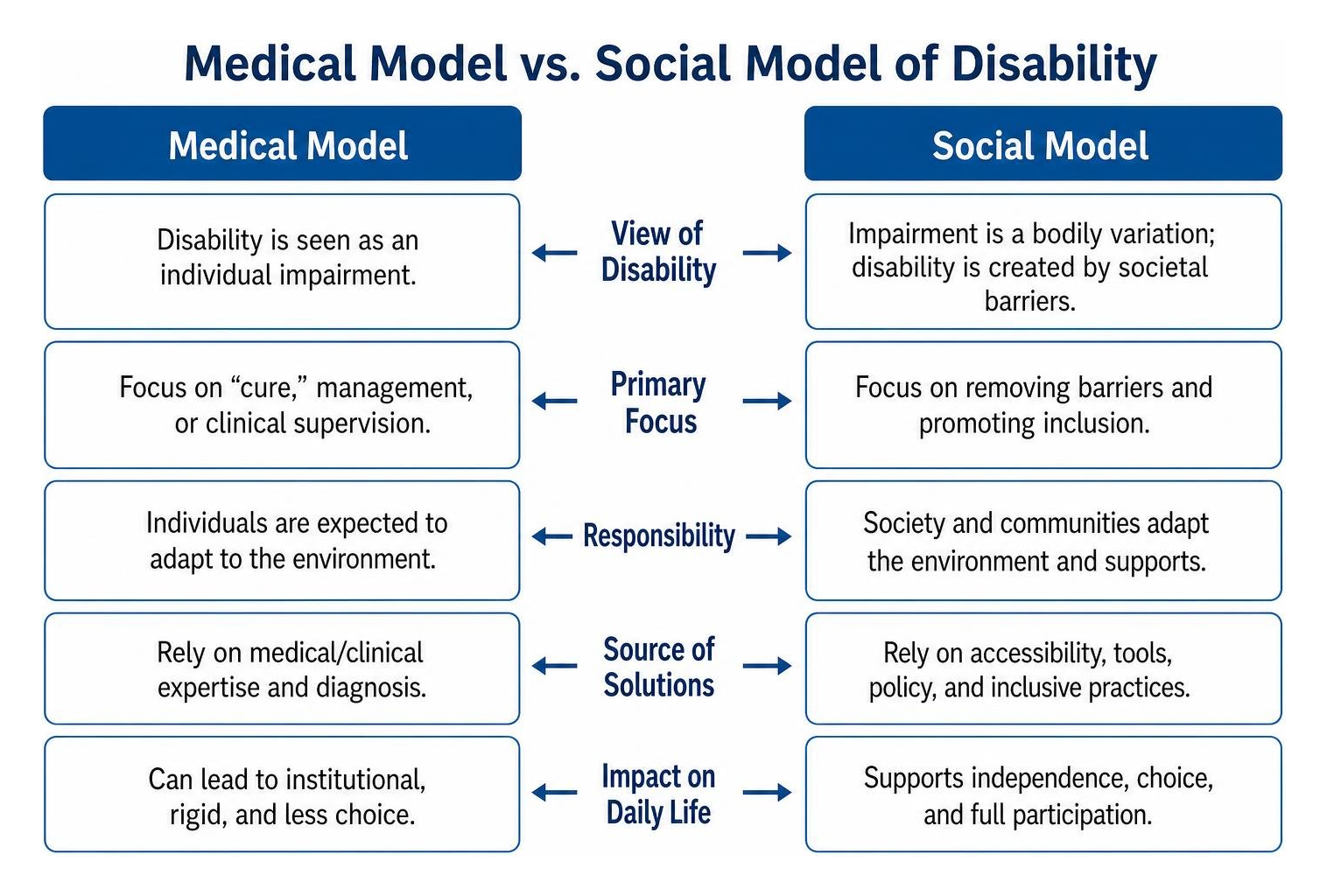
As outlined by the United Nations Convention on the Rights of Persons with Disabilities, services must be provided in the least restrictive environment possible. In our family-run setting, adopting the social model means that rather than asking a resident to adapt to an inflexible environment, we adapt the environment, tools, and daily support to fit the resident.
Person-First vs. Identity-First Language in Care Environments
Language shapes dignity and belonging. In modern disability discourse, two primary linguistic approaches exist:
- Person-First Language (e.g., "person with a disability", "adult with mobility challenges"): Emphasizes the individual's shared humanity before their diagnosis. It gained prominence to counter historical labels that reduced individuals to medical charts.
- Identity-First Language (e.g., "disabled person", "autistic adult", "Deaf resident"): Embraced by many neurodivergent self-advocates, Deaf communities, and disability rights activists. This framing recognizes disability as an intrinsic cultural identity and a source of pride, reflecting how societal barriers create the disabling condition.
In high-quality care environments, there is no universal mandate; we listen and adopt whichever language each resident prefers.
It is equally important to avoid confusing everyday technical jargon with human identity. For example, in software development, a "disabled" control refers to a frozen, non-interactive interface element. In residential care, disabled adults are active, autonomous leaders of their own lives. Language in our community reflects agency, respect, and mutual partnership.
Evaluating Universal Design in Assisted Living for Disabled Adults
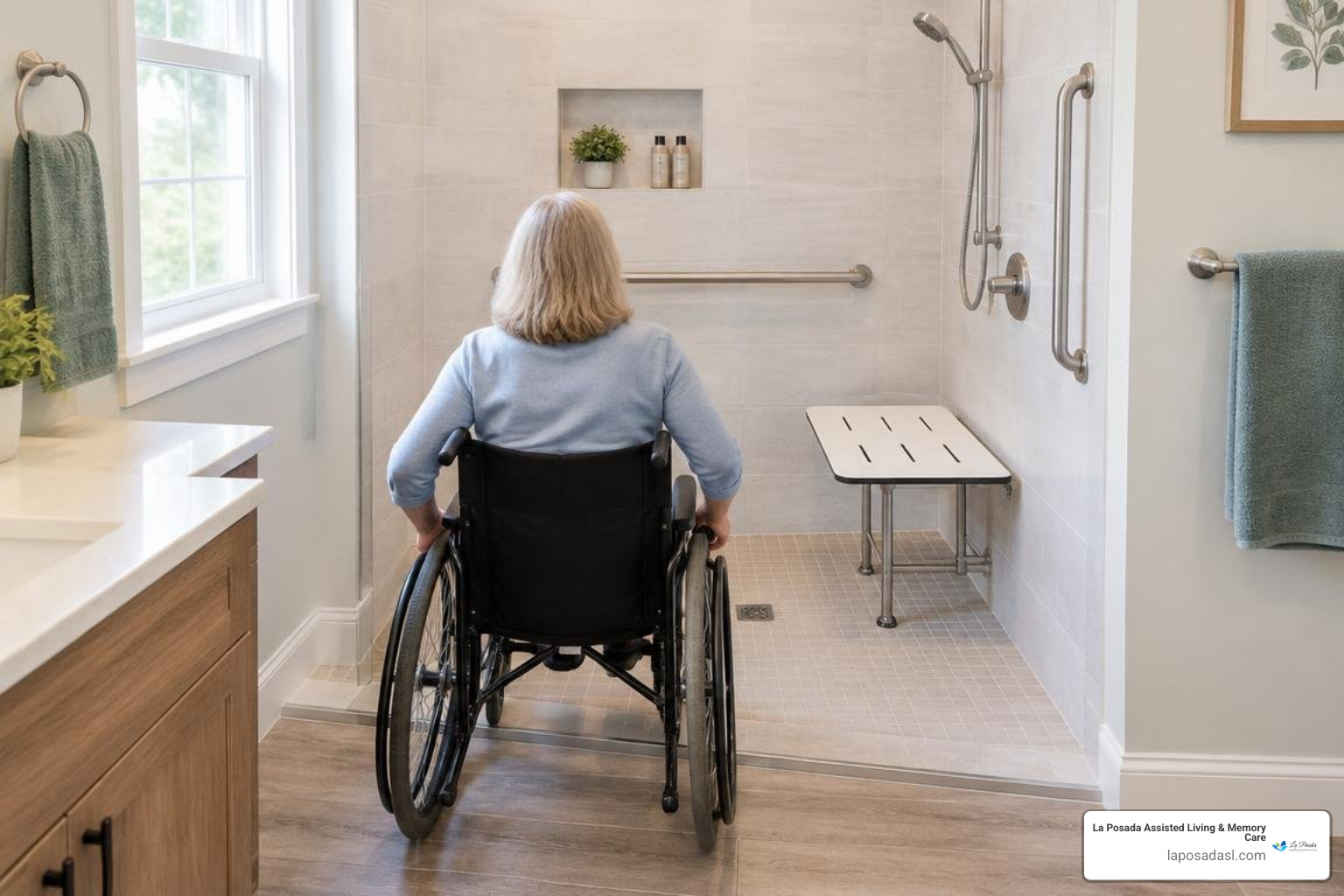
A truly accessible community relies on universal design—the practice of designing spaces to be usable by all people without the need for specialized retrofitting. As the Administration for Community Living housing guide notes, exploring housing that combines supportive services with intentional structural design ensures residents can age in place gracefully.
Key universal design features to look for during a tour include:
- Zero-Threshold Entries & Wide Doorways: Flush transitions between hallways, patios, and bedrooms eliminate tripping hazards and allow smooth navigation for wheelchairs, walkers, and scooters.
- Low-Gloss, Non-Slip Flooring: Glare-free flooring helps residents with low vision or depth-perception challenges walk with confidence.
- Tactile and Visual Wayfinding: Clear, large-print signs paired with Braille and high-contrast color schemes on walls and doorframes simplify navigation for sensory-impaired residents.
- Multi-Sensory Emergency Systems: Fire alarms and doorbells equipped with synchronized flashing strobe lights and auditory alerts protect both Deaf and hearing residents.
- Roll-In Bathrooms: Barrier-free showers equipped with adjustable handheld showerheads, sturdy grab bars, and accessible sinks preserve dignity and personal autonomy.
Essential Accommodations and Services for Autonomy
Assisted care should act as a springboard for independence, not a replacement for it. The core goal of individualized service plans is to offer subtle assistance with activities of daily living (ADLs)—such as bathing, dressing, medication management, and grooming—while preserving self-determination.
Many state-supported initiatives, such as Texas Health and Human Services long-term care programs, emphasize community-based alternatives that combine personal care with access to assistive technology.
Critical supports include:
- Assistive Technology and Environmental Controls: Voice-activated lighting, adaptive smart thermostats, motion-sensor faucets, and motorized window coverings allow individuals with limited manual dexterity or mobility to control their own living spaces.
- Adaptive Dining and Nutrition: Meal plans tailored to physical needs (such as easy-grip utensils, textured diets, and dysphasia-safe preparations) served in relaxed, social dining rooms.
- Accessible Medical and Social Transportation: Dedicated wheelchair-accessible shuttles ensure residents can attend outside medical appointments, volunteer, shop, and participate in local neighborhood life.
- 24-Hour Compassionate Care: Around-the-clock staffing ensures that unexpected needs—like nighttime transfers or sudden health changes—are met without delay.
Specialized Support for Sensory and Cognitive Impairments
Sensory and cognitive impairments require intentional, specialized programming. As outlined in AARP long-term care guidance, families navigating sensory impairments should verify that care teams are trained in adaptive communication strategies.
- Vision Rehabilitation & Low-Vision Supports: Staff trained to verbally describe meal plates using the "clock method," provide audiobooks and large-print materials, and maintain consistent room layouts to prevent disorientation.
- Deaf Culture and Interpreter Access: Reliable access to qualified American Sign Language (ASL) interpreters for healthcare consultations, closed-captioned media, and staff educated in basic sign language.
- Aphasia and Speech-Language Therapy: Communication boards, digital speech-generating devices, and patience-centered care techniques help residents recovering from strokes or neurological conditions express their desires without frustration.
Fostering Community, Peer Support, and Inclusive Culture
True wellbeing goes far beyond physical accommodations; it requires genuine social connection. Disabled adults frequently face systemic isolation, especially when their peer groups shrink or their physical environments limit spontaneous socializing.

Inclusive assisted living communities actively nurture disability culture and peer solidarity. This involves celebrating authentic representation—acknowledging the intersection of disability with race, gender, and socioeconomic background. Initiatives like the #DisabledAndHere movement highlight how BIPOC disabled adults are often underrepresented in traditional eldercare settings.
At La Posada, our holistic approach addresses body, mind, and spirit. By hosting shared creative arts programs, adaptive movement classes, gardening, and open resident councils, we create a lively, family-focused environment where every voice shapes the rhythm of our home.
Planning for Assisted Living and Financial Options
Moving into an assisted living community requires thoughtful financial planning. According to the World Health Organization's World Report on Disability, working-age disabled adults face a poverty rate nearly 2.5 times higher than non-disabled peers, and roughly half of all disabled individuals struggle with healthcare costs compared to one-third of non-disabled adults. Understanding funding mechanisms helps families secure quality care while protecting their finances.
Funding and Affordability of Assisted Living for Disabled Adults
Navigating the financial landscape involves combining private resources with public safety nets:
- Social Security Disability Insurance (SSDI) & Supplemental Security Income (SSI): Monthly cash benefits help offset room-and-board costs in residential settings.
- Medicaid Home and Community-Based Services (HCBS) Waivers: While standard Medicaid generally covers skilled nursing facilities, many states offer specialized HCBS waiver programs that help pay for personal care and supportive services within assisted living communities.
- Long-Term Care Insurance: Policies with assisted living riders can cover substantial daily care costs once benefit triggers (such as needing assistance with two or more ADLs) are certified by a physician.
- Veterans Benefits (VA Aid & Attendance): Eligible disabled veterans and surviving spouses can receive supplemental monthly pension benefits to cover the cost of daily personal care and medical transportation.
Overcoming Barriers to Quality Residential Support
Families searching for residential communities often encounter physical, attitudinal, and administrative hurdles:
- Attitudinal Barriers: Outdated assumptions that disabled adults cannot make their own lifestyle or medical decisions. High-performing communities overcome this through ongoing staff sensitivity training that emphasizes resident autonomy.
- Physical Inconsistencies: Facilities that meet basic building codes but lack practical functional accessibility (e.g., heavy manual doors, narrow activity spaces, or high dining tables).
- Advocacy and Oversight: State ombudsman programs provide independent oversight, investigating resident concerns and guaranteeing that licensing standards and individual rights are upheld across every tier of care.
Frequently Asked Questions about Assisted Care for Disabled Adults
Can residents maintain employment and SSDI benefits while in assisted living?
Yes. Residents receiving SSDI can explore part-time employment, remote consulting, or volunteer opportunities through the Social Security Administration's Ticket to Work program and Trial Work Periods. Earnings must be reported to avoid benefit interruptions, but residing in an assisted living community does not disqualify an individual from working or building professional connections.
What legal protections ensure physical and communication accessibility in residential facilities?
Federal protections under the Americans with Disabilities Act (ADA) and the Fair Housing Act mandate that residential care providers furnish reasonable accommodations and structural modifications. Facilities are legally required to provide equal access to common areas, permit service animals, and deliver effective communication aids—such as auxiliary listening systems or translated documents—for all residents.
Conclusion
Every adult deserves a supportive living environment that honors their past, supports their present, and encourages their future. By focusing on universal design, the social model of disability, and individualized care plans, assisted communities can provide the safety families need while protecting the freedom residents cherish.
At La Posada Assisted Living & Memory Care, our family-owned community in Whittier, California, is dedicated to compassionate, 24-hour care that nurtures the body, mind, and spirit. We invite you to schedule a tour, meet our dedicated team, and discover how our community can support your family's journey toward lasting comfort and independence.