

Why Assisted Living Prices Change With Care Needs
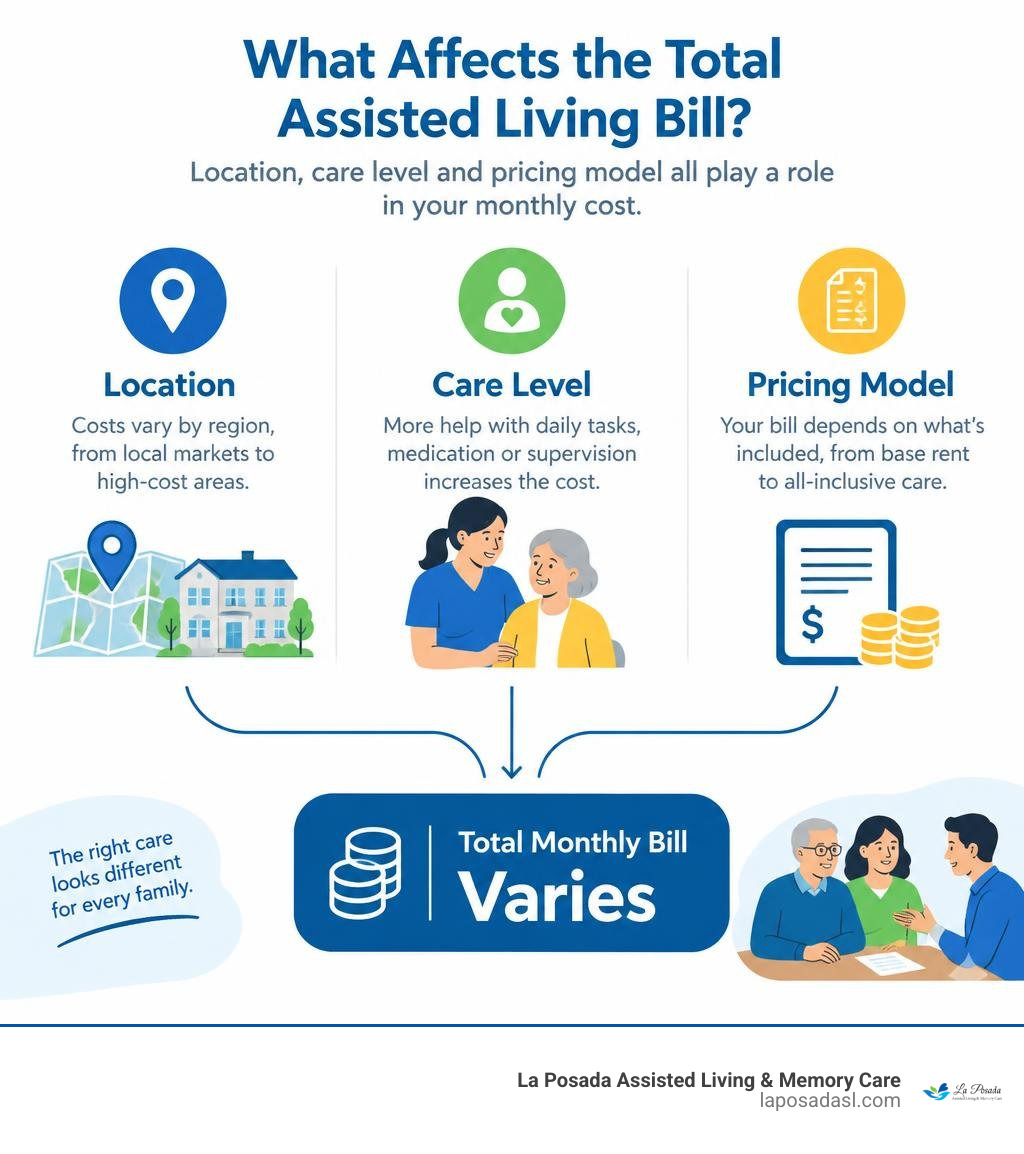
Assisted living prices depend on more than the apartment. The 2025 national median was $6,200 per month, or $74,400 per year, according to CareScout's cost survey. A family's actual bill can be higher or lower based on location, the help a resident needs, and what the community includes in its monthly fee.
For a parent who needs help with medication, daily tasks, or supervision, ask for a quote that includes the full care plan, not just base rent. Also ask how the bill would change if their needs grow.
What Do Assisted Living Prices Cost Nationally and Locally?
Understanding the broad benchmarks helps families set realistic expectations. According to the 2025 long-term care cost survey, the national median cost of assisted living reached $6,200 per month ($74,400 annually) in 2025—a 5% increase from $5,900 per month in 2024. Alternate data aggregations, such as the 50-state median analysis reported by ElderCareCosts, place the national median at approximately $6,230 per month, with the 25th percentile around $5,488 and the 75th percentile reaching $7,083 per month.
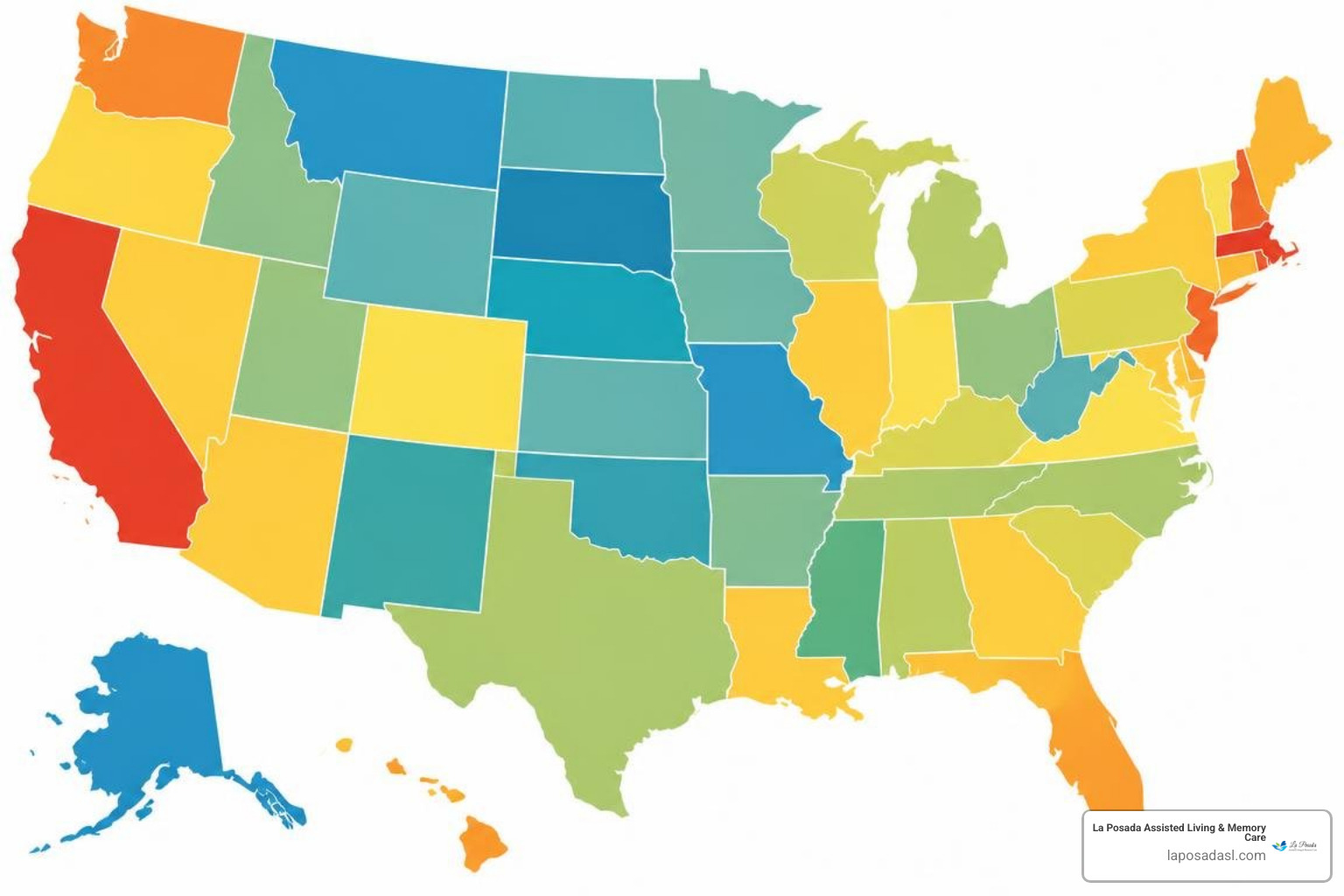
Geography plays a significant role in baseline pricing. State medians in 2025 ranged from an affordable $4,369 per month in Mississippi to $12,096 per month in Hawaii. California averaged around $7,000 per month ($84,000 per year). Local city-to-city variations can be even sharper:
| Location | Monthly Median / Range | Annual Equivalent |
|---|---|---|
| National Median | $6,200 – $6,230 | $74,400 – $74,760 |
| Mississippi (Lowest State) | $4,369 | $52,425 |
| Hawaii (Highest State) | $12,096 | $145,155 |
| California (Statewide Median) | $7,000 | $84,000 |
| Sarasota, FL | $3,925 (Range: $3,135–$6,250) | $47,100 |
| Denver, CO (2-Bedroom Range) | $4,000 – $12,800 | $48,000 – $153,600 |
| San Francisco, CA | $7,895 (Range: $4,065–$12,500) | $94,740 |
As shown above, the median cost in San Francisco is nearly $3,970 per month higher than in Sarasota. Even within a single metropolitan area like Denver, prices for similar layouts can vary by over 300%. A headline average is merely a reference point; a provider's individual quote reflects specific local real estate values, staffing ratios, and overhead.
How much do assisted living prices vary by state and city?
When reviewing city-by-city assisted living price data, differences become clear across regional markets. In California—where communities are officially licensed as Residential Care Facilities for the Elderly (RCFEs)—metro medians span a wide range:
- Riverside, CA: $4,830 / month
- Sacramento, CA: $5,375 / month
- San Diego, CA: $6,095 / month
- Los Angeles Metro (including Whittier, CA): $6,450 / month
- San Jose, CA: $7,845 / month
- San Francisco, CA: $7,895 / month
These variations reflect local living costs, labor regulations, real estate expenses, and property taxes. Published rate sheets from licensed providers show that actual out-of-pocket costs depend heavily on the specific community setting and the personalized care plan required.
How Care Level Changes Assisted Living Prices
Base rent typically covers the physical apartment, basic utilities, community amenities, and standard meals. However, care needs dictate the final monthly invoice.

Before move-in, a comprehensive wellness assessment evaluates a senior's ability to perform Activities of Daily Living (ADLs). The resulting care level directly impacts the staffing hours allocated to that resident:
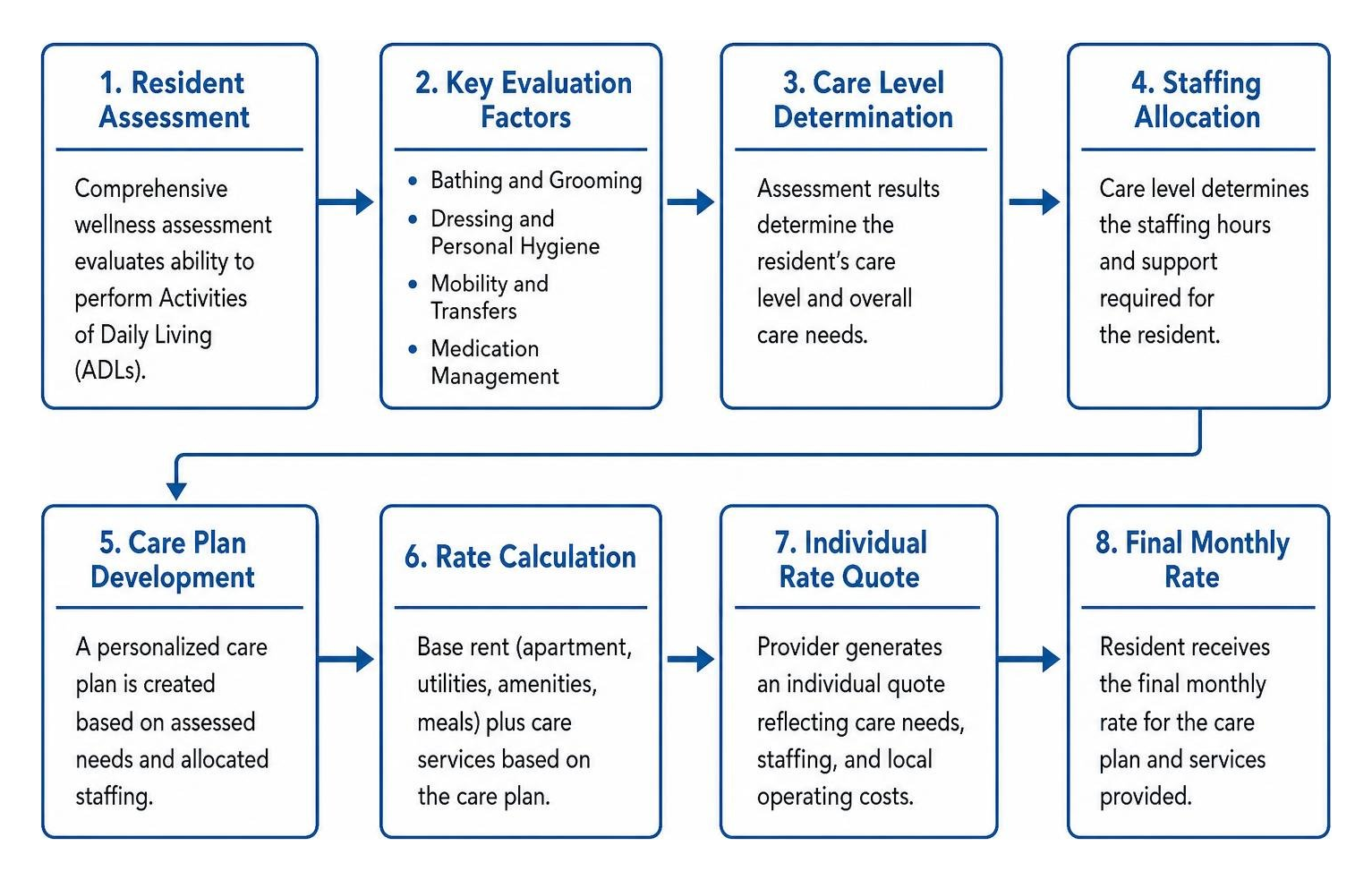
Key evaluation factors include:
- Bathing and Grooming: Whether a resident requires stand-by supervision, setup, or full physical assistance.
- Dressing and Personal Hygiene: Daily support with clothing, grooming, and personal hygiene routines.
- Mobility and Transfers: Assistance moving from bed to wheelchair or escorting to the dining room.
- Medication Management: Administering prescriptions on schedule, tracking refills, and diabetic monitoring.
- Incontinence Management: Routine scheduled assistance, hygiene care, and supply tracking.
How do assisted living prices change with a resident’s care needs?
As care needs evolve, the cost of staffing increases. When a resident transitions from minimal support to needing multi-person transfers or frequent hands-on attention, their care tier adjusts accordingly.
For example, minor medication adjustments can shift billing tiers. In itemized or point-based systems, adding a single afternoon dose or moving past a specific threshold (such as six daily pills) can add $100 or more per month to medication administration charges. Regular reassessments ensure staff can safely meet resident needs, but families should ask how these adjustments are determined and how much advance notice is provided before rates change.
What is the price difference between assisted living and memory care?
Memory care requires secured environments, specialized cognitive programming, lower staff-to-resident ratios, and higher security to prevent wandering. Consequently, memory care carries a premium over traditional assisted living:
- Regional Benchmarks: In the Northeast, traditional assisted living ranges from $7,000 to $10,500 monthly, while specialized memory care ranges from $8,000 to $14,000 monthly.
- Metro Premiums: Across major metro areas, memory care adds between $645 and $3,900 per month compared to standard assisted living in the same building (averaging roughly $2,547 higher per month in the Los Angeles metro area).
- Short-Term Stays: Respite care (short-term stays designed for recovery or family caregiver relief) is generally charged on a per-diem basis that bundles furnished accommodations, meals, and designated care levels.
What Is Included in the Monthly Fee—and What Costs Extra?
Understanding what is covered in your agreement helps prevent unexpected fees:
Typically Included in the Base Fee:
- Private or companion apartment suite
- Daily meal service (typically two to three meals per day)
- Utilities (water, electric, heating, trash removal)
- Weekly housekeeping and linen laundry service
- Scheduled group transportation for shopping and medical visits
- 24-hour emergency response and on-site staff supervision
- Daily wellness, social, cultural, and recreational activities
Often Charged as Add-Ons or Ancillary Fees:
- Advanced medication management and diabetic care
- Incontinence supplies and personal hygiene products
- Premium cable television, private high-speed internet, and landline telephone
- Personal laundry services
- On-site beauty salon, barbershop, and spa treatments
- Specialized guest meals or private dining room reservations
- Dedicated one-on-one medical escorts
Most communities also outline annual cost-of-living adjustments, which historically average between 4% and 5% annually to keep pace with staffing and operational costs.
Which assisted living pricing models affect the final bill?
Communities use various billing models. Understanding the differences is essential for long-term budget planning:
| Pricing Model | How It Works | Budget Predictability | Best Suited For |
|---|---|---|---|
| All-Inclusive | Single flat fee covering housing, meals, amenities, and standard care hours. | High: Predictable monthly expenses with few add-ons. | Residents who prefer bundled simplicity and predictable budgeting. |
| Personalized Care Packages | Base monthly rent covers room and board; care tiers are customized based on initial and ongoing assessments. | High to Moderate: Stable within designated care tiers; changes only upon reassessment. | Residents who want transparent pricing aligned with their actual support needs. |
| Tiered / Minute-Based | Base rent covers shelter; care is billed across multiple granular tiers or tracked by staff time. | Moderate to Low: Monthly fluctuations occur if staff time increases. | Seniors with stable, well-defined daily routines. |
| À la Carte / Itemized | Base rent covers basic room/board; each service (e.g., medication passes, shower assistance) is billed separately. | Low: Bills vary month-to-month based on service utilization. | Highly independent residents requiring minimal, intermittent assistance. |
What upfront fees should families expect?
When moving into an assisted living community, families should plan for standard initial fees:
- Community / Move-In Fee: Typically ranging from one-half to two months' base rent, this one-time fee covers the initial health assessment, personalized care plan development, apartment turnover, and move-in coordination.
- Deposit / First Month's Rent: Standard advance rent and security deposits to reserve the apartment.
How Can Families Pay for Assisted Living?
Because assisted living involves both housing and personal care, families often draw from several funding sources to manage expenses.
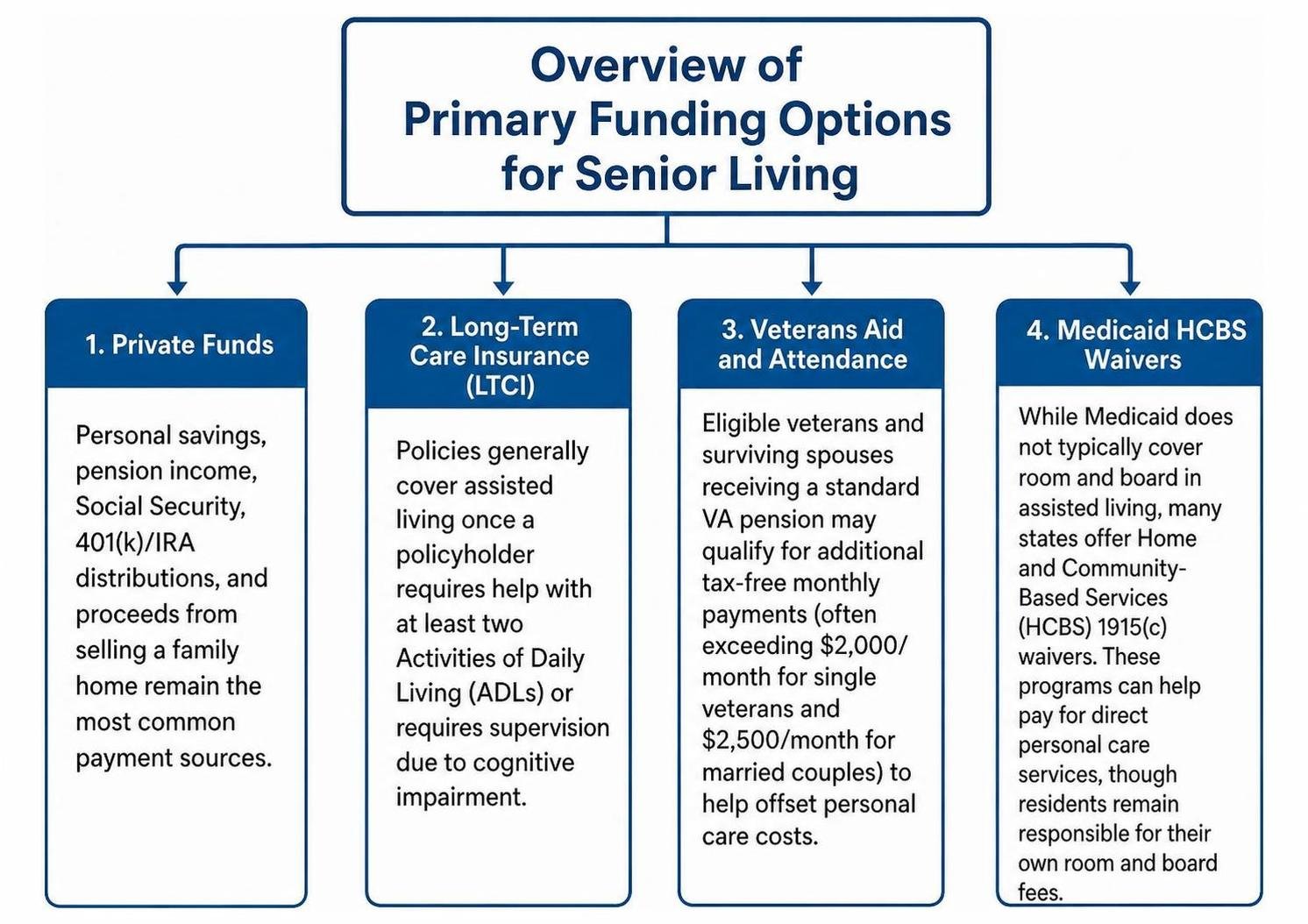
What are common ways to pay for assisted living?
- Private Funds: Personal savings, pension income, Social Security, 401(k)/IRA distributions, and proceeds from selling a family home remain the most common payment sources.
- Long-Term Care Insurance (LTCI): Policies generally cover assisted living once a policyholder requires help with at least two Activities of Daily Living (ADLs) or requires supervision due to cognitive impairment.
- Veterans Aid and Attendance: Eligible veterans and surviving spouses receiving a standard VA pension may qualify for additional tax-free monthly payments (often exceeding $2,000/month for single veterans and $2,500/month for married couples) to help offset personal care costs.
- Medicaid HCBS Waivers: While Medicaid does not typically cover room and board in assisted living, many states offer Home and Community-Based Services (HCBS) 1915(c) waivers. These programs can help pay for direct personal care services, though residents remain responsible for their own room and board fees.
- Life Insurance Conversions: Certain policies allow accelerated death benefits or life settlements to access policy value for long-term care needs.
- Medical Tax Deductions: A portion of assisted living costs—specifically the unreimbursed medical and personal care services provided under a physician-directed plan of care for a chronically ill individual—may be tax-deductible when itemized medical expenses exceed 7.5% of Adjusted Gross Income (AGI).
Does Medicare cover assisted living?
No, Medicare does not pay for assisted living. Medicare is designed for short-term acute care, physician visits, and hospitalizations. It does not cover custodial care (help with bathing, dressing, or daily living) when that is the only support needed.
Medicare coverage is generally limited to short-term medical services after qualifying hospital care. For unbiased guidance on health insurance questions, seniors can access free counseling through their local State Health Insurance Assistance Program (SHIP) or consult resources like U.S. News on assisted living costs and MedicareLens.
Frequently Asked Questions About Assisted Living Prices
What does assisted living cost for a couple?
When couples move into a community together, they typically pay the base apartment rate plus a second-person monthly fee (usually covering additional dining, utilities, and housekeeping). Each individual is then assessed separately for personal care services. This approach is substantially more affordable than renting two separate apartments, which would total approximately $12,400 per month at the national median.
Can assisted living fees increase after move-in?
Yes. Monthly costs can adjust in two primary ways:
- Annual Cost-of-Living Adjustments: Standard base rent adjustments outlined in the residency agreement, typically averaging 4% to 5% per year.
- Care Reassessments: If a resident experiences a change in physical health or cognitive function requiring additional hands-on care, an updated assessment will adjust the care tier accordingly.
What should families ask before signing an assisted living contract?
Before signing an agreement, request clear written terms regarding:
- Exactly which services are included in the base rate versus charged separately.
- How often care assessments occur, who conducts them, and what triggers an increase in care fees.
- The community's average annual fee increases over the past three years.
- State licensing credentials and recent state inspection surveys.
- Move-out notice requirements and deposit refund policies.
Conclusion
Understanding senior living costs involves looking beyond the headline base rent to examine total care fees, pricing models, and potential long-term care needs. By requesting itemized fee schedules and understanding how care-level changes affect monthly rates, families can make informed, confident decisions for their loved ones.
At La Posada Assisted Living & Memory Care in Whittier, CA, our family-owned, community-focused setting emphasizes individualized care, transparent pricing, and holistic wellness for the body, mind, and spirit. Explore our dedicated assisted living options or schedule a visit to learn how our personalized care plans support your family's needs.