

What Assisted Living Services Include
Assisted living services give older adults a place to live with help for daily tasks. Support often includes meals, bathing and dressing, medication help, housekeeping, and social activities. Staff are available day and night, and care needs can change over time.
If your parent needs frequent help, a safer daily routine, or more chances to connect with others, assisted living may be worth exploring. Start by listing the help they need, then ask each community which services are included, which cost extra, and how care can change over time.

Navigating long-term care decisions can feel overwhelming. Across the nation, roughly 10,000 Baby Boomers turn 65 every single day through 2030, and studies show that 7 out of 10 people will require some form of long-term care during their lifetime. We know that preserving personal independence is a top priority for aging adults. Assisted living strikes the ideal balance: offering just the right amount of daily assistance while honoring each resident's dignity, privacy, and personal lifestyle.
Understanding Assisted Living Services and Support
Assisted living is a residential housing option designed for older adults who want an active, independent lifestyle but need extra help with day-to-day personal care. In many states, these environments are officially referred to as residential care facilities, adult care homes, or board and care homes.
Unlike medical institutions, assisted living communities focus primarily on custodial care—helping residents manage activities of daily living (ADLs) such as dressing, personal hygiene, and meal routines—rather than high-intensity clinical interventions.
Assisted Living Support and Care Needs
To determine whether residential assisted living is the right fit, it helps to understand how different senior care settings match varying medical and daily living needs:
| Setting Type | Primary Purpose | Daily Assistance (ADLs) | Clinical Care | Living Environment |
|---|---|---|---|---|
| Assisted Living | Supportive residential care and personal assistance | Moderate to extensive support (bathing, grooming, meals) | Non-medical oversight, wellness monitoring, medication administration | Private or semi-private suites with communal spaces |
| Memory Care | Specialized support for cognitive impairments | Comprehensive assistance with daily routines | Specialized behavioral and cognitive supervision | Secure environments with structured sensory routines |
As noted by Assisted Living: MedlinePlus, residential care fills the vital space between living on one's own and moving into a higher-acuity care setting. It provides a community setting where safety and personal support coexist with self-direction and autonomy.
Comprehensive Assisted Living Services and Daily Support

One of the greatest advantages of assisted living is the flexible, unscheduled nature of care. Residents in assisted living have access to on-site teams ready to assist when unexpected needs arise.
Core Assisted Living Services for Daily Living
As highlighted in the What Is Assisted Living? A Complete 2026 Guide | U.S. News, core support services ensure that residents remain safe and nourished while shedding the burden of household chores. Typical daily services include:
- Assistance with Activities of Daily Living (ADLs): Discreet, respectful support with bathing, dressing, grooming, mobility, and personal hygiene.
- Nutritious Dining Programs: Up to three chef-prepared, balanced meals served daily in restaurant-style dining rooms, accommodating specialized dietary preferences and nutritional needs.
- Medication Management: Routine medication reminders, organization, and administration supervised by trained staff.
- Housekeeping and Laundry: Regular linen service, personal laundry, and room cleaning to maintain a pristine, hassle-free living environment.
- Scheduled Transportation: Coordinated rides for medical appointments, shopping excursions, and community outings, eliminating the stress and risks of driving.
Specialized Programming and Memory Support
Beyond everyday physical assistance, modern communities prioritize overall wellness. Enrichment activities, fitness classes, and social events stimulate cognitive vitality and encourage lasting friendships. For seniors showing early signs of memory loss or cognitive decline, tailored programming provides predictable routines and sensory engagement to maintain function and joy.
Determining Care Levels and Candidate Readiness
Recognizing when it is time to transition to assisted living requires an honest look at physical, cognitive, and emotional wellbeing. When family caregiving capacity is stretched thin or safety concerns grow, moving to a supportive environment can significantly improve a senior's quality of life.
Standard Levels of Care: Level 1, Level 2, and Level 3
Many communities use tiered care structures to tailor support directly to individual needs:
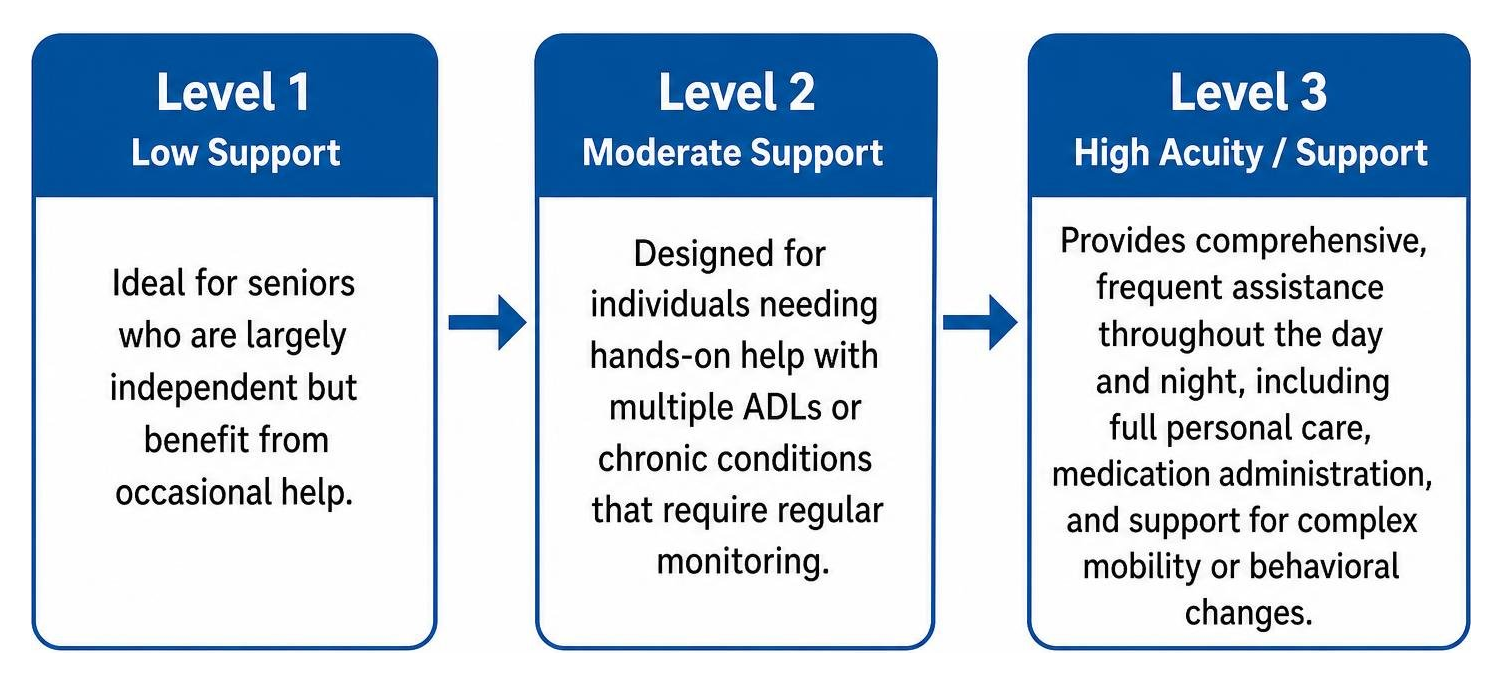
- Level 1 (Low Support): Ideal for seniors who are largely independent but benefit from occasional help, such as medication reminders, meal preparation, housekeeping, or scheduled transport to doctor visits.
- Level 2 (Moderate Support): Designed for individuals needing hands-on help with multiple ADLs, such as transferring, dressing, or managing chronic conditions that require regular monitoring.
- Level 3 (High Acuity / Support): Provides comprehensive, frequent assistance throughout the day and night, including full personal care, medication administration, and support for complex mobility or behavioral changes.
Key Signs It Is Time for Residential Support
Look for these key indicators when evaluating candidate readiness:
- Frequent Falls or Near-Misses: Balance issues, unsteadiness, or a history of falls at home.
- Medication Mistakes: Missed doses, incorrect pill counts, or expired prescriptions piling up.
- Nutritional Decline and Weight Loss: Spoiled food in the refrigerator, skipped meals, or difficulty cooking safely.
- Social Isolation: Withdrawing from hobbies, staying homebound, or feeling lonely and disconnected.
- Caregiver Exhaustion: Family members experiencing physical or emotional burnout while managing complex care routines.
How to Choose the Right Community and Tour Effectively

Communities vary significantly in size and atmosphere, ranging from boutique residential homes with 10 to 25 residents to large campuses serving 100 or more older adults. When touring prospective communities, pay close attention to the warmth of the environment, staff interactions, and overall safety features.
Essential Tour Checklist and Key Questions to Ask
When scheduling a visit, prepare a list of targeted questions:
- Staffing and Care Ratios: What is the staff-to-resident ratio during the day, evening, and overnight shifts? Are caregivers direct employees or agency contractors?
- Care Plan Customization: How often are individual care plans reviewed and updated?
- Dining and Amenities: Can we sample a meal? How do you accommodate special dietary requests?
- Safety and Emergency Systems: What emergency call systems are installed in bedrooms and bathrooms?
- Fee Structures: What is included in the base rate, and what specific fees apply as care levels increase?
- Community Life: Is there an active resident council, and what social activities are scheduled throughout the month?
Assessing Costs and Payment Options for Assisted Living Services
Planning for senior care requires clear cost benchmarking. According to long-term care industry cost reports, the national median cost for assisted living communities reached $6,200 per month ($74,400 annually) in 2025, up 5% from $5,900 per month in 2024. Typical costs vary by location, room size, and the level of personal support needed.
Pricing structures often separate the physical apartment rent—which varies based on square footage, layout, or kitchenette amenities—from the individualized care tier fees required for daily personal support.
Frequently Asked Questions About Assisted Living
Does Medicare or Medicaid pay for assisted living?
Medicare does not pay for the room and board or custodial care costs associated with assisted living. However, Medicare Part A and Part B may still cover qualifying clinical services received while living in a community.
Medicaid coverage varies widely by state. In many states, Medicaid Home and Community-Based Services (HCBS) waivers can help subsidize personal care services for income-eligible individuals, though room and board fees typically remain an out-of-pocket, private-pay expense. Families frequently finance stays through personal savings, home sale proceeds, or long-term care insurance policies.
What financial assistance is available for veterans?
Eligible U.S. military veterans and their surviving spouses may qualify for the Department of Veterans Affairs (VA) Aid and Attendance benefit, an enhanced pension designed to help cover the costs of daily personal care assistance.
Additionally, the VA operates specialized Geriatric Patient Aligned Care Team (GeriPACT) clinics in approximately two-thirds of VA medical centers to manage complex chronic conditions, and provides access to temporary respite care programs to support family caregivers. While the VA does not generally cover private room and board rent directly, veterans can leverage their VA health benefits for on-site medical care and clinical support.
How do state licensing and disclosure requirements protect residents?
Assisted living communities are licensed and regulated at the state level to ensure resident health, safety, and rights. Many states require providers to furnish a Uniform Disclosure Statement detailing all staffing patterns, fee schedules, care levels, and policies prior to move-in.
Consumers can evaluate facility safety by reviewing state health department registries, checking for notices of formal regulatory actions, and consulting survey reports maintained by regional licensing bodies or local Area Agencies on Aging. Guidance from official health resources, such as the National Institute on Aging overview of residential care, provides valuable frameworks for evaluating residential care standards.
Conclusion
Finding the right long-term care solution is one of the most loving and impactful decisions a family can make. By understanding care tiers, assessing personal support needs, and evaluating community environments with a discerning eye, you can secure a living arrangement that offers safety, companionship, and lasting peace of mind.
At La Posada Assisted Living & Memory Care in Whittier, CA, we are dedicated to providing compassionate, family-run care that nurtures the body, mind, and spirit. If you are exploring supportive care options for yourself or a loved one, we invite you to explore our personalized assisted living programs to discover how our 24-hour support, vibrant social connections, and individualized wellness plans can help your family thrive.