
How to Find the Best Assisted Living Facilities Near You
Start with your parent's needs, not a list of top-rated buildings. Search your city or ZIP code for licensed assisted living communities. Shortlist places that can help with medication, daily tasks, and social activities. Then check inspection records, ask what staff are available overnight, get a written price, and tour your top choices.
A welcoming space matters. But the best fit is a place where your parent can get the right support while keeping as much independence as possible. If they need dementia-specific care or only a short stay, ask about memory care or respite care instead.
Understanding Assisted Living and Senior Care Options
Finding the right care begins with understanding how senior living options differ. While some seniors simply want freedom from household chores, others require hands-on support with activities of daily living (ADLs) such as dressing, bathing, mobility, and medication management.
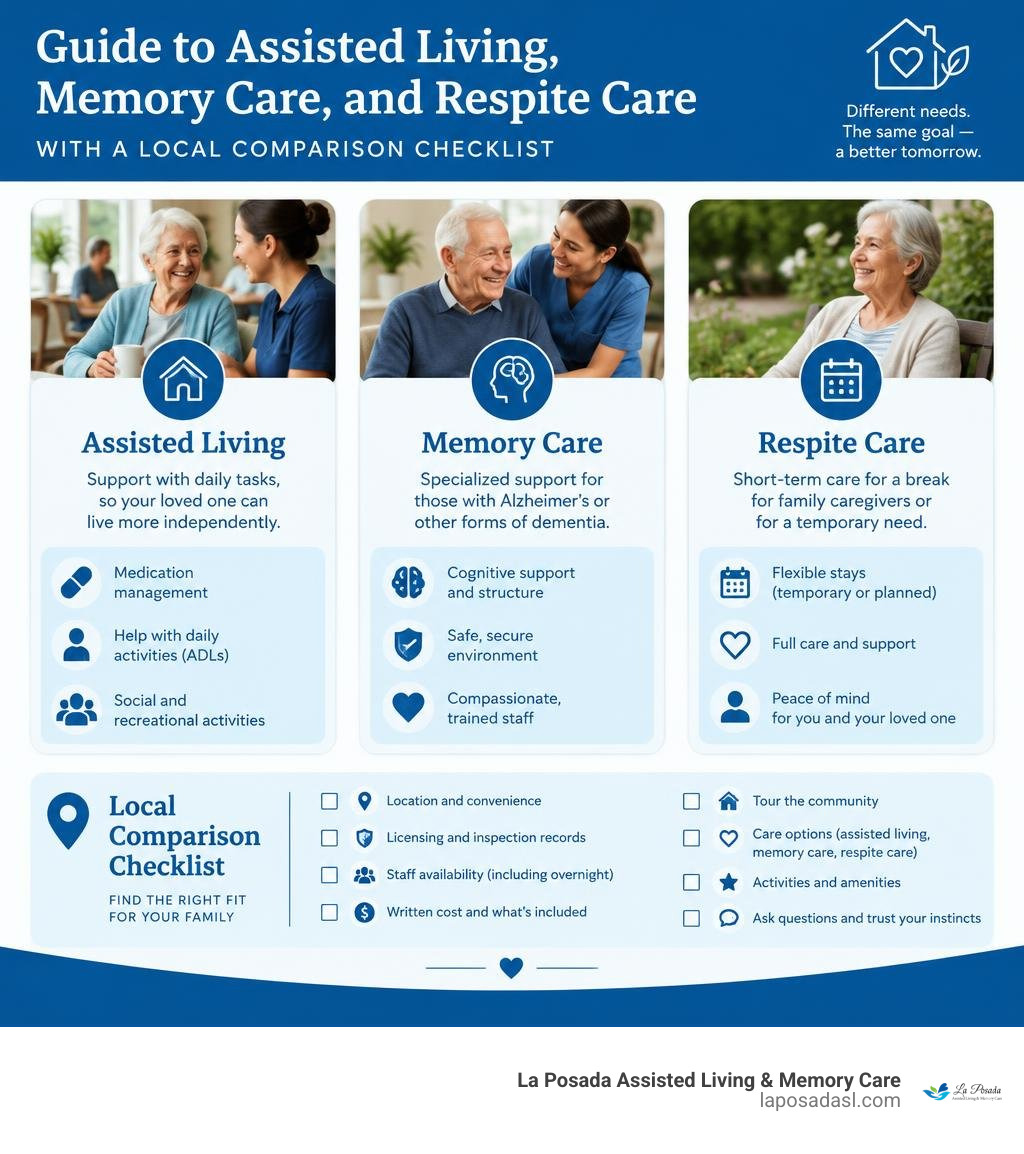
Assisted living offers a residential environment where older adults maintain personal autonomy while receiving customized, around-the-clock help. Memory care provides a more structured setting and programming for individuals experiencing Alzheimer’s disease or other forms of dementia, while respite care provides temporary stays that give family caregivers essential relief. Comparing these three care options can help families focus on the services a community can provide now and the support that may be helpful as needs change.
When exploring resources like Find Senior Living & Assisted Living Near You | MyLivingChoice, which tracks tens of thousands of licensed settings across the country, comparing care models helps clarify which setting matches your family's needs:
| Care Type | Primary Focus | Daily Support | Typical Length of Stay |
|---|---|---|---|
| Assisted Living | Help with ADLs, medication, meals, and social connection | Personalized daily support available 24/7 | Long-term |
| Memory Care | Dementia-specific security, cueing, and structured routine | Specialized cognitive and behavioral support | Long-term |
| Respite Care | Short-term support for caregivers and older adults | Care matched to the guest's needs | Short-term (days to weeks) |
At its heart, quality assisted living preserves independence. Rather than taking over tasks, caregivers encourage residents to do as much as they comfortably can, stepping in only where needed to ensure safety and comfort.
Families can also ask how the community will personalize support around familiar routines, preferred activities, meals, medication reminders, and communication with loved ones. A clear care plan should explain the help available during the day and overnight, how staff respond when needs change, and how families are kept informed. For a person living with memory loss, it is especially helpful to ask how the community supports comfort, connection, and a predictable daily routine. For a short-term stay, ask what respite care includes and how the team will help the guest settle in. These conversations make it easier to compare communities based on the practical support that matters most to the individual. They also help families identify questions to revisit after the tour and before signing a residency agreement.
Key Factors That Define the Best Assisted Living Facilities Near Me
When searching for the best assisted living facilities near me, it quickly becomes clear that glossy brochures and marble entryways do not determine the quality of care. What truly sets an exceptional community apart is its culture, staffing, and commitment to the whole person.

1. Robust Staffing and 24-Hour Attentive Care
The strength of any senior community lies in its caregiving team. Look for communities with favorable staff-to-resident ratios, low employee turnover, and continuous training. A community with dedicated caregivers available 24 hours a day ensures that assistance is always available for nighttime mobility, unexpected health changes, or personal reassurance.
2. Tailored, Holistic Care Plans
No two residents have identical daily routines. Leading providers craft personalized care plans that address physical, mental, and emotional wellness. These plans should be updated regularly as individual needs evolve.
3. Scratch-Made, Nutrient-Dense Dining
Nutrition directly influences vitality, cognitive health, and energy. Exceptional communities provide fresh, chef-prepared meals accommodating various dietary requirements—from heart-healthy to diabetic-friendly options. Communal dining rooms also serve as vibrant social hubs that prevent isolation and encourage daily connection.
4. Meaningful Social and Recreational Programming
True wellness extends beyond clinical support. Top-tier providers offer rich activity calendars featuring fitness classes, arts and crafts, guest speakers, gardening, and local outings. These events foster a sense of belonging and cognitive engagement.
National resources such as the guide to Find Top-Rated Assisted Living Communities Near You | US News highlight that resident and family satisfaction frequently hinges on these core pillars: staff warmth, quality dining, and active social calendars.
Assisted Living Costs and Financial Planning in 2026
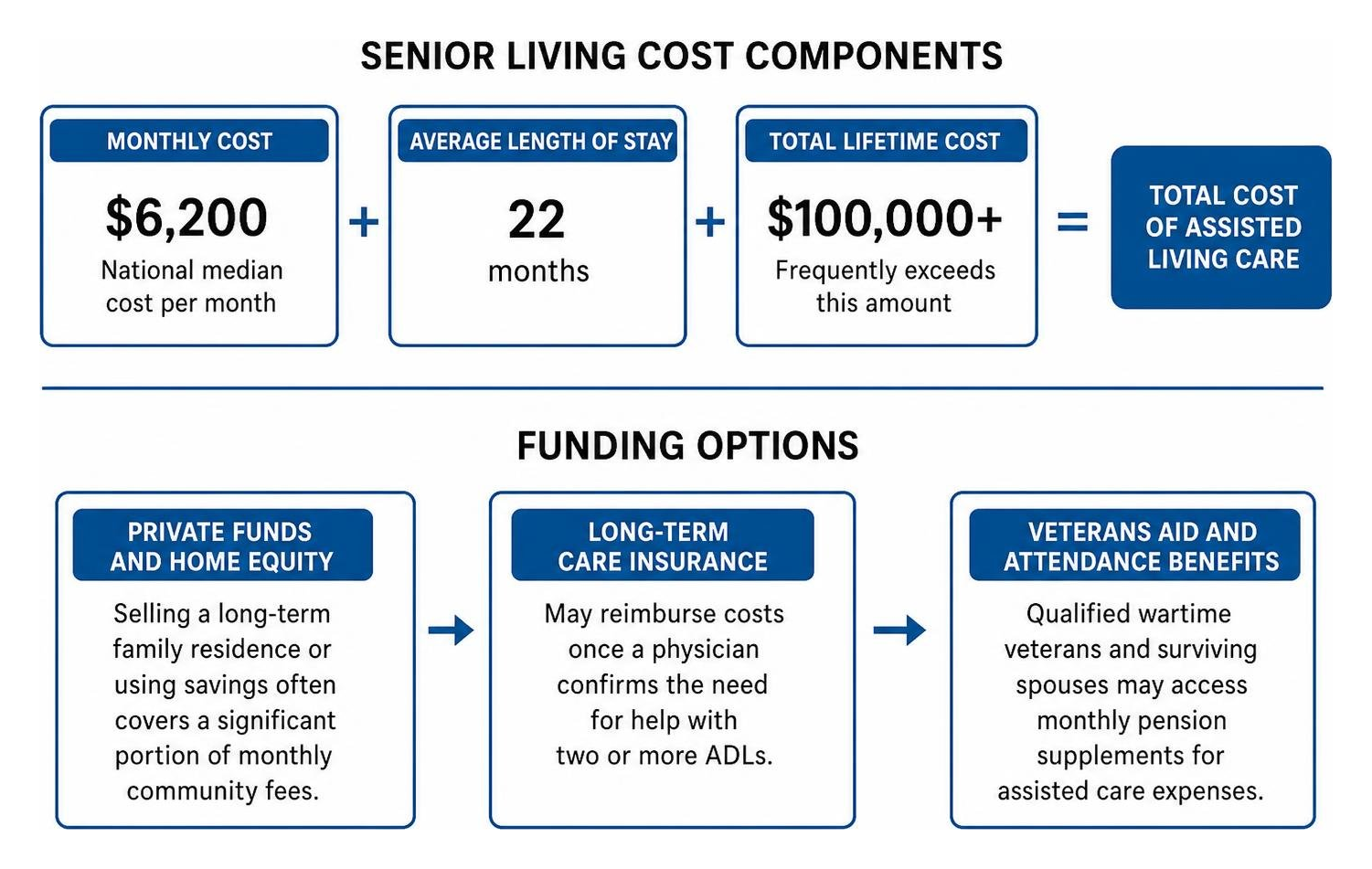
Budgeting for senior living requires looking closely at base rates and care tiers. In 2026, the national median cost of assisted living is approximately $6,200 per month, according to industry cost surveys. With an average stay spanning 22 months, total lifetime costs frequently exceed $100,000.
To finance this care effectively, families often combine several funding mechanisms:
- Private Funds and Home Equity: Selling a long-term family residence or utilizing savings often covers a significant portion of monthly community fees.
- Long-Term Care Insurance: Depending on policy terms, long-term care insurance can reimburse costs once a physician confirms that a resident needs help with two or more ADLs.
- Veterans Aid and Attendance Benefits: Qualified wartime veterans and surviving spouses may access monthly pension supplements specifically intended for assisted care expenses.
- Medicaid Home and Community-Based Services (HCBS) Waivers: While standard Medicaid does not pay for room and board in private assisted living, certain state-administered waiver programs help cover personal care services for income-eligible seniors.
How to Evaluate and Select the Ideal Community
A comprehensive evaluation requires looking beyond surface aesthetics to review licensing history, physical safety measures, and overall community atmosphere.
Always check state regulatory portals for inspection reports, citations, and substantiated complaints. When touring in person, examine the physical safety infrastructure:
- Are emergency pull cords or wearable call pendants provided?
- Do hallways feature secure handrails, zero-threshold entryways, and clear lighting to reduce fall risks?
- Is building security maintained with controlled access points and visitor check-in procedures?
How to Search and Compare the Best Assisted Living Facilities Near Me
Narrowing down regional choices involves comparing quantitative review data with community culture. Award rankings like the 2026 Best of Senior Living Awards: All Winners | A Place for Mom recognize providers representing the top 1–2% of senior living communities nationwide based on verified family feedback.
Focus your search within a comfortable proximity radius—ideally within 15 to 30 minutes of close family members—to make frequent visits and involvement as seamless as possible.
Essential Questions to Ask During a Tour
Visiting communities in person allows you to observe how staff interact with residents in real time.

During your tour, ask these direct questions:
- What is your caregiver-to-resident ratio during the day versus overnight?
- How do you calculate fee increases if a resident's care level changes?
- What is your average staff tenure, and how are new caregivers trained?
- How do you communicate health updates or care plan adjustments with families?
- What are your visitor policies and procedures for family participation in events?
Recognizing Key Signs and Navigating a Smooth Move
Knowing when to start your search is essential to avoiding crisis-driven decisions. Look for subtle signs:
- Unopened mail, unwashed laundry, or an empty refrigerator
- Recent falls, unexplained bruises, or balance issues
- Missed medication doses or unmanaged chronic conditions
- Noticeable weight loss, withdrawn behavior, or loneliness
Once you select a community, make the transition smoother by involving your loved one in choosing familiar furniture, decor, and cherished photographs for their new home. Allow time for adjustment, and work closely with community staff to integrate them into social activities at their own pace.
Frequently Asked Questions About Assisted Living
What is the average monthly cost of assisted living in 2026?
The national median cost is around $6,200 per month. Actual rates vary based on location, apartment floor plan (studio vs. one-bedroom), and the level of personalized care required.
Does Medicare pay for assisted living care?
No. Medicare does not cover the room, board, or custodial care services provided in assisted living communities. It only pays for covered medical treatments, doctor visits, hospitalizations, and short-term skilled rehabilitation.
What is the difference between assisted living and memory care?
Assisted living offers support with daily tasks while promoting resident independence in an open community setting. Memory care is housed in a secured neighborhood designed specifically for individuals with cognitive impairments, featuring specialized programming, higher staff ratios, and safety measures that prevent wandering.
Conclusion
Choosing an assisted living community is one of the most meaningful decisions you can make for an aging family member. The right environment protects your loved one's dignity, encourages daily socialization, and provides your family with genuine peace of mind.
At La Posada Assisted Living & Memory Care, we provide a compassionate, family-run atmosphere rooted in personalized, 24-hour care and holistic programs that nurture body, mind, and spirit. We invite you to explore our dedicated assisted living services in Whittier, CA, and discover how our close-knit community can support your family's next chapter.