

How to Find the Best Retirement Homes for Connection and Care
The best retirement homes match a person's care needs while helping them stay connected to others. For an active adult, that may mean a 55+ community with clubs and recreation. For someone who needs help with daily tasks, look for assisted living with a clear care plan. If a parent needs 24-hour support or has dementia, ask about staffing, medication management, memory care, and how residents spend their days.
Start by comparing care, cost, and daily life. Then visit in person: share a meal, watch an activity, and ask how the team gets to know each resident. A busy calendar matters less than whether your parent feels welcome and can take part.
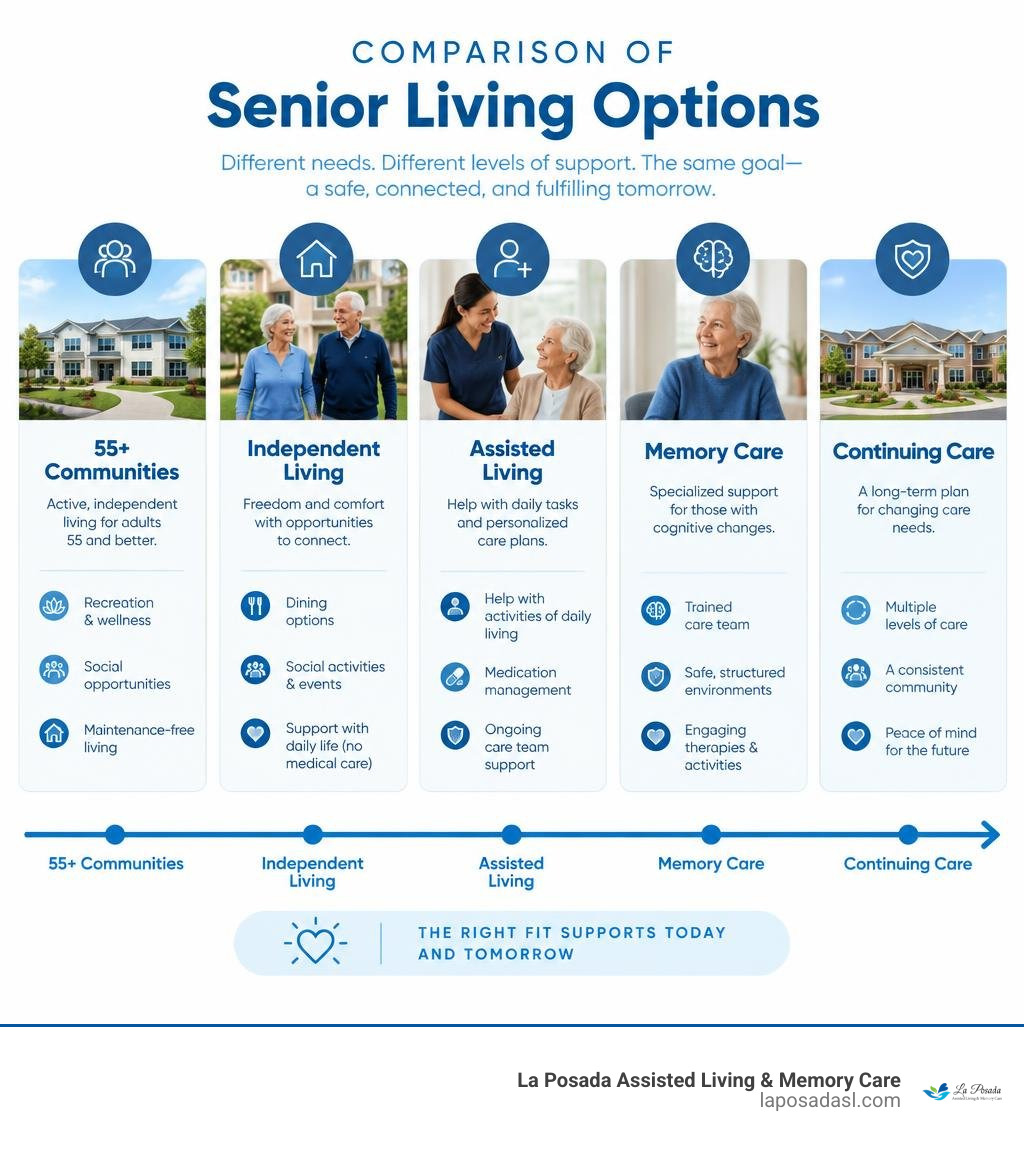
Understanding Senior Housing Types Across the Care Continuum
Navigating the senior housing landscape can feel overwhelming. Communities use various terms—active adult, independent living, assisted living, memory care, and Life Plan communities—that often blend together.
Finding the right fit begins with understanding where a setting falls on the care continuum. Matching personal care requirements with the right environment protects resident autonomy, encourages social vitality, and avoids unnecessary moves down the road.
| Senior Housing Type | Primary Focus | Medical & Daily Living Support | Typical Payment Model | Best Suited For |
|---|---|---|---|---|
| 55+ Active Adult | Lifestyle, recreation, low maintenance | None provided on-site | Home purchase or market rent + HOA | Fully independent adults seeking social amenities |
| Independent Living | Convenience, dining, hospitality | Optional third-party home care | Monthly rental (often hospitality-bundled) | Seniors wanting freedom from home upkeep and chores |
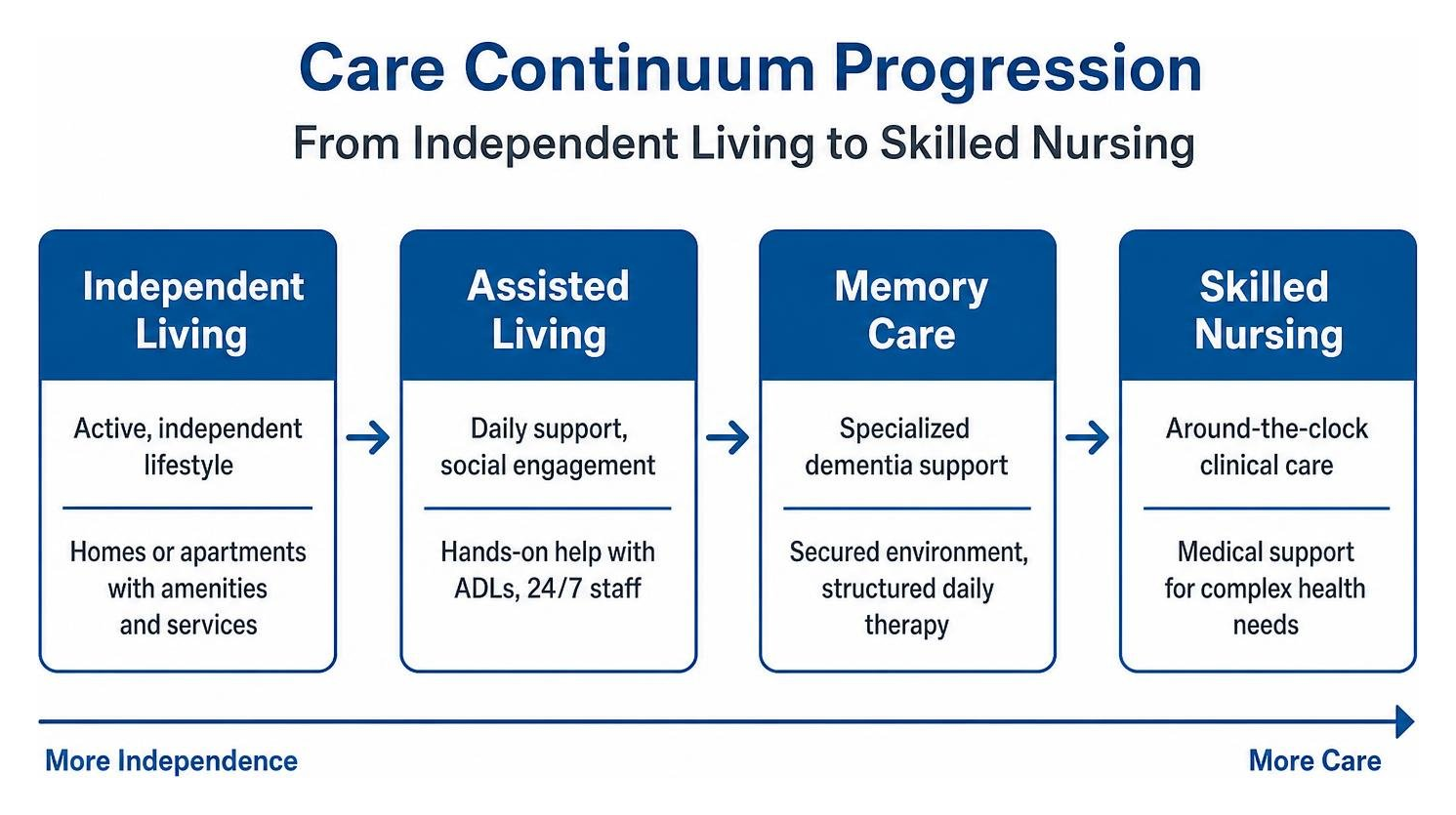
| Assisted Living | Daily support, social engagement | Hands-on help with ADLs, 24/7 staff | Monthly rent + individualized care tier | Seniors needing help with hygiene, meals, or mobility |
| Memory Care | Specialized dementia support | Secured environment, structured daily therapy | All-inclusive or tiered monthly rate | Individuals living with Alzheimer's or cognitive decline |
| CCRC (Life Plan) | Multi-level care transitions | Complete continuum (Independent to Skilled Nursing) | Large entrance fee + ongoing monthly fees | Retirees planning for every future health stage |
55+ Active Adult and Independent Living Communities
Active adult neighborhoods and independent living environments are built for seniors who manage their health independently but want to leave behind home maintenance.
In a 55+ active adult neighborhood, residents own or lease traditional single-family homes, townhouses, or manufactured homes. The emphasis is on community amenities:
- Resort-style clubhouses
- Heated swimming pools
- Pickleball, tennis, and bocce ball courts
- Walking trails and hobby spaces
Independent living communities take convenience a step further by offering private apartments alongside bundled hospitality services. Residents enjoy chef-prepared dining options (because nobody wants to wash dishes every night), weekly housekeeping, scheduled transportation, and rich social programming. These settings maximize freedom while removing the daily burdens of cooking, lawn care, and home repairs.
Assisted Living and Specialized Memory Care
When everyday activities become difficult to manage alone, assisted living bridges the gap between independence and around-the-clock peace of mind. Residents maintain their private apartments while receiving personalized support with activities of daily living (ADLs)—such as bathing, dressing, grooming, mobility, and medication management.
At La Posada Assisted Living & Memory Care in Whittier, California, we know that true wellness encompasses body, mind, and spirit. As a family-owned community, our team provides 24-hour personalized attention, ensuring every resident feels safe and socially engaged through holistic, life-enriching routines.
For seniors facing Alzheimer's disease or other forms of dementia, specialized memory care delivers structured support within secure, easy-to-navigate neighborhoods. Dedicated caregivers use cognitive stimulation, sensory programs, and familiar daily rhythms to reduce anxiety and nurture personal connection. Exploring compassionate assisted living helps families find the right balance of daily assistance and personal dignity.
Continuing Care Retirement Communities (CCRCs)
Continuing Care Retirement Communities, also known as Life Plan Communities, house all levels of care on a single campus. A resident might move in as an independent adult living in a private cottage, transition into assisted living if mobility declines, and later receive memory support or skilled nursing care without leaving the campus.
Families researching comprehensive Life Plan options can Find Top-Rated Continuing Care Retirement Communities Near You | US News to compare regional facilities. CCRCs offer long-term stability, but they often require substantial financial planning, including upfront entrance fees alongside ongoing monthly payments.
Key Features Found in the Best Retirement Homes
Quality senior living is defined by more than clean hallways and manicured lawns. The premier communities in the country foster vibrant social cultures where older adults continue to grow, learn, and contribute.

According to national benchmarks such as America’s Best Continuing Care Retirement Communities 2026, top-performing communities are evaluated across multiple quality dimensions, including overall care, accommodation quality, food service, safety standards, and staffing stability.
What Distinguishes the Best Retirement Homes from Standard Facilities
The best senior communities distinguish themselves through intentional programming that prevents isolation and keeps residents engaged. When evaluating prospective homes, look for:
- Chef-Prepared, Nutrient-Dense Dining: Menus that accommodate varied dietary needs with fresh ingredients, served in inviting communal dining rooms.
- Holistic Wellness Programs: Daily opportunities for low-impact movement, chair yoga, balance training, and water aerobics.
- Lifelong Learning and Creative Outlets: Art studios, music therapy, guest lectures, book clubs, and computer literacy workshops.
- Intergenerational and Civic Connections: Coordinated volunteer drives, local school partnerships, and cultural excursions.
- Inviting Common Areas: Landscaped courtyards, raised garden beds, cozy libraries, and walking paths that encourage daily connection.
Lifestyle Niches: Golf, Waterfront, and Mountain Living
For active adults and retirees whose golden years center around specific outdoor passions, the United States offers specialized lifestyle communities:
- Golf Course Communities: These developments feature championship courses, on-site pro shops, and driving ranges. They are common across sunny corridors in Florida, Arizona, and the Carolinas.
- Coastal and Waterfront Retreats: These neighborhoods offer private boat slips, fishing docks, and lakefront views, pairing water sports with coastal breezes.
- Mountain Settings: Gated hillside communities in regions like Western North Carolina's Blue Ridge Mountains provide scenic walking trails, cooler summer climates, and peaceful, forested settings.
Healthcare Access, Accreditation, and Pet-Friendly Policies
A community's ability to coordinate reliable medical care provides essential reassurance for families. Top-rated communities maintain transparent emergency call systems, structured medication administration protocols, and close relationships with nearby hospitals and specialized physicians.
Independent accreditation from organizations like the Commission on Accreditation of Rehabilitation Facilities (CARF) signals a commitment to rigorous clinical and non-clinical quality standards. Consumer recognitions, such as the Caring Stars awards, highlight communities with consistent resident and family satisfaction.
In addition, welcoming companion animals is a key wellness indicator. Pet-friendly policies, complete with on-site dog parks and pet therapy programs, reflect an understanding of the emotional support, companionship, and physical activity pets bring to our lives.
Cost Factors and Geographic Considerations for Retirees
Financial transparency is essential when selecting a retirement community. Costs vary significantly based on location, service models, and the level of personal care required.

Financial Models and Affordability in the Best Retirement Homes
Senior housing relies on several distinct financial structures:
- Monthly Rental Models: Common in independent living and assisted living, where residents pay a predictable monthly rate that covers lodging, utilities, dining plans, and community programming. Additional personal care services are billed as flat fees or tiered care levels.
- Entrance Fee Models (CCRCs): Require an upfront entry deposit—ranging from $100,000 to well over $1,000,000 depending on the contract type (LifeCare Type A, Modified Type B, or Fee-for-Service Type C)—alongside monthly maintenance fees.
- Manufactured Home Community Leases: Residents purchase their home outright or via a personal property loan, then pay a monthly lot lease fee that covers land use and neighborhood amenities.
Families should ask about one-time non-refundable community fees (often $2,000 to $5,000 at move-in) and annual cost-of-living adjustments to keep long-term budgets on track.
State Tax Benefits and Cost of Living Impact
A state's tax policy and overall cost of living directly influence how far retirement savings will stretch. States without personal income taxes or those that exempt Social Security benefits—such as Florida, Texas, Wyoming, and South Dakota—remain popular choices for cost-conscious retirees.
However, moving purely for tax reasons can backfire if local property taxes, insurance premiums, or healthcare costs are high. Staying close to trusted family networks and quality medical centers often outweighs modest tax savings.
Manufactured Housing vs. Traditional Real Estate Communities
For retirees seeking affordable active adult living, modern manufactured home communities offer a lower cost of entry than stick-built real estate.
- Manufactured Housing Advantages: New models can be purchased for $50,000 to $200,000, offering modern finishes and access to resort-style clubhouses, swimming pools, and sport courts without a massive mortgage.
- Manufactured Housing Trade-offs: Because residents generally lease the land beneath their homes, monthly lot fees can rise over time. In addition, manufactured homes historically appreciate at slower rates than traditional site-built real estate.
Frequently Asked Questions About Choosing Senior Living
What is the 80/20 rule for 55+ retirement communities?
The 80/20 rule refers to a federal requirement under the Housing for Older Persons Act (HOPA). To maintain legal age-restricted status, a 55+ community must ensure that at least 80% of its occupied units have at least one resident who is 55 years of age or older. The remaining 20% of units may be leased or sold to younger adults, subject to the community's specific governing rules and association bylaws.
How do CARF accreditation and national rankings impact community quality?
CARF (Commission on Accreditation of Rehabilitation Facilities) accreditation is an independent, third-party validation that a senior living provider meets strict international service, safety, and operational standards. In national evaluations, such as those published by Newsweek and U.S. News, accreditation status and verified consumer surveys account for substantial portions of a community's final score. These rankings help families identify providers with verified track records of clinical compliance and resident satisfaction.
Can seniors find quality retirement living on a fixed monthly budget?
Yes. Budget-conscious retirees can find quality options by looking in affordable regional markets, considering manufactured housing communities, or choosing independent living communities with straightforward, all-inclusive rental rates. Many non-profit, faith-based, and area agencies on aging also provide subsidized apartments and supportive resources for seniors with limited incomes.
Conclusion
Choosing the right senior living community is about more than finding an attractive apartment. It is about discovering a place where older adults can thrive, connect with neighbors, and receive attentive support.
At La Posada Assisted Living & Memory Care in Whittier, California, we treat every resident like family. Our compassionate care plans, 24-hour on-site staffing, and holistic programs nourish the mind, body, and spirit. We invite you to contact our team today to schedule an in-person tour, enjoy a meal with us, and see how our family-owned environment brings vitality and warmth to daily living.