
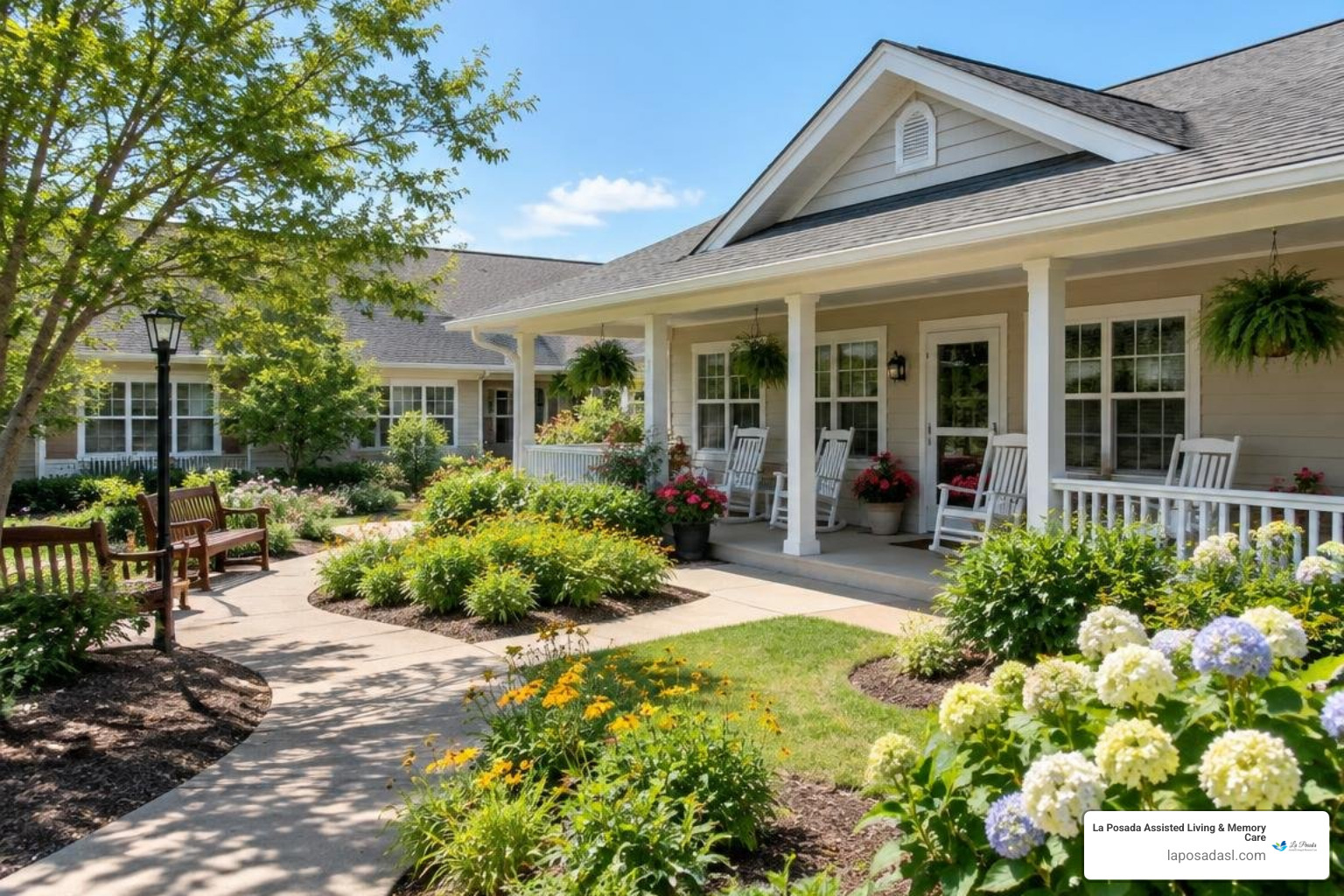
What to Know About Country House Assisted Living
Country house assisted living usually means care in a home-like setting rather than a large, institutional-feeling building. The name alone does not tell you how much help a resident will receive. Before choosing a home, confirm its overnight staffing, medication support, memory care services, monthly costs, and approach to daily activities.
If your parent needs care around the clock, visit in person and ask what happens when they need help at night. A warm setting matters, but a clear care plan matters just as much.
Understanding the Country House Assisted Living Model
When exploring options for an aging parent or loved one, the term "country house" brings to mind warm spaces, tranquil surroundings, and personalized care. In the senior living industry, this approach represents a shift away from high-rise, institutional facilities toward intimate, residential-style care.
Instead of navigating sterile hospital wings or endless hotel-like hallways, residents live in a setting designed like a traditional family home or a close-knit boutique lodge. These settings prioritize comfort, personal connection, and an atmosphere where everyone knows your name.
For families researching Assisted Living Facilities - Care Options | California Department of Aging - State of Cali, understanding the physical design and care philosophy of residential environments is essential. Whether a location is a licensed residential care home with 6 to 10 beds or an expansive country-style estate community, the goal remains the same: balancing independence with reliable, round-the-clock support.
Core Benefits of Country House Assisted Living for Seniors
The primary advantage of a country-house-style community is the scale of daily life. In large senior living complexes, it is easy for quieter residents to feel overwhelmed or lost in the crowd. In a homelike setting, care is personal and responsive.
- Consistent Caregiver Familiarity: Because staff members care for a smaller group of seniors, they quickly learn individual quirks, morning routines, favorite stories, and subtle health shifts.
- Reduced Anxiety and Disorientation: Cozy communal areas and clear sightlines help seniors—especially those navigating mild cognitive changes—feel safe and grounded.
- Flexible Daily Schedules: Meals and wake-up times can adapt to the resident's natural rhythm rather than rigid corporate schedules.
- Meaningful Relationships: Smaller group dining and shared living rooms spark genuine friendships among residents and create an inviting atmosphere for visiting families.
Architectural Layouts and Homelike Living Spaces
The architectural blueprint of a country-style residence plays a huge role in day-to-day wellness. Rather than long, echoing corridors that can discourage residents with mobility challenges, rooms are arranged around central living and dining areas.
- Short, Direct Walking Paths: Suites are typically just steps away from the dining table, lounge, and activity spaces, encouraging residents to leave their rooms and socialize without fear of exhaustion.
- Central Domestic Kitchens: The heart of the home is often an open kitchen where the sounds and aromas of home-cooked meals naturally stimulate appetites and spark conversation.
- Secure Outdoor Spaces: Enclosed courtyards, raised garden beds, and shaded porches let residents safely enjoy fresh air and sunshine without the risk of unsafe wandering.
- Private and Semi-Private Suites: Residents have their own private sanctuary, complete with accessible bathrooms and room for personal furniture, family photographs, and cherished mementos.
Care Services, Daily Living, and Memory Support
Living in a home-style environment does not mean compromising on healthcare oversight. Modern residential care combines domestic warmth with comprehensive daily living support.
Typical core health services include:
- Personal Hygiene and Grooming: Compassionate, dignified assistance with bathing, dressing, grooming, and dental care.
- Medication Administration: Dedicated oversight to ensure prescriptions are taken accurately, on time, and properly refilled.
- Mobility and Transfer Support: Assistance moving safely from bed to chair, using walkers, or navigating outdoor pathways.
- Specialized Health Monitoring: Routine blood pressure checks, diabetic monitoring, and incontinence management.
Integrated Memory Care and Cognitive Programs
Many seniors searching for a country house setting require specialized support for Alzheimer's disease or other forms of dementia. A residential floor plan is naturally suited to memory care because its manageable scale reduces sensory overload.
Care teams in these environments use structured daily routines, music therapy, and sensory stimulation to maintain cognitive function and emotional calm. Secure perimeters give seniors the freedom to stroll indoors and outdoors safely, while 24-hour supervision ensures that nighttime confusion or wandering is managed with gentle redirection.
Nutrition, Dining, and Daily Enrichment
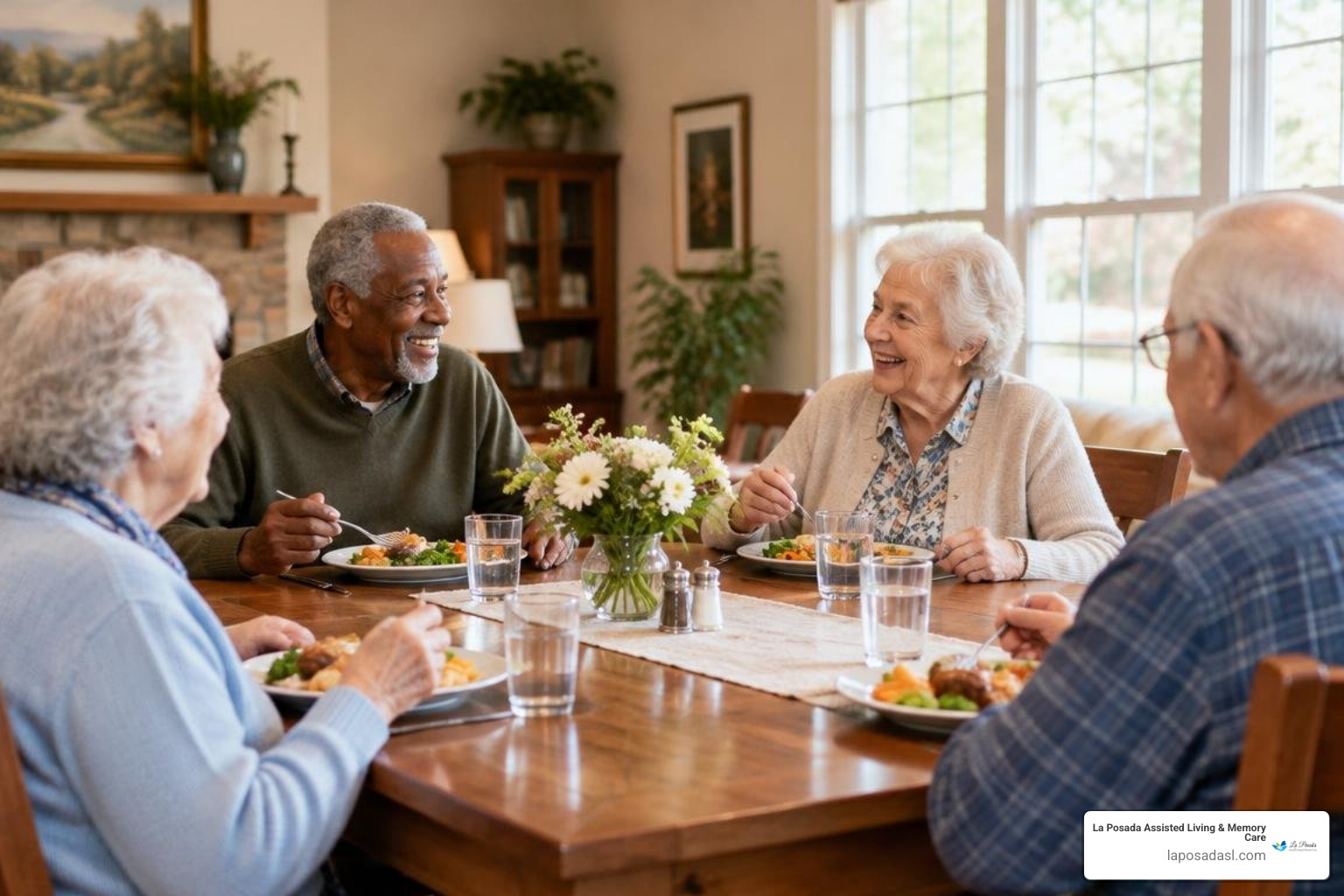
Meals in a country-style setting are social highlights. Instead of choosing food from a cafeteria line, residents sit together for family-style dining tailored to their dietary needs—including low-sodium, diabetic-friendly, pureed, or vegetarian menus.

Daily enrichment goes far beyond standard bingo. A well-rounded calendar keeps the mind and body active through:
- Morning gentle stretching, chair yoga, and guided walking clubs
- Brain fitness, trivia challenges, and history discussions
- Baking, indoor gardening, and intergenerational visits
- Live musical performances, faith-based services, and evening movie screenings
- Arts, crafts, and storytelling circles that celebrate each resident's life story
Floor Plans, Pricing Tiers, and Budgeting Considerations

Pricing for country-style senior living varies based on geographic location, suite size, and the level of hands-on physical care required. Most communities use a base rental fee combined with tiered care levels determined by an initial health assessment.
Cost Breakdown by Suite Size and Care Level
Monthly base fees typically cover accommodation, utilities, three daily meals, snacks, weekly housekeeping, personal laundry, and scheduled social activities. Additional care points (such as extensive transfer assistance or specialized memory care) are added to this baseline.
| Suite Type | Approximate Size | Included Core Amenities | Typical Monthly Cost Range |
|---|---|---|---|
| Studio Suite | 300 – 450 sq. ft. | Private bath, emergency call system, basic utilities, meals, laundry | $4,500 – $6,500 |
| One-Bedroom Suite | 500 – 700 sq. ft. | Separate living room, kitchenette, private bath, all meals, housekeeping | $6,000 – $8,000 |
| Two-Bedroom / Companion | 750 – 1,000 sq. ft. | Dual bedrooms, shared/private bath, full social program, dining services | $7,500 – $9,500+ |
Payment Pathways and Financial Planning
Planning for senior care requires looking closely at private and public funding resources:
- Private Pay & Personal Savings: The most common payment method, utilizing retirement income, investment portfolios, or proceeds from a home sale.
- Long-Term Care Insurance: Policies often cover a substantial portion of assisted living and memory care costs once a policyholder requires help with two or more Activities of Daily Living (ADLs).
- Veterans Aid & Attendance Benefit: Eligible wartime veterans and surviving spouses can receive monthly tax-free pension supplements to help pay for assisted living care.
- State Programs: While standard Medicaid does not pay for room and board in private assisted living, certain state-specific waiver programs may offer financial support for personal care services based on financial and medical eligibility.
Comparing Country House Assisted Living Options
When looking at residential care options, it helps to compare small-scale micro-communities (such as 6-to-10-bed adult foster homes) with boutique, estate-style assisted living campuses.
| Feature | Micro-Residential Care Home (6–10 Beds) | Boutique Country-Style Community (20–60+ Beds) |
|---|---|---|
| Environment | Converted single-family suburban or rural house | Purpose-built lodge or estate-style campus |
| Staffing Dynamics | 1–2 caregivers per shift; high direct interaction | Dedicated shifts, activity directors, wellness nurses |
| Care Ratios | Very low resident-to-caregiver ratio (often 1:3 to 1:5) | Balanced ratios with specialized departmental teams |
| Amenities | Domestic living room, family kitchen, backyard | Fitness rooms, multiple dining rooms, libraries, salons |
| Activity Variety | Informal, household-based daily routines | 30–40+ structured weekly events and group outings |
| Best Suited For | Seniors needing quiet spaces and close physical oversight | Seniors wanting a vibrant social calendar in a home-like setting |
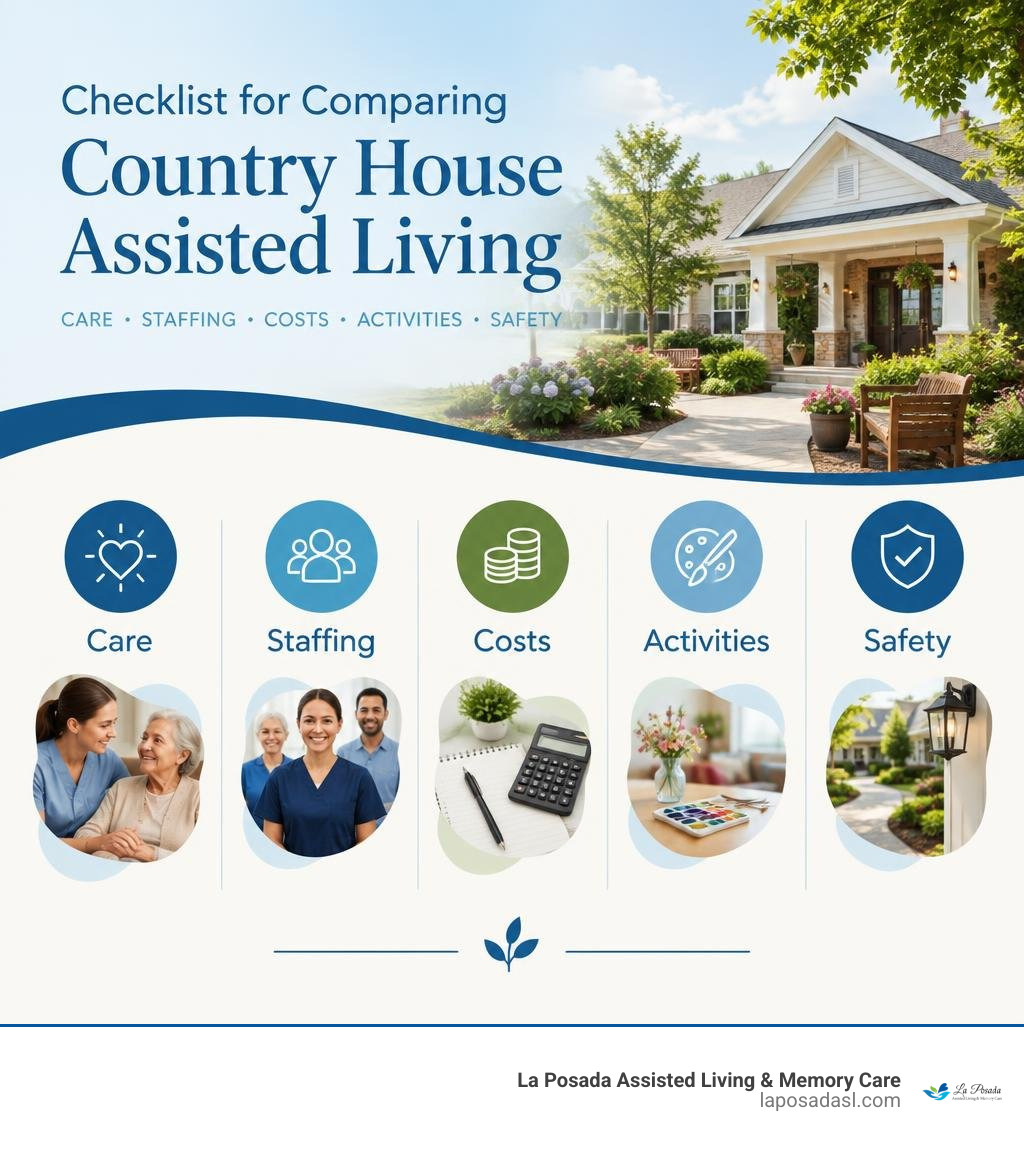
Checklist for Touring a Country House Assisted Living Facility
Before signing an agreement, visiting in person is the most effective way to evaluate cleanliness, staff warmth, and daily community culture.
- Observe Staff Interactions: Do caregivers speak warmly to residents by name? Do residents look clean, well-groomed, and engaged?
- Check the Night Shift Coverage: Ask specifically how many staff members are on duty awake at night and what the average response time is for call pendants.
- Inspect the Physical Environment: Are walking paths clear of clutter? Are safety grab bars installed securely in private bathrooms? Does the home smell clean and fresh?
- Taste the Food: Stay for lunch or dinner to experience the culinary quality, presentation, and dining room atmosphere firsthand.
- Review State Inspection Records: Ask management to see their most recent state licensing inspection and audit reports to confirm safety compliance.
- Clarify Pet Policies: If your loved one has a beloved companion animal, ask whether pets are permitted, what size limits apply, and who is responsible for daily pet care.
Frequently Asked Questions About Country House Senior Living
What makes country house assisted living different from standard senior facilities?
Country house communities focus on residential architecture, shorter hallways, and lower resident densities. Instead of a large, hotel-like environment, they provide a cozy atmosphere centered around shared living rooms, family-style kitchens, and peaceful outdoor gardens, making care feel personal rather than clinical.
Are pets allowed in country-style assisted living homes?
Many communities welcome small dogs, cats, or birds, recognizing the emotional and therapeutic value companion animals provide. However, pet policies vary by facility. Some locations allow pets in private suites provided the resident or family handles care, while others maintain shared "house pets" for all residents to enjoy.
How can families confirm licensing and state safety compliance?
Every licensed senior care community is regulated by state health and human service departments (such as California's Department of Social Services Community Care Licensing Division). Families can look up inspection reports, citations, and licensing history online through official state regulatory portals before making a move-in decision.
Conclusion
Choosing the right care community is one of the most loving and meaningful decisions a family can make. Finding a setting that balances attentive, personalized medical support with the warmth, dignity, and comfort of home ensures that your loved one thrives during their golden years.
At La Posada Assisted Living & Memory Care in Whittier, CA, we believe that senior living should always feel like family. We provide 24-hour personalized care, holistic wellness programs for body, mind, and spirit, and a close-knit, community-focused setting. If you are exploring compassionate, high-quality care options for your parent, we invite you to explore our comprehensive assisted living services and schedule a personal visit to meet our team.