

Where to Start With Dementia Resources for Family Members
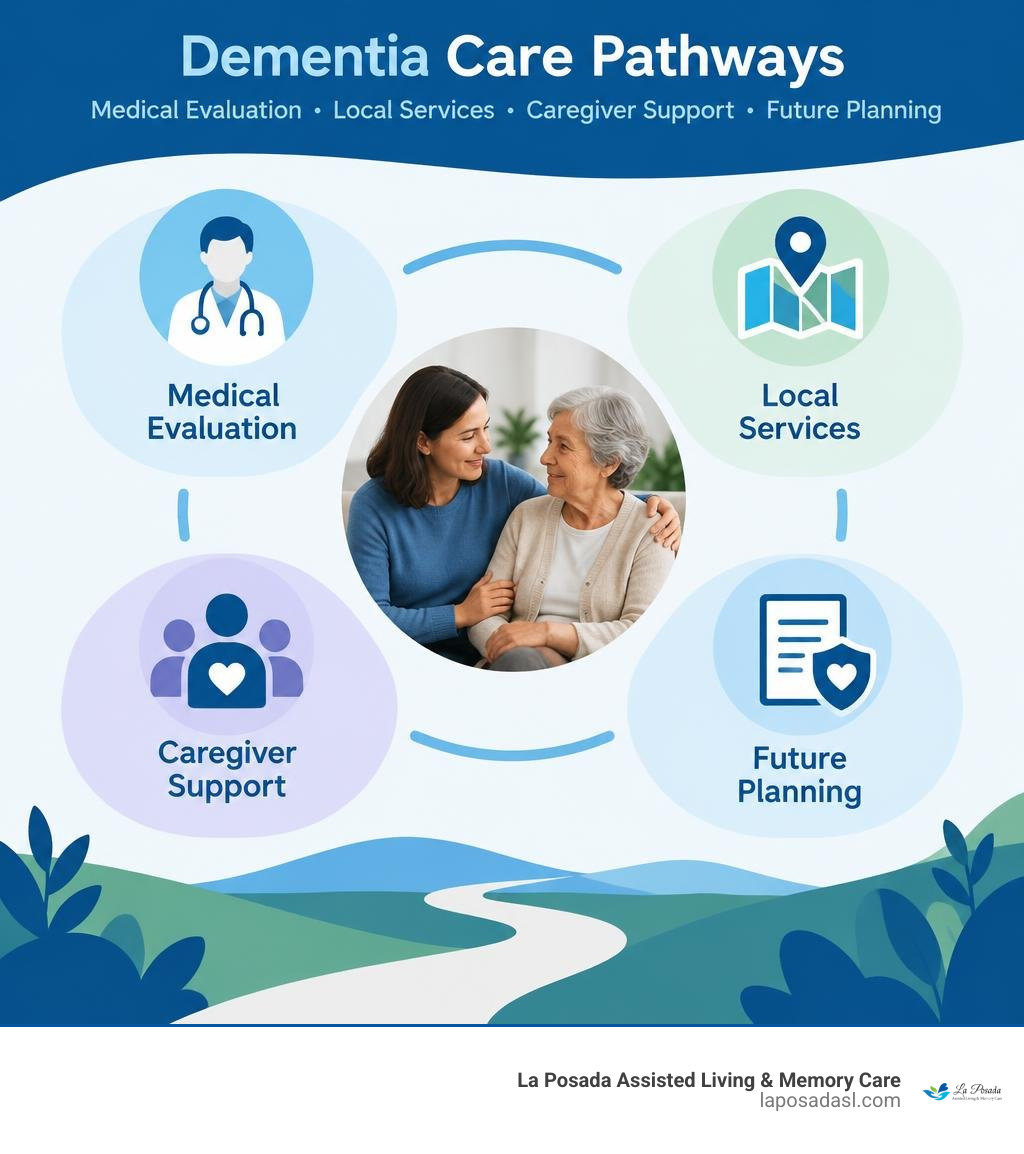
The most useful dementia resources for family members are a medical evaluation, a local aging-services agency, a caregiver support group, and a plan for breaks and future care. Start by asking your loved one’s doctor about changes you’ve noticed. Then contact your local Area Agency on Aging to ask about support groups, respite care, and services near you.
An estimated 7.4 million Americans age 65 and older live with Alzheimer’s disease. If your parent now needs help throughout the day, you do not have to manage every need alone. This guide shows you where to find reliable help and how to choose what your family needs next.
Understanding the Diagnosis: Dementia vs. Normal Aging
It is easy to brush off forgotten names or misplaced keys as harmless "senior moments." However, understanding the difference between typical cognitive aging and progressive decline is essential. Normal aging might mean occasionally misplacing your glasses or pausing to recall a word. Dementia, by contrast, involves persistent changes in memory, judgment, reasoning, and daily problem-solving that interfere with independent living.
Dementia is not a single disease; it is an umbrella term covering several conditions caused by abnormal brain changes. Alzheimer's disease is the most frequent form, accounting for 60 to 80 percent of all diagnosed cases. Other common types include vascular dementia, Lewy body dementia, and frontotemporal disorders. In some situations, individuals experience mixed dementia, where multiple underlying pathologies coexist.
Getting a thorough clinical evaluation is the first critical step. A primary care physician will review personal and family medical history, run laboratory blood work, conduct cognitive screening tests, and refer the individual to a specialist—such as a neurologist, geriatrician, or neuropsychologist. Comprehensive medical workups rule out reversible causes of cognitive impairment, such as severe vitamin B12 deficiencies, thyroid dysfunction, medication interactions, infections, or untreated sleep apnea.
For a deeper look into the medical roadmap, review A Guide for People living with Dementia and their Caregivers to help prepare for diagnostic visits.
National and Local Dementia Resources for Family Members

Navigating care systems requires tapping into both nationwide networks and community-level services. Fortunately, established public and non-profit organizations offer accessible, evidence-based assistance:
- Alzheimer’s Association (24/7 Helpline: 800-272-3900): Provides round-the-clock guidance from master's-level clinicians, educational webinars, and online message boards like ALZConnected®.
- Eldercare Locator (800-677-1116): A public service from the U.S. Administration for Community Living (ACL) that connects families directly with their local Area Agency on Aging (AAA), home meal deliveries, and local transportation.
- Alzheimer’s and Related Dementias Education and Referral (ADEAR) Center: Supported by the National Institute on Aging (NIA), this center offers free publications, research trial directories, and bilingual specialists.
- State Health Insurance Assistance Programs (SHIP): State-funded counseling programs that offer unbiased, personalized guidance on Medicare options, supplemental policies, and covered services.
State health departments and regional publications, such as the AARP Dementia Resource Guide for Individuals and Families, help families organize documents, prepare questions for specialists, and connect with local community supports.
Community Support Groups, Respite Care, and Memory Cafés
Caring for someone with dementia can feel isolating, but two-thirds of adults age 18 and older personally know someone who has lived with dementia. Connecting with local peer communities provides emotional grounding and practical problem-solving.
- Caregiver Support Groups: Joining a regular weekly or monthly peer group gives family members a confidential space to exchange coping strategies and practical tips.
- Memory Cafés: Originating as relaxed community social gatherings, Memory Cafés allow individuals with dementia and their care partners to socialize without fear of stigma or judgment.
- Dementia Friendly Communities: Municipalities and neighborhoods trained to accommodate, support, and welcome individuals living with cognitive changes.
- Respite Services: Respite services give primary caregivers time to attend appointments, run errands, or rest.
Local resource compilations, such as this Dementia Resource Guide, illustrate how county-level aging and disability resource centers coordinate respite grants and structured day programs.
Specialized Dementia Resources for Family Members Facing Unique Diagnoses
Certain types of dementia introduce distinct motor, behavioral, and practical hurdles:
- Lewy Body Dementia (LBD): The Lewy Body Dementia Association (LBDA) assists families dealing with hallucinations, motor stiffness, fluctuations in alertness, and medication sensitivities.
- Frontotemporal Degeneration (FTD): The Association for Frontotemporal Degeneration (AFTD) focuses on younger individuals who experience marked changes in personality, executive function, empathy, and language abilities.
- Younger-Onset Alzheimer’s: Dedicated programs assist individuals diagnosed under age 65 who are still navigating active careers, minor children, and disability benefits.
- VA Caregiver Support Program: The Department of Veterans Affairs provides comprehensive support for eligible veterans and their designated caregivers, including adult day health services, home telehealth, respite hours, and financial stipends.
Daily Caregiving Strategies: Home Safety, Communication, and Symptom Management

Daily life runs much smoother when your home environment is secure and communication is adapted to your loved one's changing abilities. Older adults living with dementia face twice the risk of falling and three times the risk of sustaining serious fall-related injuries compared to their peers. Implementing straightforward environmental modifications creates a safer setting:
- Fall Prevention: Secure or remove loose throw rugs, install sturdy grab bars beside toilets and showers, apply non-skid strips in tubs, and ensure hallways have bright, glare-free lighting.
- Wandering Safety: Enroll in location-tracking initiatives such as Project Lifesaver or MedicAlert, install discreet door alarms or chime monitors, and maintain updated photographs in case of an emergency.
- Communication Techniques: Speak slowly using a calm, reassuring tone. Maintain eye contact, ask simple yes-or-no questions, give your loved one ample time to process answers, and avoid arguing about distorted perceptions. In later stages, non-verbal cues—gentle touch, soothing tones, and familiar music—become primary channels of connection.
- Sundowning Management: More than 90% of people with dementia experience sundowning—a cluster of behavioral changes, restlessness, or agitation occurring in the late afternoon and evening. Keep living spaces well-lit before dusk, minimize background television noise, establish a predictable afternoon wind-down routine, and limit caffeine after lunch.
The detailed FAMILY CARE manual provides additional stage-by-stage instructions for mealtime adaptation, bathing assistance, and behavioral validation.
Preserving Caregiver Health and Preventing Burnout
You cannot pour from an empty cup. Providing continuous care without personal breaks leads to emotional exhaustion, chronic health issues, and depression. Acknowledging your limits is a sign of resilience, not failure.
- Set Realistic Boundaries: Prioritize essential daily tasks and let non-essential chores wait.
- Accept Assistance: When family, friends, or neighbors offer help, provide concrete tasks—like picking up groceries, folding laundry, or sitting with your loved one for an hour.
- Maintain Preventive Health: Keep your own routine medical, dental, and counseling appointments.
- Schedule Scheduled Respite: Arrange regular weekly breaks using respite care services or short-term stays in a specialized community.
The comprehensive guide Living with dementia offers further clinical insights on sustaining caregiver mental wellbeing through structured coping techniques.
Planning Ahead: Legal, Financial, and Long-Term Care Options
Proactive planning protects your family member’s assets and ensures their healthcare choices are respected. As cognitive conditions progress, families often evaluate different levels of residential and supportive care:
| Care Setting | Core Focus & Staffing | Best Suited For | Typical Payment Options |
|---|---|---|---|
| Respite Care | Short-term temporary residential stays (days to weeks) with 24-hour support | Caregiver relief, post-hospital recovery, or trial community stays | Private pay, select VA programs, occasional local respite grants |
| Assisted Living | Housing, meals, medication management, and daily personal care assistance | Individuals needing physical help who remain relatively safe in open layouts | Private pay, long-term care insurance, specific state waiver programs |
| Memory Care | Secure environments, specialized dementia programming, and 24-hour supervision | Individuals experiencing cognitive decline, wandering risk, or behavioral changes | Private pay, long-term care insurance, select veteran benefits |
When exploring long-term housing arrangements, families in Whittier, CA often turn to specialized communities like La Posada Assisted Living & Memory Care to provide secure environments, life-enriching routines, and around-the-clock professional attention.
Legal and Financial Dementia Resources for Family Members
Establishing legal and financial arrangements early—while your loved one retains the legal capacity to express their wishes—avoids the need for costly court-ordered guardianships:
- Durable Power of Attorney (POA) for Finances: Authorizes a trusted individual to manage bank accounts, pay household bills, and oversee property.
- Healthcare Proxy / Medical POA: Designates an agent to make healthcare decisions if the individual becomes incapacitated.
- Advance Directives & Living Wills: Outlines specific preferences regarding life-sustaining interventions, tube feeding, and palliative comfort measures.
- National Academy of Elder Law Attorneys (NAELA): A professional network that helps families locate certified elder law attorneys experienced in Medicaid qualification, special needs trusts, and estate conservation.
- LongTermCare.gov: A federal clearinghouse maintained by the Administration for Community Living that outlines long-term care costs, private insurance coverage parameters, and state benefit guidelines.
Frequently Asked Questions About Dementia Resources
What immediate steps should families take after a dementia diagnosis?
Begin by establishing a multidisciplinary medical team (primary care physician, neurologist, and social worker) to build an ongoing management plan. Next, gather all vital financial and medical documents, and schedule an appointment with an elder law attorney to establish powers of attorney and advance directives. Finally, reach out to your local Area Agency on Aging or reputable helplines to join a caregiver support group and assess your home for basic safety modifications.
Does Medicare pay for long-term residential memory care?
Medicare does not pay for custodial, non-skilled residential care in assisted living or memory care settings. Medicare covers medically necessary outpatient doctor visits, diagnostic tests, home health physical therapy, and hospice care. Long-term memory care is primarily paid for out-of-pocket, via private long-term care insurance policies, veteran benefits (such as the VA Aid and Attendance pension), or state-specific Medicaid waiver programs when eligibility thresholds are met.
How can families manage nighttime sundowning behaviors safely?
Maintain predictable morning and evening routines, ensure exposure to natural sunlight during morning hours, and close window blinds before sunset to eliminate confusing exterior shadows. Keep indoor lighting consistent, avoid afternoon caffeine, introduce soothing activities like listening to familiar music or folding warm laundry, and review medication schedules with a doctor to ensure other issues like pain, urinary tract infections, or sleep apnea are not triggering nighttime distress.
Conclusion
A dementia diagnosis alters daily routines and family roles, but you do not have to carry the weight of caregiving alone. By tapping into national helplines, local Area Agencies on Aging, peer support groups, and structured respite programs, you can build a resilient care team that protects your loved one's dignity while preserving your own health.
Whether you need short-term relief or are planning for future residential memory support, compassionate help is within reach. Take advantage of available educational tools, connect with trusted community partners, and prioritize your own wellbeing at every step along the journey.