

Family Style Senior Living: Care That Feels More Like Home
Family style senior living brings daily care and social life into a home-like setting. Residents may share meals, spend time together, and get help based on their needs. For families, the goal is simple: a loved one who feels known, connected, and supported.
The feel of a place matters, but so does the care behind it. If your parent needs supervision or help with medication, ask what staff can provide around the clock. This guide will help you compare care, costs, and daily life before you choose.

What Defines Family Style Senior Living?
When you imagine elder care, you might picture long, hospital-like hallways, fluorescent lighting, and crowded cafeterias. Family style senior living flips that script entirely. Instead of a sprawling commercial facility, it centers around a residential care home model designed to feel just like a real family home.
In these small-scale communities, daily routines do not run on a rigid corporate schedule. Instead, life moves at a warm, natural pace. Living areas are shared, open, and inviting, allowing residents to spend their days in comfortable living rooms, relaxing on sunny porches, or chatting in cozy open-concept kitchens.
Personalized care is the heartbeat of this approach. With fewer residents living under one roof, caregivers provide continuous 24-hour support tailored to each person's exact physical, emotional, and social needs. Caregivers do not just drop by to complete tasks; they become part of the household fabric, learning how each resident takes their coffee, what music makes them smile, and when they need a gentle listening ear.
| Feature | Family Style Senior Living | Traditional Assisted Living Facilities |
|---|---|---|
| Community Scale | Intimate residential households (often 6 to 15 residents) | Large multi-story complexes (often 50 to 150+ residents) |
| Caregiver-to-Resident Ratio | Exceptionally low (frequently 1:3 to 1:5) | Standard ratios (often 1:8 to 1:15 or higher) |
| Dining Experience | Scratch-cooked, shared around one communal family table | Cafeteria or restaurant-style service with vast menus |
| Environment | Homelike, single-story, cozy residential architecture | Hospitality-style lobbies, commercial hallways, elevators |
| Caregiver Continuity | Same core care team daily, building deep personal bonds | Rotating shift workers across multiple wings and floors |
| Sensory Atmosphere | Quiet, predictable, warm, and low-stress | Busy, dynamic, higher foot traffic, potential overstimulation |
Intimate Household Layouts vs. Large Institutions
Navigating a massive, multi-wing building can quickly become overwhelming for an aging adult, especially someone managing mild cognitive changes or joint stiffness. Family style senior living communities use familiar residential architecture to make navigation simple and stress-free.
Residents enjoy private or companion suites that open directly into comfortable shared living rooms, sunrooms, and dining spaces. You will not find endless corridors or confusing elevator banks. Instead, everything a senior needs is just a few steps away. Secure outdoor walking paths, raised garden beds, and enclosed courtyard patios allow seniors to enjoy fresh air and sunshine safely, supporting mobility and cardiovascular health without the risk of wandering or disorientation.
How Family Style Senior Living Enhances Daily Dining and Social Connection
If you think back to your favorite family memories, chances are they happened around the kitchen table. In our communities, mealtime is the highlight of the day.
Instead of pre-packaged, institutional food served on trays, meals are scratch-cooked using fresh, wholesome ingredients. The comforting aromas of simmering soups, roasting chicken, and baking bread fill the house, naturally stimulating appetites and prompting fond memories.
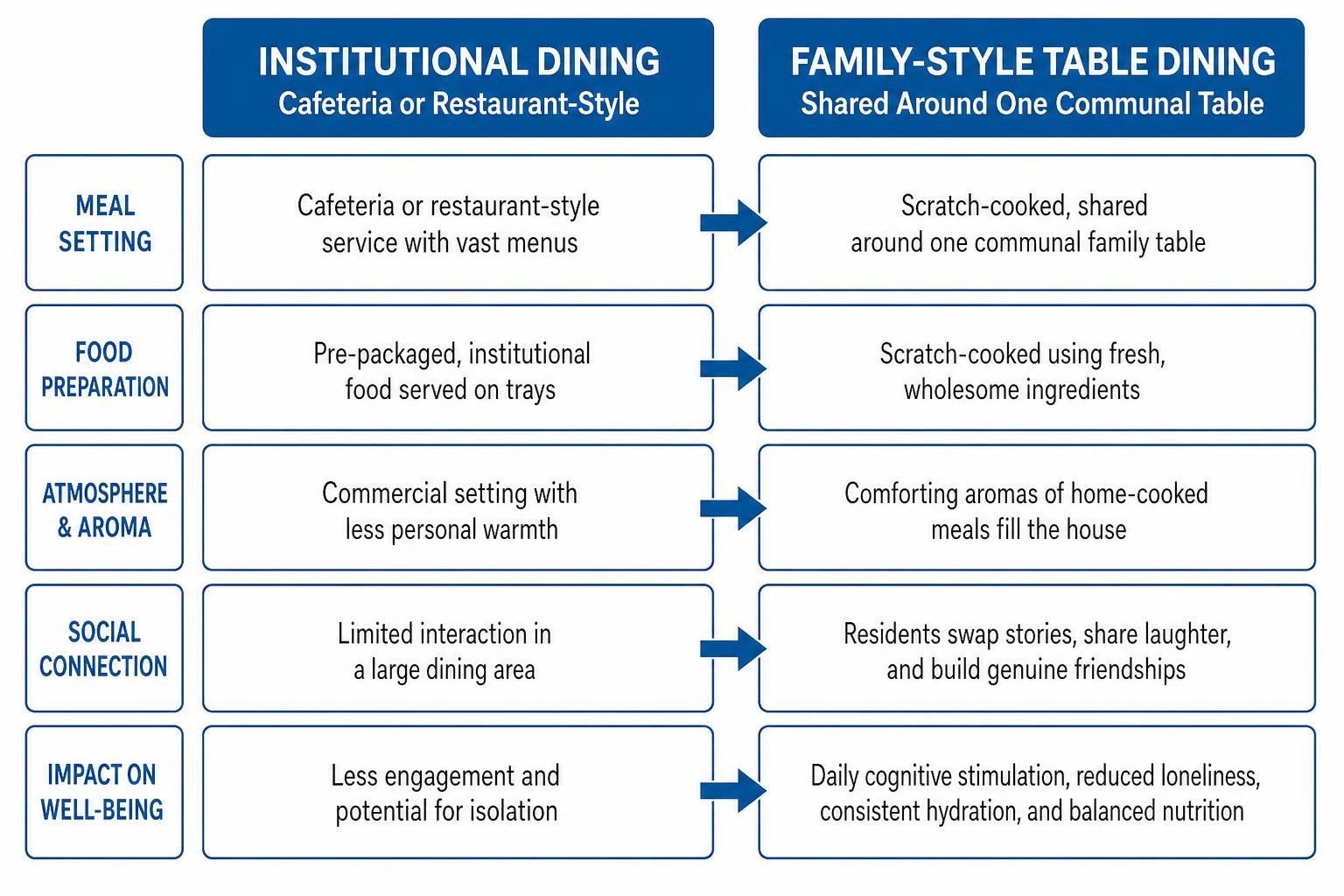
Sitting together around a central dining table turns eating into an engaging social event. Residents swap stories, share laughter, and build genuine friendships. For older adults, this table talk provides daily cognitive stimulation, wards off feelings of loneliness, and ensures consistent hydration and balanced nutrition.
5 Key Benefits of Residential Care Environments

Choosing the right care setting is about finding an environment where your loved one can genuinely thrive. Here are five core benefits of choosing an intimate, residential eldercare setting:
- Individualized, Person-Centered Attention: Care is never one-size-fits-all. Daily routines bend to match the senior’s personal preferences, wake-up times, and lifestyle habits.
- Deep, Family-Like Bonds: Living in a close-knit environment fosters strong friendships among peers and warm, trusting connections with caregivers.
- Reduced Anxiety and Hospital Readmissions: Consistent daily observation means minor health shifts—like dehydration or early infections—are caught and addressed early before turning into emergencies.
- Holistic Wellness Programming: Enriching activities support the whole person—body, mind, and spirit—through art therapy, pet therapy, gentle movement, gardening, and music.
- A Sense of Belonging and Purpose: Seniors are not passive recipients of care; they are valued members of a household who contribute to daily life and conversation.
Consistent Caregiving Teams and Lower Staff Ratios
One of the biggest frustrations families face in large eldercare facilities is high staff turnover and rotating shift workers. It is hard for an older adult to feel secure when a different caregiver walks through their door every morning.
In a family-style environment, consistent caregiving teams provide daily care. This continuity creates trust and emotional safety. Caregivers provide dignified, patient support with activities of daily living (ADLs), including:
- Morning grooming, bathing, and personal hygiene
- Dressing and wardrobe selection
- Gentle mobility assistance and transfer support
- Precise medication management and health monitoring
When caregivers work with the same small group of seniors every day, they immediately notice subtle changes in appetite, mood, or physical balance, ensuring proactive and compassionate care.
Seamless Transitions as Care Needs Change
Health needs naturally evolve over time, but moving an aging parent from one facility to another can be emotionally and physically taxing. Residential care homes support aging in place by providing flexible, adaptable care plans.
Whether a resident requires light daily assistance, advanced dementia support with structured daily rhythms, or short-term respite care while a family caregiver rests, services adjust smoothly. Residents stay in their familiar surroundings, surrounded by the people, pets, and routines they know and love.
Navigating Costs, Amenities, and Community Selection

Understanding senior housing costs can feel like solving a complex puzzle. Across the nation, monthly costs vary depending on the level of care, location, and housing model. For example, in regions like Cary, North Carolina, the average cost of assisted living is approximately $3,860 per month, with local facilities averaging high satisfaction ratings (around 9.7 out of 10) and offering amenities like walking paths (featured in 92% of communities) and resident-run social activities (available in 61% of locations).
Many adults want to remain at home for as long as possible, but planning ahead for changing care needs remains important.
When evaluating options, families often find that family-style residential care offers an all-inclusive, predictable pricing model that covers housing, meals, utilities, 24-hour staffing, and personalized care without hidden surprise fees. To learn more about how residential homes fit into the broader care landscape, review 11 Senior Housing Options for Every Level of Care - AARP.
When touring communities, keep an eye out for these essential amenities:
- Safe, single-level living spaces with step-free entries and wide hallways
- Bathrooms equipped with zero-threshold walk-in showers and sturdy grab bars
- Secure outdoor gardens, walking paths, and shaded patios
- An open, accessible kitchen where residents can watch meals being prepared
- Engaging activity areas for board games, crafts, music, and quiet reading
- 24-hour emergency response and monitoring systems
Evaluating Care Plans: Is Family Style Senior Living Right for Your Loved One?
Every older adult has a unique personality and set of care needs. Determining whether a smaller, family-style setting is the best fit involves looking closely at your loved one’s daily life:
- Social Preferences: Does your parent feel lost or overwhelmed in large crowds? Seniors who prefer intimate gatherings and quiet conversations thrive in residential settings.
- Cognitive Needs: For adults experiencing Alzheimer's or other forms of dementia, small layouts reduce confusion, agitation, and wandering risks.
- Physical Mobility: Seniors who use walkers or need hands-on transfer assistance often navigate compact, single-story homes with far greater confidence.
- Level of Care Required: If your parent requires frequent, one-on-one help with meals, hygiene, and medications, lower staff-to-resident ratios guarantee they will not have to wait long for assistance.
Essential Questions to Ask During Your Community Tour
When you visit a prospective care home, look beyond the decor and observe the interactions between staff and residents. Here are critical questions to ask:
- What is your direct caregiver-to-resident ratio during the day, evening, and overnight shifts?
- How long has your core caregiving team been with the community?
- How do you handle sudden medical emergencies or changes in a resident’s health condition?
- Are meals prepared fresh on-site, and can you accommodate specific dietary restrictions or personal favorites?
- What daily activities do you offer to support cognitive, physical, and emotional health?
- What is your policy for family visits, holiday celebrations, and weekend outings?
Frequently Asked Questions About Family-Style Senior Care
What is the main difference between family style senior living and larger senior living communities?
The main difference lies in community scale and everyday atmosphere. Large commercial facilities operate like hotels with centralized dining halls, long hallways, and rotating staff covering dozens of residents. Family-style care takes place in intimate residential homes where a small group of seniors lives together, sharing home-cooked meals around a common table with high staff-to-resident ratios and deeply personalized daily routines.
How do smaller senior living homes accommodate progressive memory loss?
Smaller homes provide a predictable, low-stress environment that naturally reduces confusion and anxiety for residents with memory loss. With simple floor plans, secure perimeters, consistent daily rhythms, and familiar caregivers who understand each resident’s personal history, seniors with dementia feel safe, grounded, and understood.
Can couples with different care needs live together in a residential care home?
Yes. One of the greatest advantages of family-style living is its flexibility. A couple can share a suite even if one spouse needs advanced memory care or extensive physical assistance while the other is relatively independent. Both receive customized care plans without having to live in separate wings or buildings.
Conclusion
Choosing a senior living community is one of the most important decisions your family will ever make. It is not just about finding a safe place for mom or dad to sleep—it is about finding a warm, joyful community where they feel cherished, respected, and truly at home.
At La Posada Assisted Living & Memory Care in Whittier, CA, we believe exceptional eldercare begins with real relationships. Our family-owned community offers personalized 24-hour assisted living, specialized memory care, and restorative respite care built around holistic programs for the body, mind, and spirit. We invite you to explore personalized family style senior living with our compassionate team and discover how wonderful senior living can be when it feels just like family.