

Flexible Respite Care That Fits Your Family's Schedule
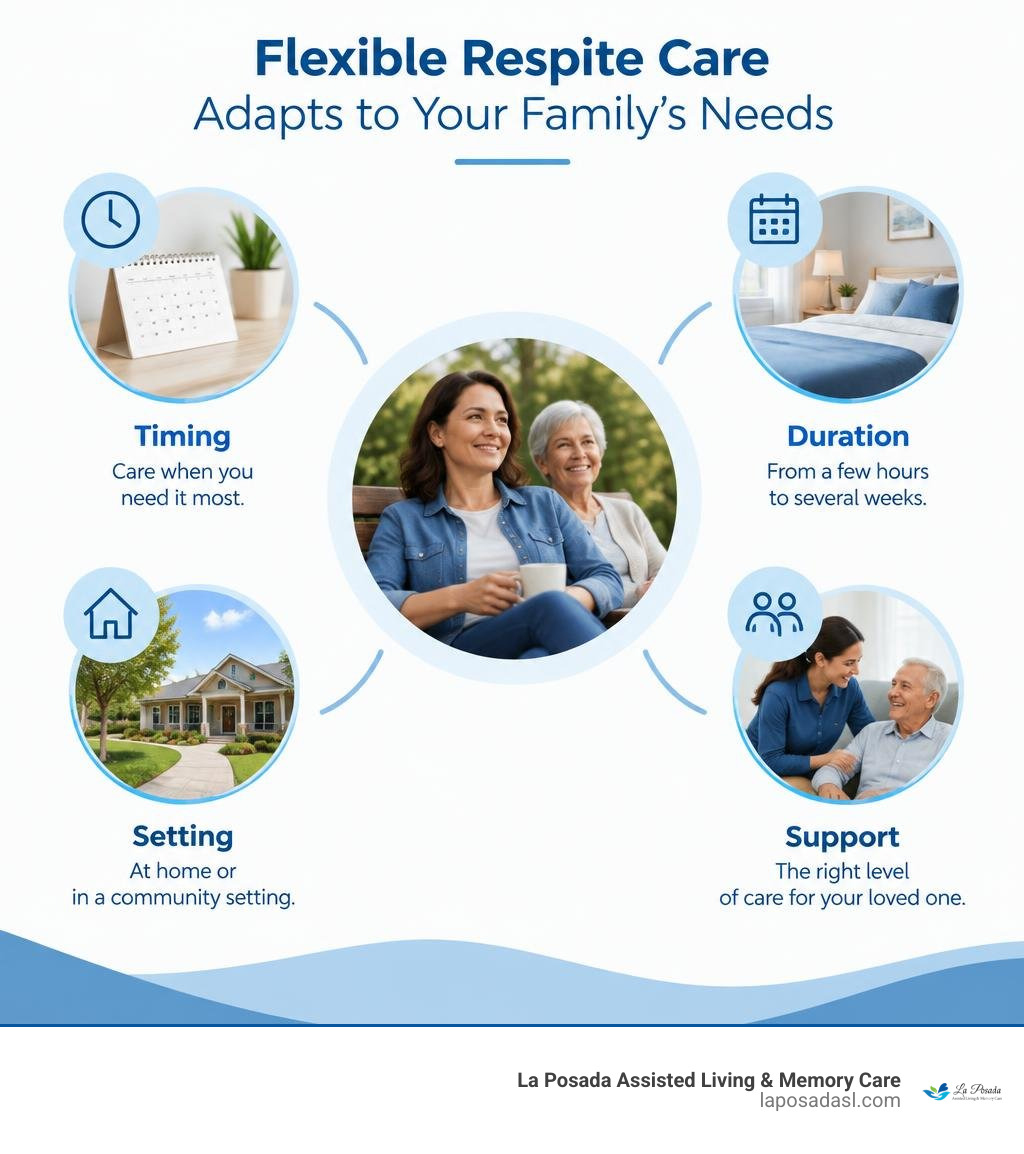
Flexible respite care gives a family caregiver a break while someone else provides temporary support for their loved one. Instead of fitting every family into a fixed schedule, care may be arranged around the times, length of stay, setting, and daily routines that work for them. Options depend on the provider and the level of care needed.
If your parent needs close supervision, start by listing their care needs and when you need help. Then ask providers about staff training, available dates, and whether they can follow your parent's usual routine. According to the Family Caregiver Alliance, respite care is an essential service that helps sustain family caregiving over time.
What Is Flexible Respite Care and How Does It Work?
Caring for an aging parent or spouse is one of the most meaningful acts of love, but it is also physically demanding and emotionally intense. Many family caregivers find themselves managing medication schedules, preparing specialized meals, assisting with mobility, and providing companionship around the clock. Over time, the constant responsibility can lead to profound caregiver strain.
Flexible respite care works as an adaptable safety net. Unlike rigid programs that mandate rigid contracts or strict weekly hours, flexible care models bend to meet your family's exact rhythm. Whether you need an afternoon off to attend your own medical appointments, coverage for a weekend getaway, or several weeks of residential support while recovering from an illness yourself, adaptable respite bridges the gap seamlessly.
The core philosophy centers on honoring the care recipient's lifestyle and dignity while granting the primary caregiver guilt-free, restorative time away. According to the Family Caregiver Alliance, respite care is an essential service that helps sustain family caregiving over time.
| Feature | Traditional Respite Care | Flexible Respite Care |
|---|---|---|
| Scheduling | Fixed hours (e.g., set shifts or strict monthly minimums) | Dynamic hours (as-needed, hourly, partial days, or custom durations) |
| Location Options | Often restricted to specific daytime centers or fixed facilities | In-home, adult day programs, or residential short-term community stays |
| Routine Preservation | Requires the senior to adapt to the facility's rigid schedule | Caregivers adapt to the senior's established personal habits and sleep cycles |
| Notice Required | Often weeks or months of advance booking | Designed for rapid intake, recurring adjustments, and emergent needs |
| Service Customization | Standardized, one-size-fits-all care plans | Individualized holistic plans matching physical, social, and emotional needs |
Core Components of Adaptable Support Models
To provide true relief, an adaptable care model encompasses several key building blocks:
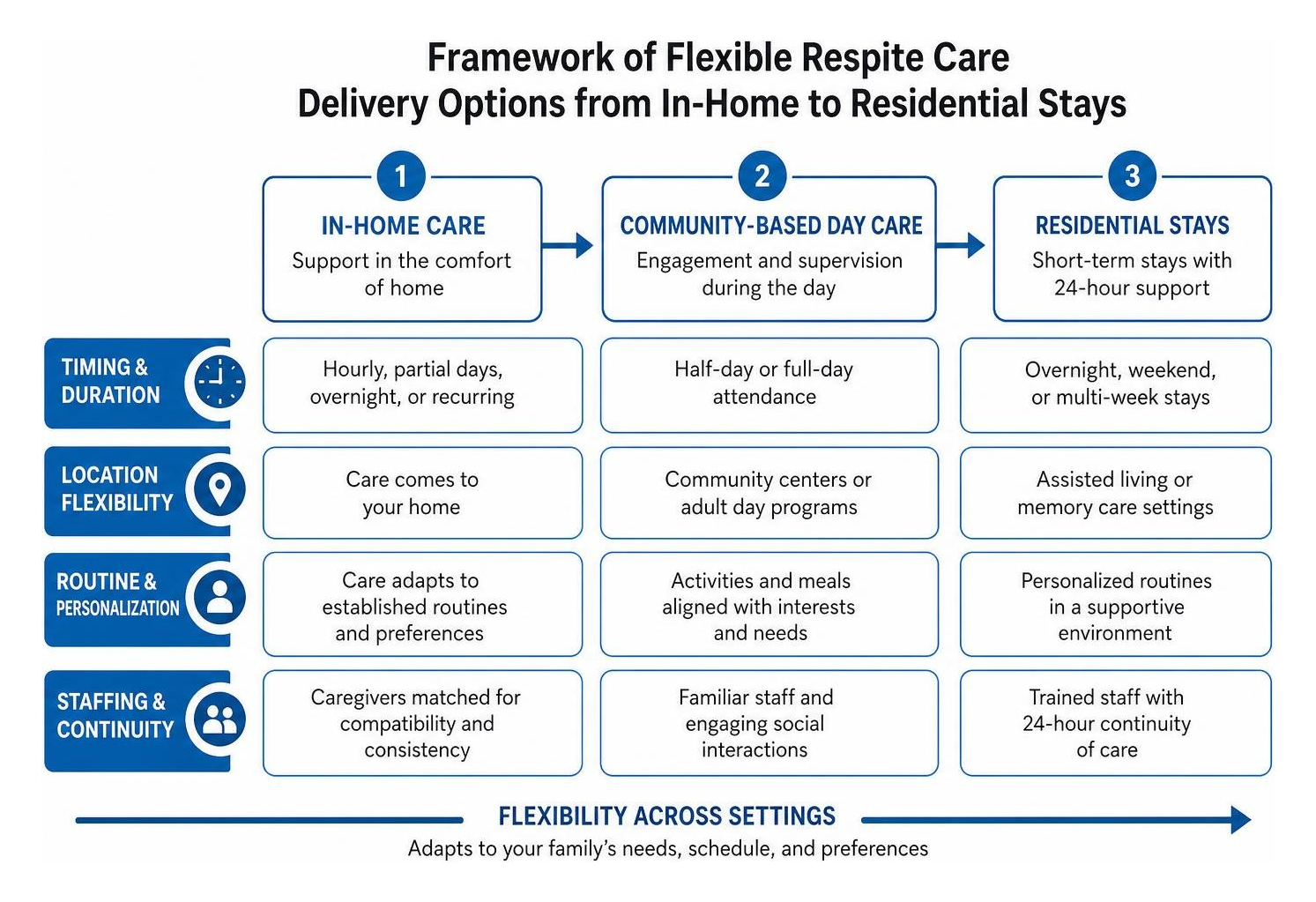
- Timing & Duration: Services can range from a four-hour block in the afternoon to overnight supervision, weekend stays, or extended multi-week arrangements.
- Location Flexibility: Families can choose between in-home assistance, community-based day engagement, or residential short-term stays in an assisted living or memory care environment where 24-hour support is available.
- Personalized Daily Routines: Rather than forcing a senior who loves sleeping in until 9:00 AM to wake up at dawn, adaptable care providers tailor their assistance to the individual's natural body clock, culinary preferences, and favorite pastimes.
- Consistent Staffing: High-quality providers match caregivers based on personality compatibility, care complexity, and language preferences to build trust and continuity.
Integrating Flexible Respite Care with Existing Health Services
Adaptable respite care does not operate in a vacuum. It works best when coordinated with a loved one's broader healthcare team. For seniors living with chronic illnesses, mobility limitations, or cognitive decline, continuity of care is vital to prevent hospital readmissions and reduce anxiety.
When transitioning a senior into a short-term respite stay or introducing a new in-home caregiver, providers coordinate closely with visiting physical therapists, occupational therapists, primary care physicians, and home health nurses.

For seniors who require dedicated memory support, clear multidisciplinary communication ensures that behavioral management techniques, cueing strategies, and sensory routines remain consistent. Sharing detailed dietary restrictions, fall-risk management plans, and non-pharmacological soothing techniques creates a seamless safety net for your loved one.
Key Benefits for Family Caregivers and Loved Ones
The positive impact of adaptable respite extends across the entire family dynamic. When caregivers are supported, seniors thrive.
For family caregivers, stepping away temporarily reduces chronic stress hormones, lowers the risk of depression, and restores physical energy. It gives you space to nurture your career, invest in your marriage, spend time with children or grandchildren, and maintain your own health.
For seniors, respite care offers vibrant social engagement. In-home companions bring fresh energy, stories, and activities into the home. In residential settings, guests enjoy group fitness, musical performances, art classes, and nutritious dining alongside peers, stimulating cognitive function and reducing feelings of isolation.
Recognizing Caregiver Burnout
Many caregivers push through exhaustion until their body or mind forces them to stop. Watch for these common indicators of caregiver stress:
- Emotional Exhaustion: Persistent feelings of overwhelm, irritability, anxiety, or tearfulness.
- Physical Depletion: Chronic fatigue despite sleeping, frequent headaches, or weakened immune defenses.
- Social Withdrawal: Pulling away from friends, hobbies, and personal interests.
- Changes in Sleep Patterns: Insomnia, interrupted sleep, or oversleeping.
- Feelings of Resentment: Experiencing guilt, frustration, or anger toward the caregiving role or the care recipient.
- Neglect of Personal Health: Skipping personal medical visits, ignoring nutrition, or neglecting exercise.
Overcoming Implementation Challenges and Staffing Hurdles
While the benefits are clear, delivering truly adaptable respite care comes with real-world hurdles that providers must navigate.
- Workforce Availability: The broader senior care sector faces ongoing staffing demands. Flexible models require deep talent pools to accommodate shifting family schedules without compromising consistency.
- Vetting and Background Screening: Ensuring safety requires rigorous background checks, reference verifications, and health screenings for every staff member.
- Specialized Dementia Training: Seniors with cognitive conditions need care from staff who understand validation therapy, redirection, and de-escalation techniques.
- Regulatory Compliance: Residential communities providing respite must maintain state licensing standards, adhere to stringent medication management protocols, and uphold health safety guidelines.
Reputable providers invest heavily in ongoing caregiver education, competitive compensation, and structured oversight to ensure that families receive dependable, high-quality support whenever they need it.
How Modern Technology Enhances Scheduling and Care Coordination
Technology has transformed the ease of organizing temporary care. Families no longer have to rely on endless games of phone tag to book assistance or confirm shifts.
Modern care coordination platforms feature intuitive scheduling portals where families can request care blocks, update care instructions, and track caregiver arrivals in real time. Digital care logs allow relief staff to document fluid intake, meals, medication administration, mood, and daily activities directly on a secure dashboard accessible to family members.
Virtual check-ins and video conferencing tools enable family members to connect with their loved ones during residential stays, providing total peace of mind while away.
How to Access and Fund Adaptable Care Solutions
Navigating the financial and logistical landscape of senior care can feel daunting, but several pathways can help cover costs.

- Comprehensive Needs Assessment: Start by scheduling an intake evaluation with a licensed home care agency or senior living community to determine exact care levels and medical needs.
- Long-Term Care Insurance (LTCI): Many comprehensive policies include daily or monthly allowances for both in-home and facility-based respite care once elimination periods are met.
- Veterans Benefits: The VA provides qualifying veterans and surviving spouses with Respite Care Benefits, as well as the Aid and Attendance pension, which can offset short-term and ongoing care expenses.
- Medicaid Waivers: Depending on your state, Home and Community-Based Services (HCBS) waivers may allocate funding for family caregiver relief.
- Private Pay and Family Budgeting: Many families choose to budget out-of-pocket for scheduled weekly or monthly relief, viewing it as an essential investment in their long-term sustainability as caregivers.
Evaluating Providers for Quality Flexible Respite Care
When interviewing agencies or touring senior living communities, asking targeted questions will help you find the right fit:
- What are your staff-to-resident ratios during the day and overnight?
- What specialized training or certifications do your caregivers hold regarding Alzheimer’s and dementia care?
- How do you handle medical emergencies or sudden behavioral changes?
- Can we schedule a short trial visit or day stay before booking an extended period?
- How do you ensure my loved one’s dietary, sleep, and social preferences are respected?
Frequently Asked Questions About Respite Support
How quickly can short-term relief care be scheduled?
Standard respite stays usually require a few days of advance notice to complete necessary medical assessments, physician orders, and intake paperwork. However, many responsive providers maintain expedited intake pathways for emergency situations—such as sudden caregiver illness or family emergencies—and can arrange same-day or next-day admissions when documentation is readily available.
Does Medicare pay for short-term caregiver relief?
Traditional Medicare does not generally cover non-medical respite care or standard residential assisted living stays. However, there is an important exception: Medicare covers up to five consecutive days of inpatient respite care at a time for patients actively enrolled in Medicare-certified hospice care. Outside of hospice, families typically rely on Long-Term Care Insurance, VA programs, Medicaid waivers, or private funds.
How do adaptable care models accommodate seniors with memory loss?
High-quality adaptable programs create structured, secure environments designed specifically for cognitive challenges. Caregivers use gentle redirection, familiar music, sensory activities, and calming spaces to ease transitions. Secure community layouts prevent wandering while allowing safe freedom of movement, and staff work closely with families to maintain the senior's established morning and evening rituals.
Conclusion
Caregiving is a marathon, not a sprint. Caring for yourself is not selfish—it is the single most important step you can take to ensure your loved one receives loving, patient, and sustainable support over the long haul.
At La Posada Assisted Living & Memory Care, our family-owned community in Whittier, CA, provides warm, personalized short-term and residential care designed to nurture body, mind, and spirit. Whether you need reliable memory care support or a compassionate environment for a short-term respite stay, our team is here to help your family find balance and peace of mind.