

Top Types of Residential Homes for Mentally Challenged Adults
Residential homes for mentally challenged adults provide structured living environments with varying levels of support, from semi-independent apartments to 24/7 skilled nursing care. The main models include group homes, specialized assisted living, intermediate care facilities, and supported apartments. Seven out of every 10 adults with a disability live at home with their parents and family caregivers. While family care provides deep love and familiarity, it often creates long-term challenges. Aging parents face caregiver burnout, and adult children can experience social isolation. Planning ahead ensures a smooth transition to an environment where your loved one can thrive for life.
When evaluating residential settings, families encounter a diverse spectrum of models designed around different levels of autonomy and medical need. Today's housing and support programs for adults with disabilities focus on blending everyday support with community engagement.
Group Homes and Certified Community Residences
Group homes—often structured as certified community residences—typically host 4 to 14 individuals in standard neighborhood houses. These homes offer 24/7 staffing, shared living spaces, private or semi-private bedrooms, and daily support with chores, meal preparation, hygiene, and life-skills development. The primary goal is fostering a family-like atmosphere while providing continuous safety oversight.
Specialized Assisted Living and Adult Foster Care
Specialized assisted living communities and adult foster care homes bridge the gap between shared independent living and intensive medical care. These settings provide personalized personal care, organized recreational activities, culinary services, and medication management in a homelike environment. Staff members remain on site around the clock to support residents who require help with activities of daily living (ADLs) or have evolving cognitive and behavioral support needs.
Skilled Nursing Facilities and Intermediate Care
Skilled nursing facilities (SNFs) and Intermediate Care Facilities for Individuals with Intellectual Disabilities (ICF/IIDs) serve individuals with severe physical disabilities, profound medical complexities, or intensive behavioral health needs. These environments offer round-the-clock licensed nursing care, continuous clinical monitoring, and comprehensive therapeutic support such as physical, occupational, and speech therapies.
Supported Apartments and Independent Living Options
Supported apartments and HUD-subsidized housing programs cater to adults capable of living semi-independently. Residents rent their own apartments—often using Section 8 housing vouchers—and receive scheduled drop-in support, vocational coaching, case management, and crisis intervention services several hours per week.
Understanding Care Levels: Group Homes vs. Assisted Living vs. Skilled Nursing
Selecting the right environment requires understanding how staff intensity, medical capabilities, and daily support structures differ across care models.
| Care Model | Primary Focus | Staffing Level | Medical Oversight | Typical Monthly Cost Structure |
|---|---|---|---|---|
| Supported Apartments | Semi-independent living and self-direction | Drop-in support visits (a few hours weekly) | Self-managed or external visiting nurses | Subsidized rent (approx. 30% of income) + Medicaid-funded services |
| Group Homes | Life skills, behavioral support, and social integration | 24/7 direct support professionals (DSPs) | Medication administration by certified staff; on-call clinical oversight | SSI/SSDI room & board ($1,100–$1,500/mo) + Medicaid Waiver daily service rates |
| Assisted Living | Daily personal care, meals, and socialization | 24-hour trained care staff and on-site directors | Licensed nurses on staff; regular medication and wellness management | Private pay or Medicaid assistance ($4,000–$6,500/mo) |
| Skilled Nursing (SNF) | Intensive medical care and physical assistance | 24/7 licensed nurses (RNs/LPNs) and CNAs | Continuous physician and skilled nursing oversight | Exceeds $10,000/month; funded via Medicaid, Medicare, or private pay |
Key Support Services and the Least Restrictive Environment Rule
Modern disability housing is built on the foundation of resident rights, empowerment, and person-centered planning.
Essential Support Services in Homes for Mentally Challenged Adults
Comprehensive residential programs deliver holistic services tailored to each resident's individual plan, including:
- 24/7 Supervision and Safety Monitoring: On-site direct care professionals ensure physical safety, assist with crisis de-escalation, and offer continuous reassurance.
- Medication Management: Trained staff oversee prescriptions, coordinate with pharmacies, and administer daily medications reliably.
- Life Skills and Vocational Training: Residents learn cooking, budgeting, personal hygiene, and laundry, with opportunities to pursue community employment or volunteer work.
- Community Integration: Structured outings, trips to local events, and access to therapeutic amenities help foster genuine neighborhood belonging.
- Dual-Diagnosis Care: Homes providing specialized residential support for mental illness and dually diagnosed community care coordinate both psychiatric and developmental therapies under one roof.
Legal Principles: The Least Restrictive Environment and CMS Guidelines
Under the landmark U.S. Supreme Court Olmstead ruling and regulations enforced by the Centers for Medicare & Medicaid Services (CMS), individuals with disabilities must receive services in the least restrictive environment possible.
CMS Home and Community-Based Services (HCBS) regulations mandate that funded settings cannot resemble isolated institutions. Residents must have access to their broader communities, control over their personal schedules, privacy in their living units, freedom to receive visitors, and choices regarding their meals and daily activities.
Funding Options: Navigating Medicaid, SSI, and Private Pay
Securing long-term funding is often the most complex step for families exploring residential care.
Government-Funded vs. Private-Pay Homes for Mentally Challenged Adults
Understanding the differences between funding models helps families identify practical long-term options:
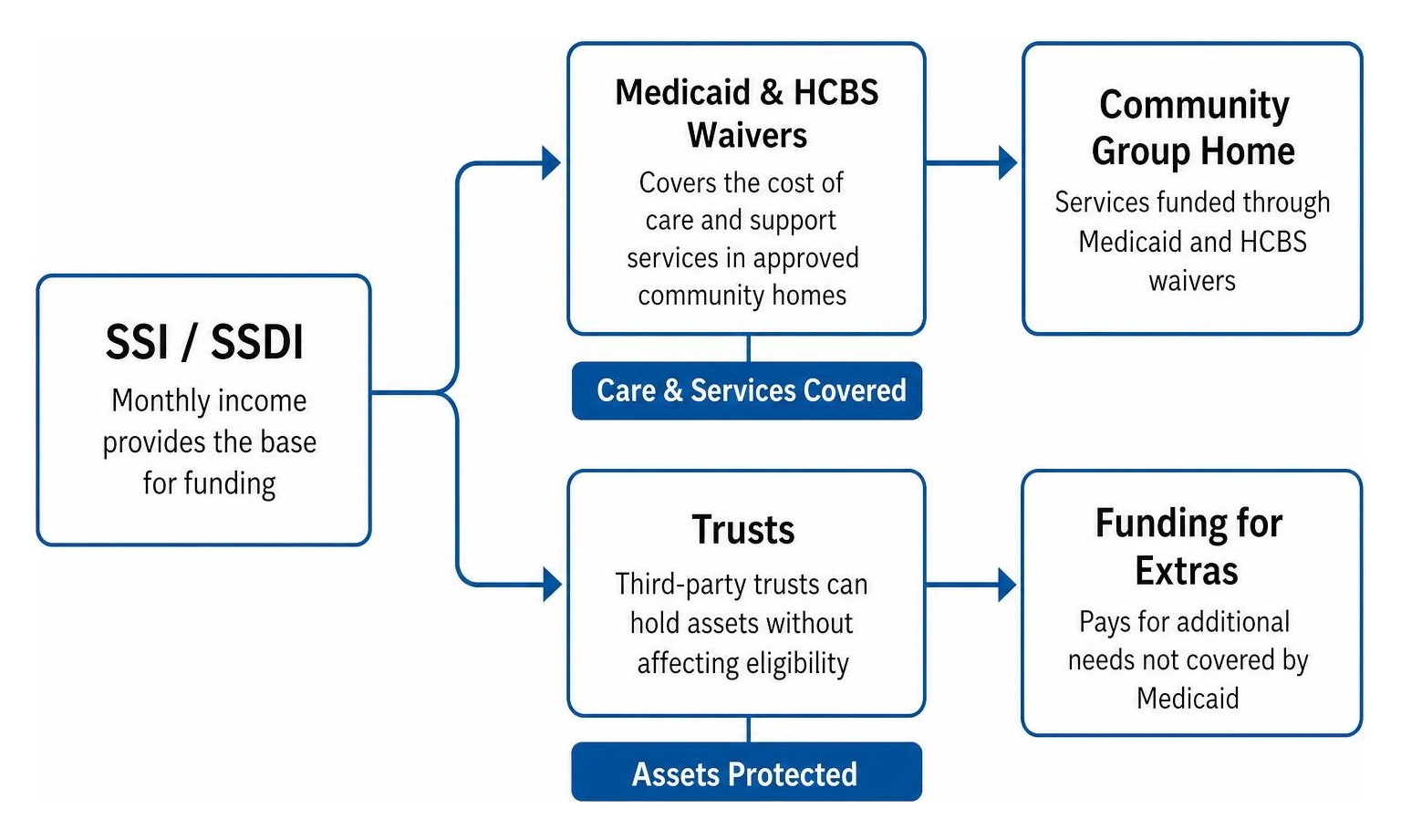
- Government-Funded Group Homes: Certified through state developmental or mental health authorities, these homes cover daily care using Medicaid and HCBS waivers. Room and board are funded via the resident's monthly Supplemental Security Income (SSI) or Social Security Disability Insurance (SSDI).
- Private-Pay Communities: Often offering campus-style housing, specialized equestrian therapy, or luxury amenities, these communities require out-of-pocket payments and rarely accept government vouchers.
- Nonprofit and Charitable Homes: Mission-driven organizations provide subsidized residential care through community donations, volunteer support, and sliding-scale fee programs.
Utilizing Medicaid Waivers, Section 8, and Special Needs Trusts
To maximize available financial support:
- Home and Community-Based Services (HCBS) Waivers: Cover core care services, such as personal assistance, behavior support, and transportation, allowing Medicaid funds to be used outside institutional settings.
- Supplemental Security Income (SSI): Pays for room, board, and basic living expenses. Many long-term group homes set their monthly room-and-board rates directly to standard SSI/Medicaid Special Assistance benefit amounts.
- Section 8 Vouchers: Cover rent in supported apartment programs, with residents contributing roughly 30% of their adjusted monthly income.
- Special Needs Trusts (SNTs): Allow parents and relatives to set aside funds for an adult child's housing, enrichment, and personal needs without jeopardizing their eligibility for Medicaid or SSI.
A Step-by-Step Guide to Finding and Selecting the Right Home
Finding an appropriate residence requires structured evaluation and realistic comparisons.

Family Home vs. Residential Care: Weighing Pros and Cons
| Living Arrangement | Advantages | Challenges |
|---|---|---|
| Living in the Family Home | Direct family oversight, familiar environment, minimal immediate out-of-pocket housing costs. | High caregiver stress, risk of social isolation, lack of long-term succession planning as parents age. |
| Residential Community Care | Structured 24/7 care, built-in peer connections, life-skills development, permanent long-term stability. | Emotional adjustment period during transition, potential waitlists, adherence to communal house rules. |
How to Evaluate Facilities with Social Workers and Referral Hubs
To begin the placement process, connect with your local county mental health authority or developmental disability intake office. Social workers can assess care needs and direct you toward available local openings, such as long-term mental health group home services or certified community residences. You can also verify provider licensing and review state inspection reports using resources like the Pennsylvania DHS Human Services Provider Directory or your state's equivalent health registry.
When touring prospective facilities, bring this checklist of essential questions:
- What is the staff-to-resident ratio during day, evening, and overnight shifts?
- What qualifications, certifications, and crisis-intervention training do staff members complete?
- How are medical appointments, prescription refills, and dietary restrictions handled?
- What opportunities exist for residents to participate in community activities, work, or day programs?
- How does the home address behavioral challenges, medical emergencies, or evolving health needs?
- Can residents personalize their living quarters, pick their daily meals, and host family visits freely?
Frequently Asked Questions About Residential Mental Health Housing
What are the main eligibility criteria for admission to adult disability homes?
Admission generally requires proof of adulthood (age 18 or older), legal residency or citizenship, and a documented intellectual, developmental, or psychiatric diagnosis established before age 22 (or a qualifying adult mental health condition). Applicants must also undergo functional assessments verifying that they need assistance with daily living activities.
What is the average monthly cost of residential care for adults with disabilities?
Costs vary widely depending on the level of care. Standard group homes charge roughly $1,100 to $1,500 per month for room and board (frequently paid using SSI benefits), while care services are billed to Medicaid. In contrast, specialized skilled nursing facilities often cost more than $10,000 per month due to their intensive clinical requirements.
How do CMS community-based regulations affect housing choices in 2026?
Under current CMS guidelines, all Medicaid-funded residential programs must ensure community integration and individual autonomy. Housing providers cannot isolate residents, restrict visitors without clinical cause, or enforce rigid institutional routines, ensuring individuals retain personal freedom and dignity.
Conclusion
Securing a safe, comfortable, and empowering home for an adult with intellectual or developmental challenges is one of the most loving choices a family can make. Beginning your search early protects aging parents from burnout and ensures your loved one transitions smoothly into a supportive environment built for lifelong growth.
At La Posada Assisted Living & Memory Care, we understand that finding the right care setting is deeply personal. Our family-owned community in Whittier, CA, provides warm, 24-hour care that nurtures the body, mind, and spirit. If your family is exploring supportive residential care or memory support, explore our compassionate assisted living services and schedule a tour with our caring team today.