

How to Find Low-Income Assisted Living for Young Adults
Start with two calls: Ask your local housing authority about Section 8 vouchers and disability-focused housing, including HUD Section 811. Then ask your state Medicaid agency whether home- and community-based services can help pay for personal care. If you need help finding the right program, a local disability services agency or housing navigator can guide you.
Check housing and care costs separately. A rent subsidy may lower the cost of an apartment, while Medicaid may cover eligible support services. Neither automatically pays for both.
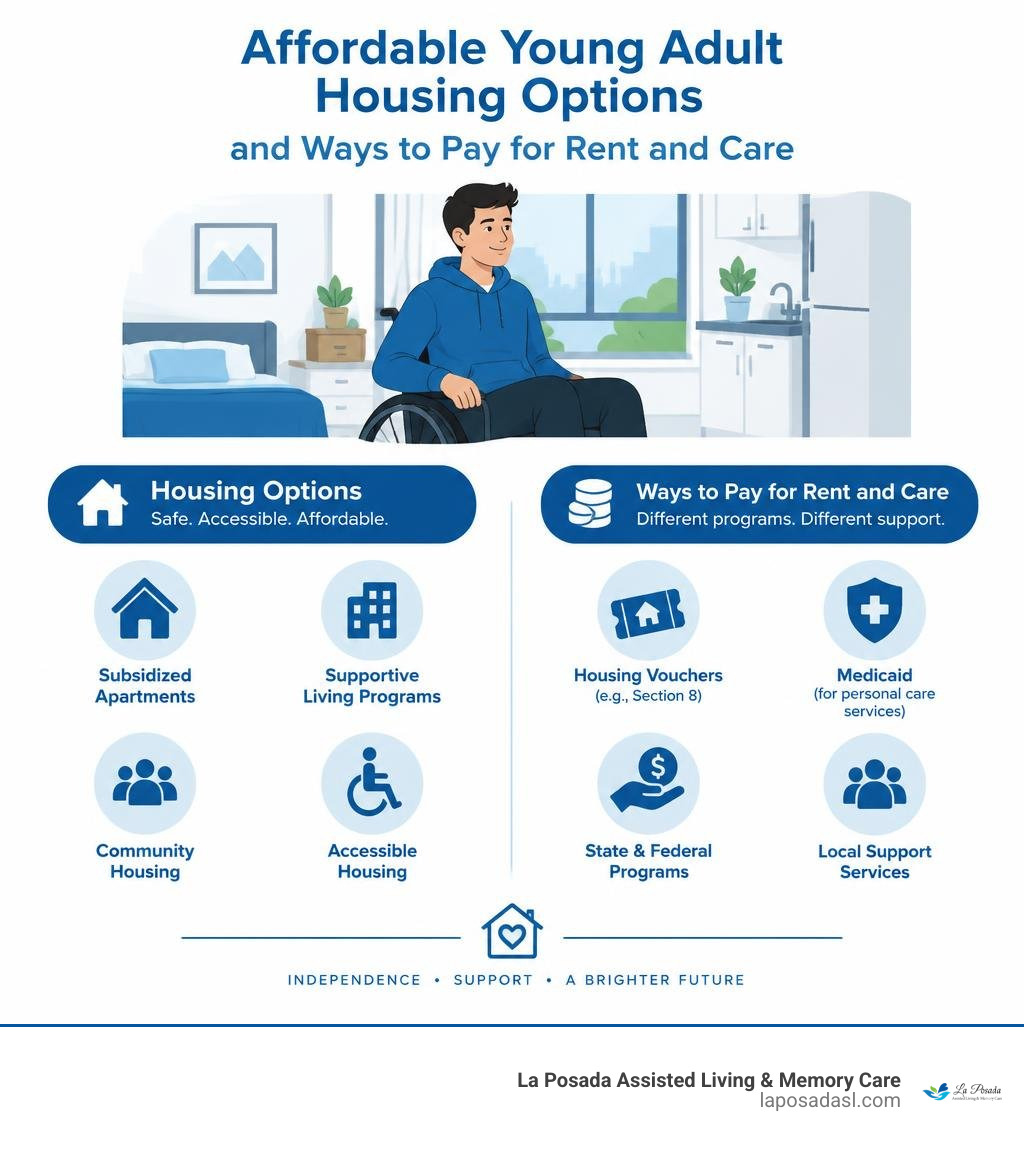
Finding safe, accessible, and affordable housing is one of the most critical challenges facing young people with special needs today. Across the country, more than 4.2 million young people experience homelessness each year. While the median age when young people move out of their parents' home is now in the mid-20s (often 26 or older), young adults living with physical, intellectual, or developmental disabilities face an even steeper climb toward independence.
Skilled nursing facilities and private residential programs can be prohibitively expensive, frequently costing over $10,000 per month. Fortunately, state and federal safety nets, supportive living arrangements, and community initiatives offer viable pathways to help you or your loved one build an independent, fulfilling life without overwhelming financial strain.
Housing Models and Low Income Assisted Living for Young Adults
Under federal civil rights law and landmark Supreme Court rulings, individuals with disabilities have a protected right to live in the least restrictive environment possible. Rather than institutional settings, modern support systems focus on community integration, personal autonomy, and dignity.

Finding the right model depends on personal medical needs, daily living capabilities, and desired level of independence. Navigating low income assisted living for young adults involves understanding several core housing structures:
| Housing Model | Level of Daily Care | Primary Funding Sources | Ideal For |
|---|---|---|---|
| Independent Living Communities | Low (Periodic drop-in aid, accessibility modifications) | HUD Section 8 / Section 811, SSI, SSDI | Young adults who can self-manage daily routines but need physical accessibility and affordable rent. |
| Supported Living Arrangements (SLA) | Moderate (Scheduled personal care, meal assistance, life skills) | Medicaid HCBS Waivers + Project-Based Vouchers | Individuals needing regular support with chores, medication management, and vocational goals. |
| Boarding & Group Homes | Moderate to High (24/7 staff oversight, shared meals, structured routine) | State Disability Grants, SSI Room & Board, Medicaid | Young adults who thrive with built-in social interaction, behavioral support, and consistent supervision. |
| Specialized Residential Care Facilities | High (24-hour nursing, continuous personal care attendant assistance) | Medicaid Long-Term Care Waivers, Special Needs Trusts | Individuals with traumatic brain injuries, significant physical limitations, or severe medical needs. |
Independent Living Communities and Supported Living Arrangements
Independent living communities allow young adults with mild physical impairments or learning differences to maintain their own apartments while receiving community-based aid. Supported Living Arrangements (SLAs) take this a step further by pairing individual or shared apartments with visiting personal care attendants. These aides assist with cooking, cleaning, budgeting, and transportation, allowing residents to build crucial life skills in a self-directed environment.
Boarding Homes, Group Homes, and Alternative Farm-Based Communities
For those who benefit from structured daily routines and constant peer interaction, group homes offer residential living with around-the-clock professional staffing. These homes typically accommodate 4 to 8 residents, fostering deep community bonds and mutual support.
An emerging alternative includes therapeutic ranch- or farm-based residential programs. These settings combine supportive living arrangements with meaningful outdoor work, gardening, and animal care, building vocational confidence and social resilience in a calm, therapeutic setting.
Specialized Facilities in Low Income Assisted Living for Young Adults
When young adults experience significant mobility impairments, severe developmental disabilities, or traumatic brain injuries (TBI), specialized residential care facilities provide higher staffing ratios and dedicated medical oversight. In these settings, state developmental disability waivers help fund personal care aides to ensure residents receive dignified help with bathing, dressing, transfers, and specialized therapy.
State and Federal Funding Pathways for Assisted Living
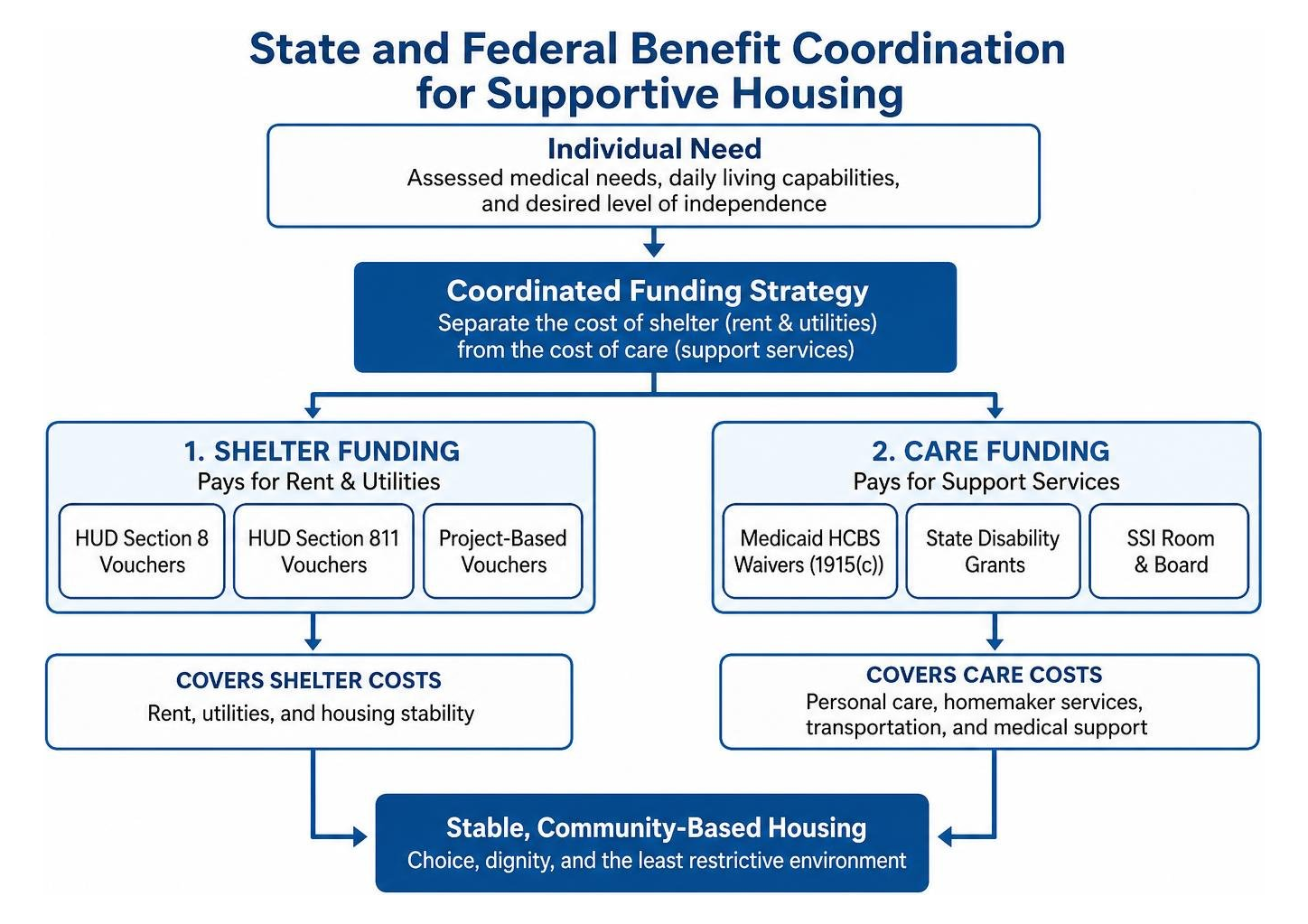
Affording housing and daily support requires combining different public benefit streams. The most sustainable approach separates the cost of shelter (rent and utilities) from the cost of care (personal attendants, therapy, and medical support).
Medicaid HCBS Waivers and State Disability Assistance
Traditional Medicaid generally covers medical appointments and nursing home care, but Home and Community-Based Services (HCBS) 1915(c) waivers allow states to pay for care services delivered directly in community homes. While Medicaid statutory rules prevent waiver funds from directly paying for standard room and board, an HCBS waiver can fully cover:
- Personal care attendant (PCA) hours
- Homemaker and chore services
- Non-emergency medical transportation
- In-home nursing assessments and behavioral therapy
- Assistive technology and home accessibility modifications
Section 8 Vouchers and HUD Subsidized Programs
To cover the actual rent, federal and local housing agencies provide critical rental subsidies:
- Housing Choice Vouchers (Tenant-Based Section 8): Enables recipients to choose private rental housing where the voucher subsidizes the rent. Program participants contribute roughly 30% of their adjusted gross monthly income toward rent, and the government covers the remainder.
- Project-Based Vouchers & Section 811: These subsidies attach directly to specific units in affordable housing developments. Under HUD's Section 811 Supportive Housing for Persons with Disabilities, properties offer deeply subsidized rents alongside coordinated on-site supportive care. You can find specialized state and regional options through agencies such as the Stanislaus Regional Housing Authority affordable options.
- Permanent Supportive Housing Programs: Initiatives such as the Homeward NYC supportive housing guide illustrate how project-based vouchers are blended with on-site mental health counseling, life-skills coaching, and peer mentorship for vulnerable young adults.
Special Needs Trusts and Financial Asset Management
To remain eligible for Supplemental Security Income (SSI) and Medicaid, individuals typically cannot own more than $2,000 in countable financial assets. Families can protect resources and supplement public benefits by establishing a first-party or third-party Special Needs Trust (SNT) or opening an ABLE (Achieving a Better Life Experience) account. An SNT can pay for housing upgrades, specialized therapies, education, and entertainment without reducing essential government assistance.
Transitional Housing for At-Risk Youth and Former Foster Care
Young adults who age out of foster care or face unexpected homelessness confront unique hurdles when seeking stable, supportive housing.
Supervised Independent Living for Foster Youth
Many states offer Extended Foster Care programs for youth aged 18 to 21 or 22. Through initiatives like the Supervised Independent Living program at SAFE, eligible young adults receive safe, furnished housing, individualized case management, mental health support, and a monthly living stipend to help cover essential groceries and personal necessities while they attend school or vocational training.
Permanent Supportive Housing for Young Adults Facing Homelessness
For transitional age youth (TAY) experiencing housing insecurity, non-profit community providers deliver immediate and long-term relief. Comprehensive organizations like the Larkin Street Youth Services housing programs provide a continuum of care that ranges from emergency crisis shelter to rapid rehousing rental subsidies and permanent supportive housing.
Similarly, models like the Phoenix Rising youth supportive housing development offer dedicated single-occupancy studio apartments for young adults aged 18 to 25. These communities integrate primary healthcare linkages, recovery coaching, and on-site vocational training cafés, proving that safe housing combined with targeted skill-building creates a lasting launchpad for independence.
How to Apply for Subsidized Housing and Navigate State Programs
Applying for low-income supportive housing takes diligence, patience, and clear organization. Because demand is high, having your documentation organized before an opening occurs makes a huge difference.

Application Steps for Low Income Assisted Living for Young Adults
- Gather Proof of Identity and Income: Collect certified copies of your birth certificate, government-issued photo ID, Social Security card, and benefit award letters (SSI, SSDI, or SNAP).
- Obtain Medical and Functional Documentation: Ask your primary care doctor, psychiatrist, or social worker for a comprehensive functional assessment detailing your physical or developmental needs.
- Connect with a Housing Navigator: Reach out to your local Aging and Disability Resource Center (ADRC), independent living center, or community action agency to find open waiting lists. You can also research regional subsidized vacancies through state-wide platforms like the aptfinder affordable housing directory.
- Complete Coordinated Entry Assessments: If you are currently unhoused or in temporary shelter, register with your local Coordinated Entry System (CES) to gain priority access to supportive housing units.
- Submit Multiple Applications: Do not rely on a single building waitlist. Apply across multiple properties, housing authorities, and non-profit housing developments simultaneously.
Managing Waitlists and Working with Housing Navigators
Subsidized housing waitlists can take several months or even a few years. Keep a personal housing binder or spreadsheet recording every program name, contact person, date applied, and confirmation number. Update each housing authority immediately if your phone number, mailing address, or income changes, and respond promptly to annual waitlist confirmation letters to avoid losing your spot.
Frequently Asked Questions About Affordable Young Adult Supportive Housing
How is rent calculated for low-income young adult supportive housing?
In most federally subsidized supportive housing developments, rent follows the standard 30% rule. Your tenant-share payment is set at roughly 30% of your adjusted monthly gross income. Housing authorities allow deductions for ongoing out-of-pocket medical expenses, disability-related equipment costs, and dependent care, ensuring your net housing expense remains genuinely affordable.
Can Medicaid cover room and board in assisted living facilities?
Under federal guidelines, Medicaid cannot directly pay for standard room and board costs (such as monthly rent and groceries). However, Medicaid HCBS waivers can pay for the costly supportive services delivered within the home—including personal care assistants, nursing visits, medication administration, and physical therapy. Residents typically use their monthly SSI or SSDI benefit payments to cover room and board charges.
What is the difference between Section 811 and Section 202 housing?
Both programs provide subsidized, supportive multifamily housing funded by HUD, but they serve different populations:
- HUD Section 811: Specifically designed for low- and very-low-income adults with disabilities who are between the ages of 18 and 61.
- HUD Section 202: Exclusively reserved for very-low-income seniors aged 62 and older.
Conclusion
Securing affordable, supportive housing as a young adult requires patience and steady advocacy, but the resources exist to make community living achievable. By pairing federal rent subsidies like Section 8 and Section 811 with state Medicaid HCBS waivers and community support networks, young adults with disabilities can achieve the autonomy and security they deserve.
At La Posada Assisted Living & Memory Care, we have spent years witnessing the profound impact that compassionate, personalized care has on individuals and families. Located in Whittier, California, our family-owned community believes that every person—regardless of age or ability—thrives when supported by tailored assistance, social connection, and holistic wellness programs. Whether you are mapping out long-term care plans or exploring supportive pathways for a loved one, prioritizing dignity, independence, and strong community support is always the best path forward.