

Understanding Respite Care in Nursing Homes and Care Communities
To find trusted nursing homes with respite care near you, start by contacting your local Area Agency on Aging (AAA), checking state health department licensing records for citations, and assessing whether your loved one requires clinical skilled nursing or residential assisted living support. Hospital discharge planners and primary care physicians can also provide immediate referrals to reputable short-term providers with open respite suites.
Caring for an aging family member is an act of profound dedication, but it is also physically and emotionally demanding. Respite care provides short-term, temporary relief for family caregivers, ensuring their loved ones receive professional, 24-hour supervision, assistance with activities of daily living (ADLs), and comprehensive medication management in a secure, supportive setting.
Whether you are planning a well-deserved vacation, recovering from an illness, managing demanding work commitments, or simply needing dedicated time to rest, respite care bridges the caregiving gap. Stays typically range from a few days to several weeks. In addition to scheduled caregiver relief, short-term stays provide critical support during sudden family emergencies or home renovations. Respite also serves as a risk-free trial period—industry data shows that over 30% of seniors on respite stays smoothly transition to permanent residency after experiencing the active community lifestyle and supportive environment.
Nursing Home Respite vs. Assisted Living Respite
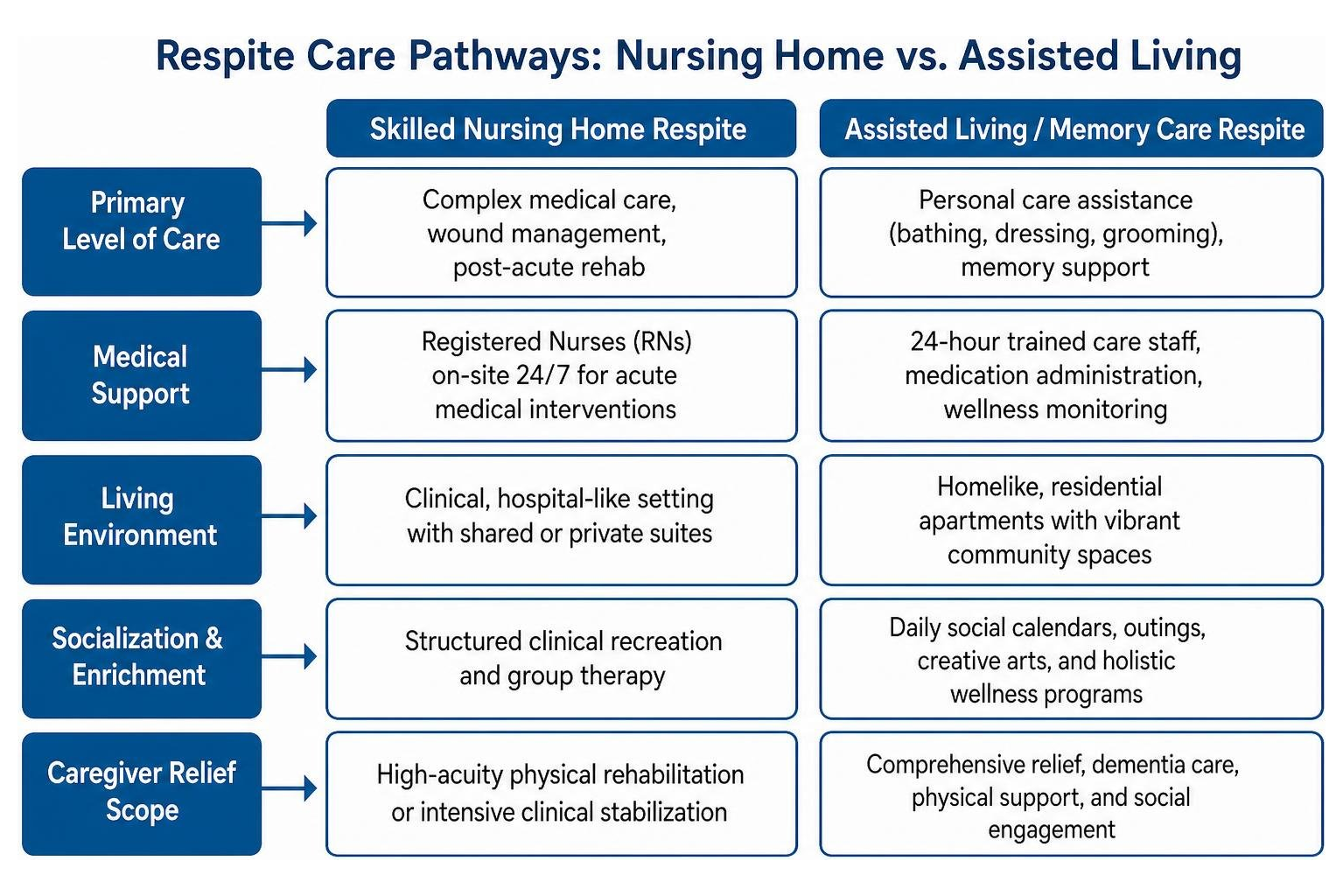
When evaluating short-term care options, families often weigh the differences between skilled nursing facilities (nursing homes) and assisted living communities. The right setting depends directly on the care recipient's medical complexity, mobility, and cognitive needs.
| Feature | Skilled Nursing Home Respite | Assisted Living / Memory Care Respite |
|---|---|---|
| Primary Level of Care | Complex medical care, wound management, post-acute rehab | Personal care assistance (bathing, dressing, grooming), memory support |
| Medical Support | Registered Nurses (RNs) on-site 24/7 for acute medical interventions | 24-hour trained care staff, medication administration, wellness monitoring |
| Living Environment | Clinical, hospital-like setting with shared or private suites | Homelike, residential apartments with vibrant community spaces |
| Socialization & Enrichment | Structured clinical recreation and group therapy | Daily social calendars, outings, creative arts, and holistic wellness programs |
| Caregiver Relief Scope | High-acuity physical rehabilitation or intensive clinical stabilization | Comprehensive relief, dementia care, physical support, and social engagement |
Key Benefits of Temporary Respite Care for Caregivers and Loved Ones
Caregiving responsibilities can gradually accumulate until exhaustion and caregiver stress set in. Research highlights that 37% of family caregivers juggle full-time or part-time paid employment alongside elder care duties. Furthermore, 47% of caregivers state that providing care has negatively impacted their physical or mental health, a figure that climbs to 64% among spouses or partners who live with the care recipient around the clock.
Utilizing temporary respite care offers transformative advantages for both sides of the caregiving relationship:
- Preventing Caregiver Burnout: A planned break allows you to attend to your own medical appointments, career demands, personal relationships, or uninterrupted rest without guilt, knowing your loved one is supported by trained professionals.
- Enriched Socialization for Seniors: Homebound seniors frequently experience social isolation and loneliness. Respite stays introduce them to peers, communal dining, musical performances, fitness classes, and group activities that boost cognitive health and emotional mood.
- Specialized Dementia & Memory Support: Communities equipped with memory care offer structured routines, sensory engagement, and secure environments that reduce anxiety, confusion, and wandering behaviors for individuals living with Alzheimer's or other forms of dementia.
- Professional Health Monitoring: Dedicated care teams track vital signs, nutritional intake, hydration, sleep quality, and medication adherence around the clock, catching subtle health changes before they escalate into hospitalizations.
How to Find Quality Nursing Homes with Respite Care Near Me
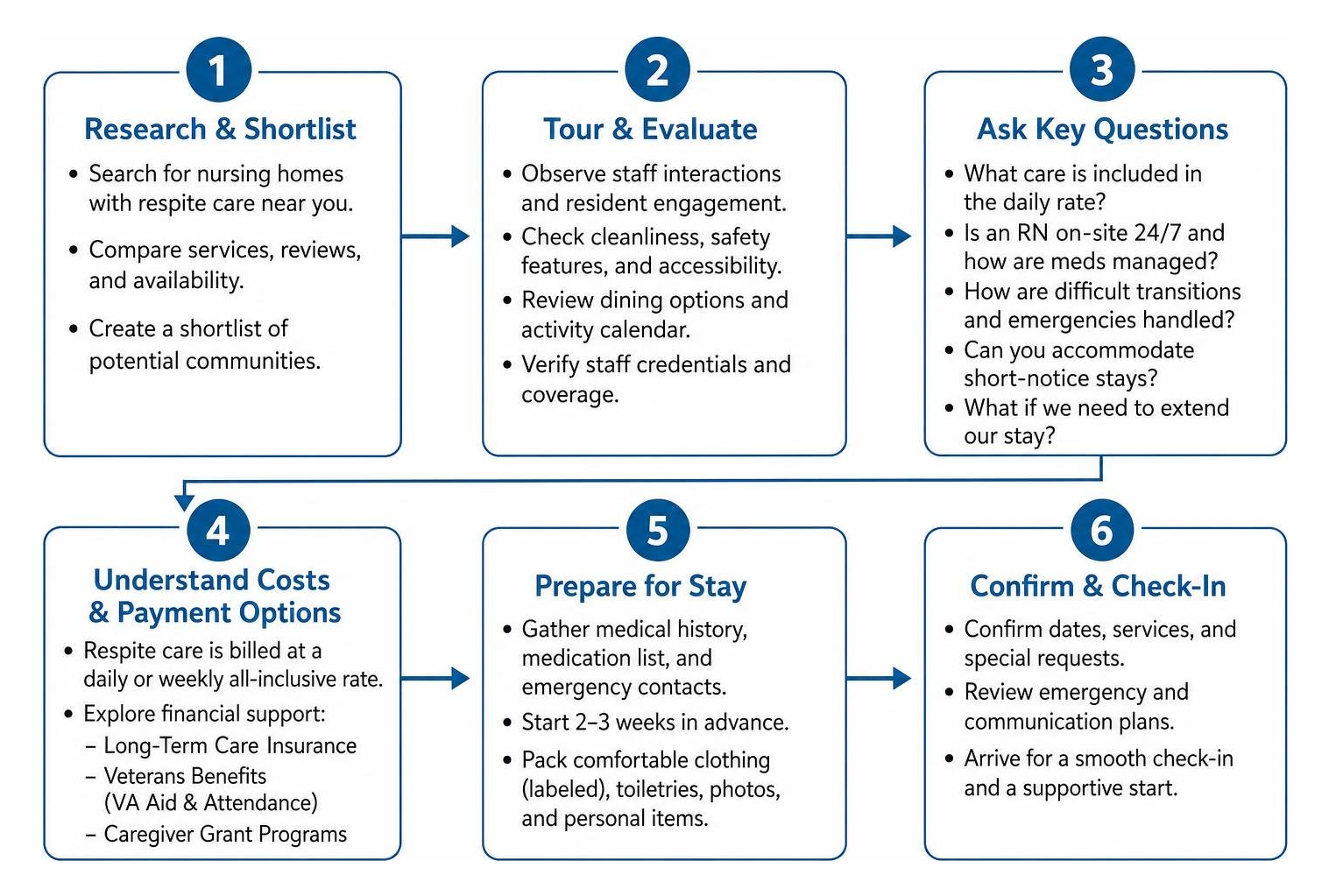
Finding the right provider requires a combination of local research, professional guidance, and thorough evaluation. When searching for nursing homes with respite care near me, consider these trusted avenues:
- Local Area Agencies on Aging (AAA): These regional organizations provide free consultations, directory listings, and insights on local respite programs, family caregiver support funds, and certified facilities.
- Hospital Discharge Planners & Physicians: Healthcare professionals frequently collaborate with short-term residential communities and can recommend reputable options tailored to specific rehabilitation or clinical diagnoses.
- State Licensing Databases: Review public health department records online to verify facility licenses, inspection reports, staffing ratios, and any cited compliance violations.
- Word-of-Mouth & Caregiver Support Groups: Caregiver forums, disease-specific support groups, and local community networks provide unfiltered, real-world feedback about staff attentiveness, food quality, and facility cleanliness.
Steps to Locate and Tour Nursing Homes with Respite Care Near Me

Once you have shortlisted potential providers, touring each community in person is essential. Take note of how the environment feels the moment you walk through the door:
- Observe Staff-Resident Interactions: Do staff members greet residents by name with warmth, patience, and dignity, or do they seem rushed, stressed, and disengaged?
- Evaluate Cleanliness and Safety: Check for clean, odor-free common areas, secure entryways, wide hallways, accessible grab bars, and clearly marked emergency pull cords in bedrooms and bathrooms.
- Review Dining and Enrichment: Ask to see the daily activity calendar and dining menus. Taste a meal if possible to ensure the culinary offerings are nutritious, freshly prepared, and appetizing.
- Check Staff Credentials: Ensure that licensed nurses and certified care associates are present around the clock, with adequate staff-to-resident ratios during evening and weekend shifts.
Key Questions to Ask Nursing Homes with Respite Care Near Me
To ensure there are no surprises during your loved one's stay, prepare a list of targeted questions for the community's intake coordinator:
- What levels of medical and personal care are included in the daily or weekly respite rate?
- Is a Registered Nurse on-site 24/7, and how are medication administration rounds managed?
- How do you support seniors experiencing sun-downing, confusion, or homesickness during their first few nights?
- What is your policy and protocol for emergency hospital transfers if an acute health issue arises?
- Can you accommodate short-notice or emergency respite bookings on weekends or holidays?
- What happens if we need to extend the respite stay by a few days or weeks due to travel delays or health recovery?
For additional guidance on evaluating senior living options, the National Institute on Aging offers comprehensive resources on respite care and caregiver support.
Costs, Payment Options, and Preparing for a Respite Stay
Respite care is typically billed at a daily or weekly all-inclusive rate, which covers furnished accommodations, three daily meals, 24-hour personal care, medication administration, and activity programming.
While most standard respite stays are funded through private pay, several financial assistance avenues may offset expenses:
- Long-Term Care Insurance: Many comprehensive policies feature specific riders that cover short-term respite care stays up to a designated annual limit.
- Veterans Benefits (VA Aid & Attendance): Eligible veterans and surviving spouses can often utilize VA respite care benefits for up to 30 days per calendar year.
- Caregiver Grant Programs: Local nonprofit foundations, disease-specific associations (such as the Alzheimer's Association), and municipal caregiver support initiatives periodically offer respite voucher grants.
To prepare for a smooth check-in, begin gathering medical history records, a current physician-signed medication list, and emergency contact details about two to three weeks in advance. When packing, bring comfortable, familiar clothing labeled with permanent fabric markers to avoid the classic "mystery of the missing socks" in the laundry, along with favorite toiletries, photos, and personal comfort items.
Frequently Asked Questions About Nursing Home Respite Care
How long can a loved one stay in a nursing home for respite care?
Most communities offer flexible respite stays ranging from a minimum of three to seven days up to six weeks. If your family requires a longer duration due to extended travel or home renovations, stays can often be renewed or converted smoothly into permanent residency.
Can respite care be arranged on short notice during an emergency?
Yes. Many communities maintain dedicated respite suites specifically for emergency placements—such as a primary caregiver's sudden hospitalization or illness. In urgent scenarios, intake teams can expedite clinical assessments to admit a senior within 24 to 48 hours.
What is the assessment process for short-term respite care qualification?
Prior to admission, a community nurse or care director conducts a comprehensive care-needs evaluation. This includes reviewing physician medical orders, evaluating mobility and transfer capabilities, assessing dietary restrictions, and noting cognitive routines. This assessment ensures the team designs an individualized care plan before your loved one arrives.
Conclusion
Taking a proactive approach to respite care is one of the healthiest choices you can make as a family caregiver. Taking regular, planned breaks preserves your physical and emotional wellbeing, allowing you to return to your caregiving journey refreshed, patient, and energized. At the same time, your loved one receives dignified, round-the-clock support in an engaging environment designed to nourish body, mind, and spirit.
For families in Southern California seeking compassionate, family-run support, La Posada Assisted Living & Memory Care in Whittier provides personalized, 24-hour care, enriching holistic programs, and comfortable accommodations tailored to both short-term stays and permanent living. Explore our trusted respite care and senior living services to schedule a tour and secure the peace of mind your family deserves.