

What Is Respite Care and Why Is It Essential for Families?
Respite care is planned or emergency short-term care that steps in so a primary caregiver can take time off. Short-term stays in dedicated senior living settings allow loved ones to receive full support—including personal care, nutritious dining, social activities, and safety monitoring—while family members rest, travel, manage work commitments, or attend to personal health needs.
A family caregiver is anyone—a spouse, adult child, relative, or close friend—who assists an aging loved one with activities of daily living on a regular, non-professional basis. These tasks often include preparing meals, managing medication schedules, coordinating medical visits, assisting with bathing, and providing constant companionship. While caring for someone you love is deeply rewarding, it is also physically and emotionally demanding.
Understanding Caregiver Strain and Physical Health Impacts
Caring for an aging parent or spouse is rarely a standard part-time role. In fact, 37% of caregivers juggle their caring responsibilities alongside paid employment. Juggling professional deadlines with personal care tasks can quickly lead to chronic exhaustion.
Research highlights significant health consequences for family caregivers:
- 47% of caregivers report that providing daily care has negatively impacted their physical or mental health in at least one way.
- 64% of spousal or partner caregivers who live with the care recipient experience notable negative health declines.
- 60% of family caregivers experience chronic health problems, compared to just 33% of non-caregivers.
- More than one-third of caregivers report that their personal finances have suffered as a direct result of their caregiving duties.
Despite these intense demands, an alarming gap remains between the need for support and its utilization: 39% of caregivers state that respite services would be immensely helpful, yet only 13% currently use them. Taking advantage of community and carer support services is not an admission of defeat; it is an essential step to protect both your health and the quality of care you provide.
Key Benefits of Respite for Caregivers and Loved Ones
Taking a step back benefits everyone involved in the caregiving dynamic. Rather than a disruption, a well-planned stay creates positive outcomes on both sides:
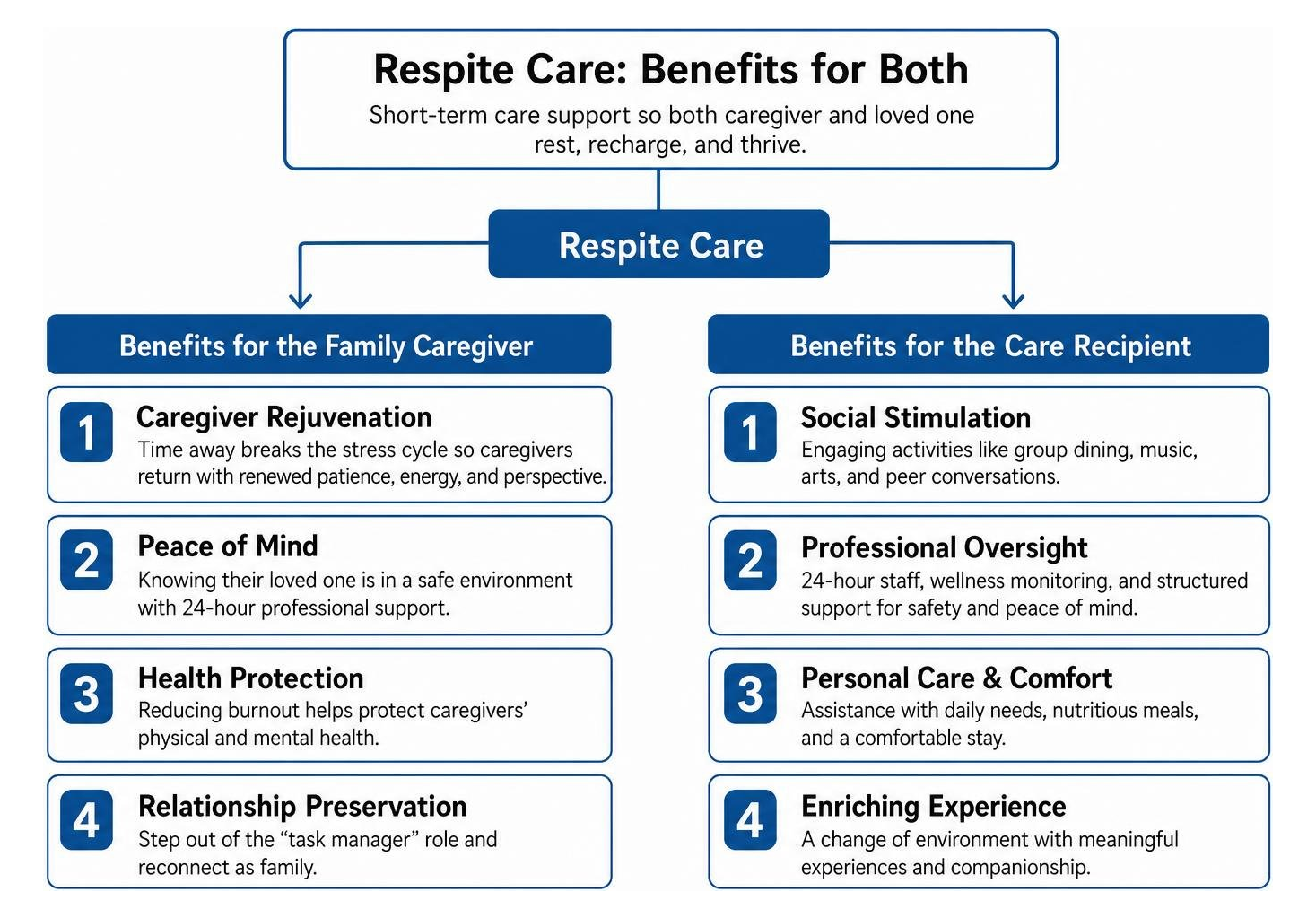
- Caregiver Rejuvenation: Stepping away breaks the chronic stress cycle, helping caregivers return with renewed patience, energy, and perspective.
- Social Stimulation: Home routines can sometimes feel quiet or isolating. A community stay introduces seniors to group dining, music programs, creative arts, and peer conversations.
- Professional Oversight: With 24-hour staff, wellness monitoring, and structured assistance, families enjoy peace of mind knowing their loved one's daily needs are handled safely.
- Relationship Preservation: Continuous caregiving can sometimes blur the line between family bond and clinical routine. Respite allows families to step out of the "task manager" mindset and reconnect as parent and child or loving partners.
Types of Senior Living Communities Offering Respite Care
Senior living settings provide short-term residential stays in fully furnished accommodations where guests enjoy the full suite of community amenities. This model is ideal for families needing days or weeks of comprehensive support.
| Community Model | Primary Focus | Included Services & Amenities | Best Suited For |
|---|---|---|---|
| Assisted Living Respite | Independence with daily living assistance | Furnished suites, chef-prepared meals, medication management, social calendar, housekeeping | Seniors needing help with bathing, dressing, and mobility |
| Memory Care Respite | Specialized cognitive and dementia support | Secure environments, sensory therapies, structured routines, 24/7 specialized supervision | Seniors living with Alzheimer's disease or other forms of dementia |
| Short-Term Recovery Respite | Post-hospitalization or post-procedure recovery | Assistance with daily routines, wellness checks, nutrition, coordination with therapy services | Seniors transitioning from rehab or hospital stays before returning home |
Assisted Living Facilities Offering Respite Care
Assisted living communities focus on balancing independence with personalized daily support. During a short-term stay, guests move into a furnished private or semi-private apartment. They receive tailored help with tasks such as dressing, grooming, bathing, and medication schedules, all while enjoying restaurant-style dining and daily community events.
Many families also use assisted living respite as a low-pressure "trial stay." Experiencing the dining, meeting neighbors, and interacting with staff helps seniors see what community life is like without committing to a permanent move right away.
Memory Care Settings Offering Respite Care
For seniors living with Alzheimer's disease, vascular dementia, or other memory challenges, specialized memory care communities provide a secure, comforting environment. Memory care teams are specifically trained in dementia communication, sensory engagement, and positive behavioral redirection.
Guests in memory care benefit from clear, reassuring daily routines, secured indoor and outdoor walking areas, and therapeutic activities designed to maintain cognitive abilities and reduce anxiety. For family members caring for a loved one with memory loss, these stays offer a reliable way to recharge knowing their loved one is in an environment tailored to their cognitive needs.
Planning a Community Respite Stay
When selecting communities offering respite care, planning ahead ensures a smooth transition. High-quality communities will work directly with your family to understand your loved one's daily habits, wake-up times, food preferences, and personal interests.
While specialized programs like LSI Respite Care provide short-term in-home or community-based relief for up to 48 hours at a time, residential senior living communities are typically arranged for longer periods—ranging from several days to several weeks—giving families extended flexibility.
How to Access Respite Care and Prepare for Emergencies
Arranging a short-term stay is straightforward when approached step-by-step. Planning in advance avoids rush decisions during stressful moments.

Assessing Care Needs and Selecting a Provider
To find the right fit for your loved one, follow these practical steps:
- Complete a Care Assessment: Document your loved one's specific needs, including mobility levels, dietary restrictions, bathing assistance, and transfer support.
- Schedule In-Person Tours: Visit potential communities. Observe how staff interact with residents, check the cleanliness of the suites, sample the food, and review the activity calendar.
- Verify Staffing and Licensing: Inquire about staff-to-resident ratios, night-shift coverage, medication management protocols, and state licensing credentials.
- Gather Admissions Paperwork: Communities typically require a physician's health assessment, a current list of medications, and standard intake documents before arrival.
Building an Emergency Respite Care Plan
Caregivers can experience unexpected emergencies, such as sudden illness, injury, or family crises. Preparing an emergency respite plan ahead of time ensures your loved one receives seamless support without delay:
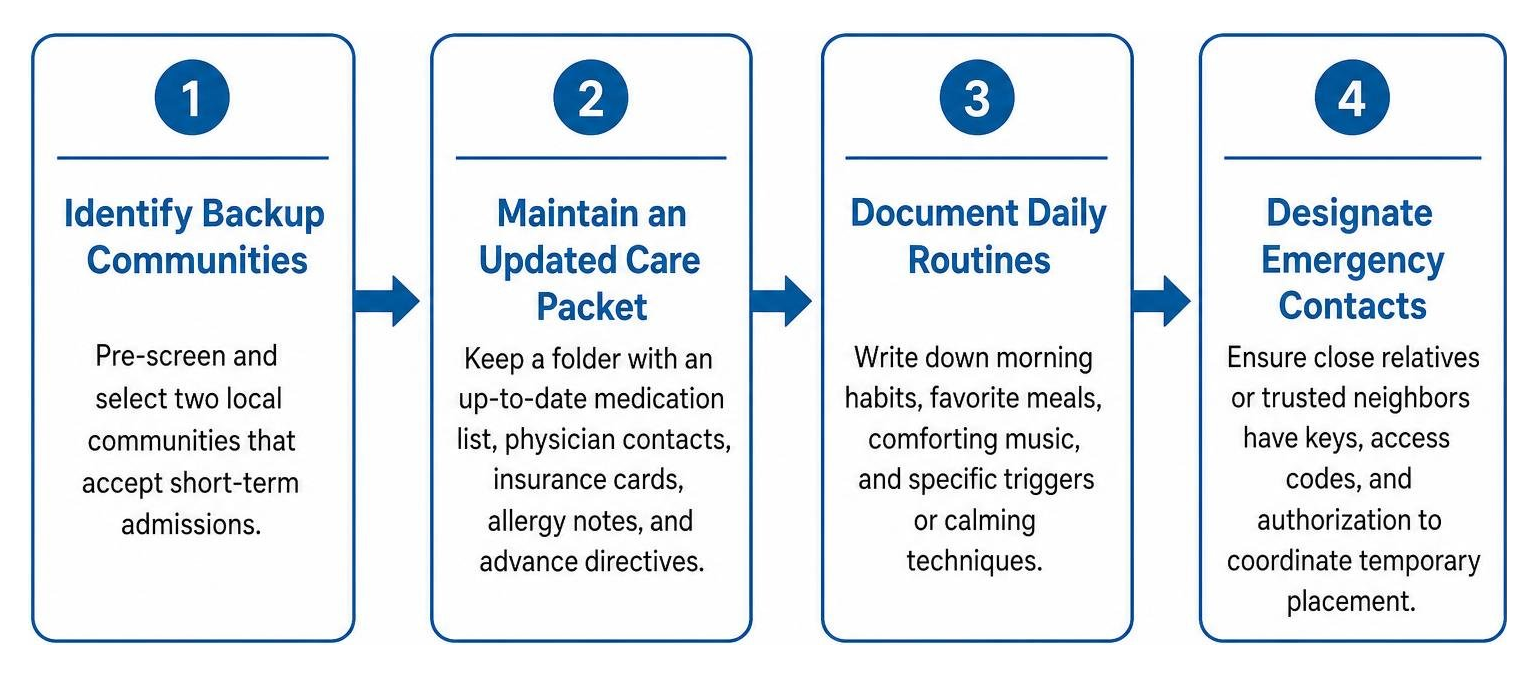
- Identify Backup Communities: Pre-screen and select two local communities that accept short-term admissions.
- Maintain an Updated Care Packet: Keep a folder in your home containing an up-to-date medication list, physician contacts, insurance cards, allergy notes, and advance directives.
- Document Daily Routines: Write down morning habits, favorite meals, comforting music, and specific triggers or calming techniques.
- Designate Emergency Contacts: Ensure close relatives or trusted neighbors have keys, access codes, and authorization to coordinate temporary placement if you are suddenly unavailable.
Understanding Respite Care Costs and Financial Assistance
Understanding the financial side of respite care helps families plan their budgets effectively and explore all available relief programs.

Typical Costs of Respite Care Options
Respite care costs vary depending on the level of assistance required and the type of setting:
- Residential Senior Living Respite: Communities generally charge an all-inclusive daily rate ranging from $150 to $350+ per day, depending on whether your loved one requires standard assisted living or specialized memory care. This daily fee covers furnished lodging, three meals daily, utilities, personal care assistance, medication management, and all community activities.
- In-Home Care Aides: The median hourly rate for private in-home aides is approximately $35 per hour.
- Adult Day Programs: Community day centers cost roughly $75 to $120 per day, with full-time attendance (five days a week) reaching up to $26,000 annually.
- Nursing Home Facilities: Skilled nursing stays, which provide intensive medical rehabilitation, average a median of $315 per day for a semi-private room.
Insurance, Government Programs, and Grant Subsidies
While many residential stays are funded out-of-pocket, several financial assistance programs can help offset costs:
- Veterans Affairs (VA) Benefits: Eligible veterans can access up to 30 days of respite care per calendar year through VA medical centers or contracted community residential care settings.
- Medicare: Standard Medicare does not cover routine assisted living respite care. However, for individuals enrolled in the Medicare hospice benefit, Medicare covers up to five consecutive days of inpatient respite care at a time to give family caregivers a rest, requiring only a modest 5% copayment. Additionally, programs like the Medicare GUIDE (Guiding an Improved Dementia Experience) model offer eligible dementia caregivers up to $2,500 annually for respite services.
- Medicaid Waivers: Many states offer Home and Community-Based Services (HCBS) waivers that allocate funds or vouchers for family caregiver respite.
- Long-Term Care Insurance: Certain private long-term care policies include built-in respite provisions that reimburse daily stays in licensed assisted living or memory care communities.
- Non-Profit Caregiver Grants: Organizations such as local Area Agencies on Aging (AAA), the Alzheimer's Association, and family caregiver coalitions frequently provide short-term respite grant stipends to qualifying families.
Frequently Asked Questions About Respite Care
How long can a senior stay in a respite care program?
Stay lengths are flexible and tailored to family needs. Stays can range from a weekend (2 to 3 days) to several weeks or even a full month. Most residential communities have a minimum stay requirement—often between 3 and 14 days—to help guests settle into their new routine and ensure thorough medical intake.
Does Medicare or private health insurance pay for respite care?
Traditional Medicare and standard private health insurance do not cover room-and-board costs for assisted living or memory care respite stays. Medicare only covers short-term respite (up to 5 consecutive days) when the individual is actively receiving hospice care. Long-term care insurance policies, VA caregiver benefits, and state-specific Medicaid waivers are the most common non-private funding sources.
What should families pack for a community respite stay?
Because communities provide fully furnished apartments, you only need to pack personal essentials:
- 5 to 7 changes of comfortable, labeled clothing and non-skid footwear
- Personal toiletries, grooming products, and eyeglasses
- Prescribed medications in their original pharmacy bottles with clear labels
- Assistive mobility devices (walker, cane, wheelchair)
- Familiar personal touches, such as family photos, a favorite throw blanket, or a cherished book
Conclusion
Sustaining a healthy, loving caregiving relationship requires balance. When you take time to care for yourself, you protect your own well-being and ensure your loved one continues to receive patient, attentive support. Short-term community respite care offers a safe, engaging, and professional environment where your parent or spouse can thrive while you take a well-deserved rest.
At La Posada Assisted Living & Memory Care, our family-owned, community-focused home in Whittier, CA, provides warm, 24-hour personalized care tailored to the mind, body, and spirit. Whether you need temporary relief, post-hospital recovery support, or a welcoming trial stay, our compassionate team is here to support your family every step of the way. Reach out today to learn more about our short-term respite options and schedule a personal tour.