

Finding Residential Respite Care Near Me
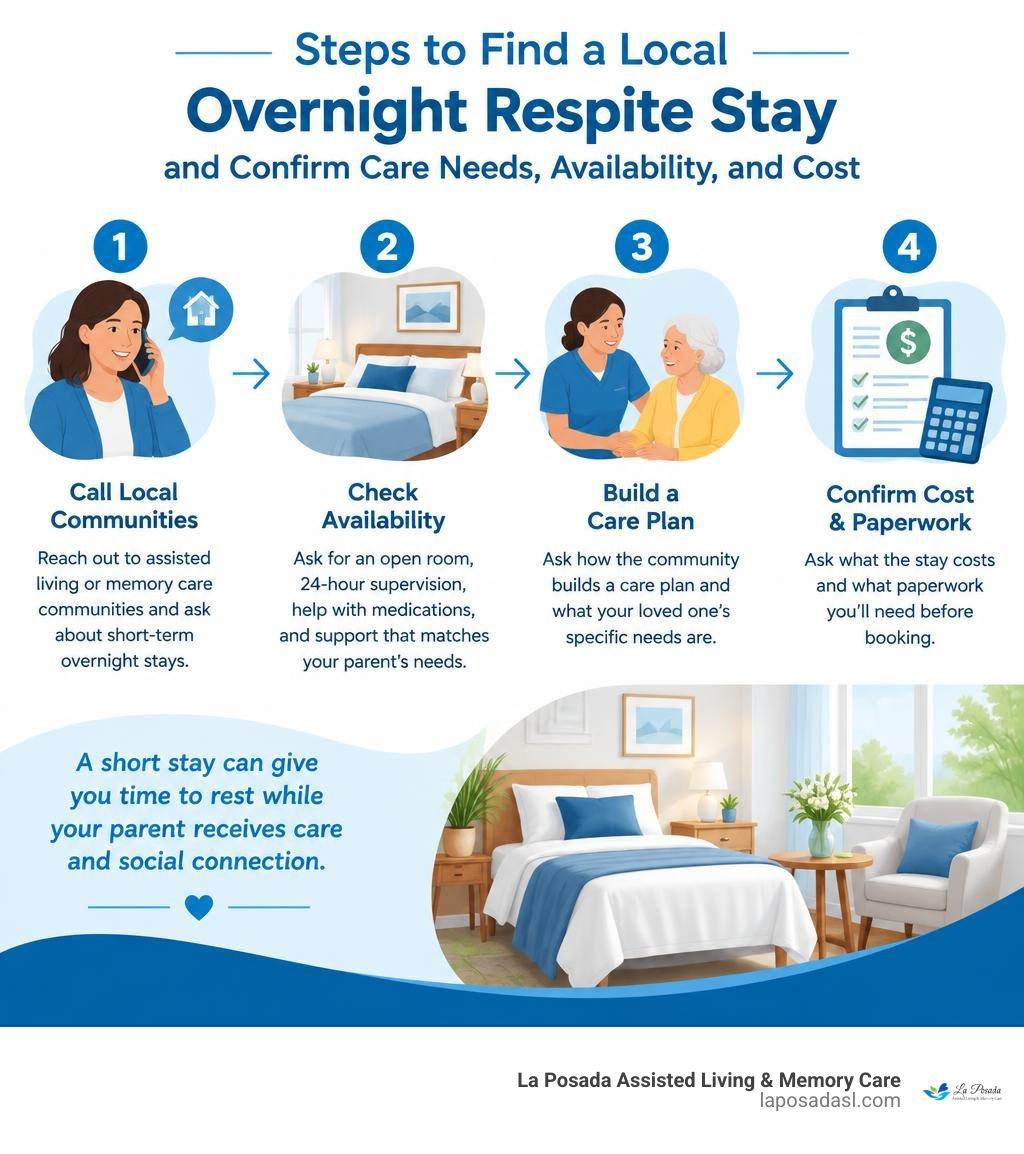
To find residential respite care near me, call local assisted living or memory care communities and ask about short-term overnight stays. Check for an open room, 24-hour supervision, help with medications, and support that matches your parent’s needs.
A short stay can give you time to rest while your parent receives care and social connection. Before booking, ask how the community builds a care plan, what the stay costs, and what paperwork you’ll need.
Understanding Residential Respite Care and How It Differs from Other Options
Caring for an aging parent or loved one is one of the most generous acts of love a person can offer. It is also exhausting. Many caregivers push themselves past their limits, forgetting that a caregiver running on empty cannot provide the steady hand their family member needs. Residential respite care bridges this gap by offering a fully furnished, supportive environment where an older adult can stay overnight, for a weekend, or across several weeks while their primary caregiver takes a well-deserved break.
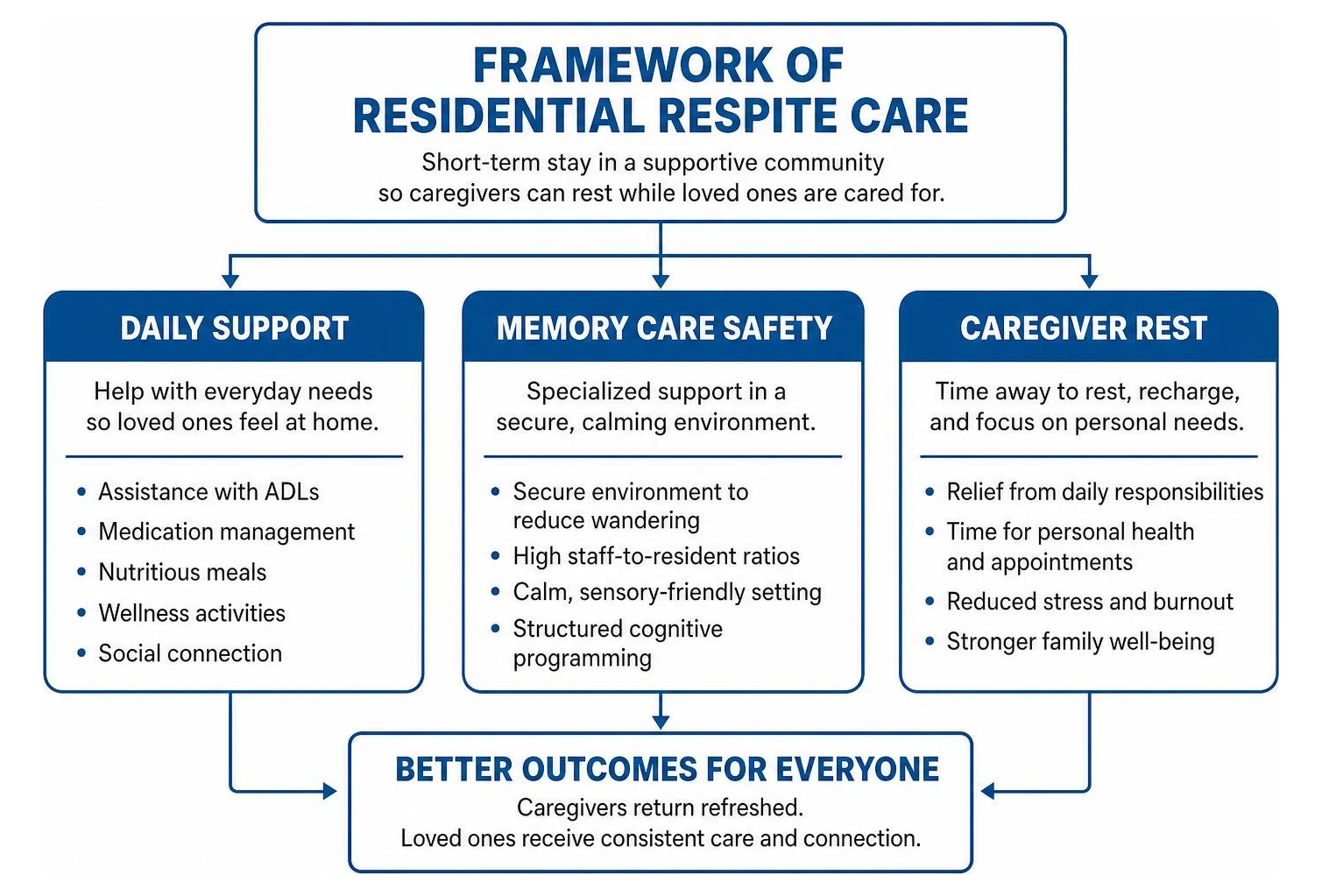
Residential respite provides continuous, around-the-clock support. Guests receive assistance with activities of daily living (ADLs), chef-prepared meals, medication management, and rich social programming.
State-level programs and organizations reinforce the principle that respite care is designed fundamentally as care for the caregiver, preventing burnout and keeping families healthy. For example, statutory frameworks established through initiatives like the New York State Respite Program emphasize that short-term substitute care delays or prevents premature, permanent institutionalization by sustaining family caregivers over the long term.
| Respite Care Option | Typical Length of Stay | Staffing & Supervision | Best Suited For |
|---|---|---|---|
| Overnight Residential Respite | 2 nights to 4 weeks | 24-hour professional care team, wellness staff, secure building | Caregivers traveling, undergoing personal medical procedures, or needing intensive rest. |
Levels of Care: Assisted Living and Memory Care
Residential respite is not a one-size-fits-all service. Senior living communities tailor short-term stays to distinct levels of care depending on your loved one’s specific physical and cognitive needs:
- Assisted Living Respite: Ideal for seniors who need a helping hand with bathing, dressing, medication scheduling, and mobility, but who otherwise enjoy an active, social lifestyle. Guests stay in comfortable, private suites and enjoy daily wellness classes, outings, and communal dining.
- Memory Care Respite: Designed specifically for individuals living with Alzheimer’s disease, vascular dementia, or other cognitive impairments. These specialized neighborhoods offer secure environments with keypad entries to prevent wandering, calm sensory lighting, high staff-to-resident ratios, and structured cognitive programming.
Planning for Individualized Care Needs
Every older adult has unique daily rhythms, personal preferences, and clinical requirements. When arranging a residential stay, the community’s wellness directors collaborate directly with the family to craft an individualized service plan.
Whether your loved one needs strict diabetic monitoring, pureed dietary accommodations, physical therapy reinforcement, or simply a warm companion to sit with during evening routines, a custom plan ensures continuity of care so your loved one feels right at home from day one.
How to Find and Evaluate Residential Respite Care Near Me
Finding the right community requires a mix of thoughtful research, community visits, and asking the right questions.

Key Factors When Screening Residential Respite Care Near Me
When touring potential senior living communities for a short-term respite stay, look closely at how the environment feels and how the team interacts with residents:
- Staff Credentials and Ratios: Are care team members available 24/7 on the floor? What specialized dementia training does the memory care team receive?
- Medication Management Protocols: Can the community accommodate complex medical routines, such as insulin administration or specialized eye drops?
- Safety and Security Features: Are rooms equipped with emergency call systems? Does the memory care neighborhood have secured courtyards and wander-management safeguards?
- Furnished Suites and Amenities: Are the short-term suites fully furnished with comfortable bedding, accessible private bathrooms, and entertainment options?
- Dining and Social Life: Are meals freshly prepared to meet specific dietary needs? Is there a lively calendar of music therapy, exercise classes, and social hours?
Navigating State Directories and National Respite Networks
If you need help exploring local availability or subsidized programs, several national and public agencies maintain searchable databases and navigation hotlines:
- National Respite Locator: The ARCH National Respite Network maintains a comprehensive national database connecting family caregivers to regional lifespan respite programs and vetted providers.
- Area Agencies on Aging (AAA): Local AAAs administer funding through the National Family Caregiver Support Program, offering local referrals, case management, and respite vouchers for caregivers supporting adults aged 60 and older.
- Aging and Disability Resource Centers (ADRC) / No Wrong Door Networks: Programs like NY Connects in New York or the 11 Caregiver Resource Centers (CRCs) across California provide free, unbiased guidance to navigate long-term services and support.
Financial Support, Medicare, Medicaid, and Funding Options
Understanding how to pay for residential respite helps families plan both proactive retreats and unexpected emergency stays without financial strain.
Public Programs and Sliding Fee Scales
While standard Medicare Part A and Part B do not cover room-and-board costs for elective residential respite care in assisted living communities, several public pathways offer relief:
- Medicaid Home and Community-Based Services (HCBS) Waivers: Many states offer HCBS waivers that allocate monthly or annual respite budgets, allowing qualifying low-income seniors to receive temporary out-of-home care.
- Medicare GUIDE Model: Newer initiatives under Medicare, such as the Guiding an Improved Dementia Experience (GUIDE) Model, reimburse participating healthcare providers up to $2,500 annually per eligible dementia patient for respite services, including facility-based overnight respite.
- Statewide Sliding Scale Programs: Programs like the New Jersey Statewide Respite Care Program provide subsidized respite with cost-sharing ranging from 0% to 25% of service expenses, depending on the care recipient’s monthly income and liquid assets.
Veterans Programs and Dementia Relief Funds
- VA Caregiver Support Program: Eligible veterans enrolled in VA healthcare can receive up to 30 days of clinician-approved respite care per calendar year at contracted community residential facilities or VA medical centers.
- Aid and Attendance Benefit: Veterans and surviving spouses who qualify for the VA Aid and Attendance pension can use these monthly funds toward residential assisted living and respite costs.
- Nonprofit Caregiver Grants: Organizations like the Alzheimer's Association and local caregiver coalitions frequently offer emergency respite mini-grants to offset the private-pay costs of memory care respite.
Planning Ahead: Preparing for Planned and Emergency Respite Stays
The best time to research residential respite care is before an emergency happens. When a caregiver suddenly faces personal illness, unexpected surgery, or a family crisis, scrambling to find an available bed creates unnecessary anxiety.

Crucial Preparation Steps for Residential Respite Care Near Me
To guarantee a seamless transition for your family member, follow these proactive planning steps:
- Pre-Screen and Pre-Certify Early: Tour local communities, submit background medical assessments, and have your loved one's physician sign required state health evaluation forms in advance. Communities with your records on file can admit your loved one immediately during a sudden crisis.
- Book a Trial Weekend: Schedule a short two-night stay well ahead of any major caregiver vacation or medical procedure. This familiarizes your loved one with the surroundings, dining team, and staff.
- Organize Medical and Behavioral Profiles: Provide the care team with an updated medication administration record (MAR), a list of primary doctors, and notes on specific behavioral triggers, comforting phrases, and calming routines.
- Pack Comforting Essentials: Bring familiar items from home—such as favorite family photo albums, a cozy blanket, comfortable non-skid slippers, and preferred toiletries—to make the suite feel instantly welcoming.
Frequently Asked Questions About Residential Respite Care
How long can a loved one stay in a residential respite care facility?
Stays typically range from a minimum of three to seven days up to 30 or 60 days, depending on community licensing and family needs. Specialized crisis respite centers or hospital discharge transition programs often accommodate guests for up to 28 days to stabilize health before returning home.
Does Medicare or Medicaid cover residential respite care costs?
Medicare only pays for residential respite care under the Medicare Hospice Benefit, which covers up to five consecutive days of inpatient respite at an approved hospice facility or hospital when the patient is in end-of-life care.
For non-hospice assisted living and memory care respite, costs are primarily paid out-of-pocket, through long-term care insurance policies that include respite riders, or via state Medicaid HCBS waiver vouchers.
How do I prepare a family member with dementia for a short-term respite stay?
Frame the stay positively as a relaxing retreat, wellness getaway, or temporary "senior hotel" rather than a care intervention. Introduce the community team ahead of time, maintain their established morning and evening routines, and share a "life story" sheet with caregivers detailing their past career, hobbies, favorite music, and favorite snacks.
Conclusion: Securing Compassionate Relief Close to Home
Caring for an aging family member is deeply rewarding, but preserving your own physical, mental, and emotional health is what makes sustained caregiving possible. Taking time to recharge is not a failure of care—it is an essential part of it.
At La Posada Assisted Living & Memory Care in Whittier, CA, our family-owned community is dedicated to wrapping your loved one in personalized, 24-hour care within a warm, community-focused neighborhood. Our holistic programs nurture body, mind, and spirit, giving your loved one an enriching experience filled with social connection while you take the time you need to rest and renew.
When you need dependable, compassionate residential respite care, contact our Whittier team to tour our furnished suites, explore our specialized memory care, and create a personalized respite stay that brings peace of mind to your entire family.