

What Is Respite Care and Why Is It Essential for Caregivers?
Caregiving is an act of deep devotion, but even the most dedicated family members reach moments of profound exhaustion. Respite care is temporary relief designed specifically for family caregivers, stepping in to shoulder daily responsibilities so you can recharge, manage personal business, or take a well-deserved vacation.
Across the globe, the caregiving demand is staggering. In France alone, more than 8 million people provide daily care for a dependent loved one due to age, illness, or disability. In the United States, millions of adult children balance full-time jobs, child-rearing, and the complex daily needs of aging parents.
Without routine support, the constant physical and emotional demands of caregiving take a severe toll on your wellbeing. Respite care acts as a safety valve, offering professional, compassionate support that keeps families whole, healthy, and resilient.
Recognizing Caregiver Burnout and the Need for Relief
Caregiver burnout develops gradually. It often starts with mild fatigue and slowly escalates into chronic physical exhaustion, emotional numbness, irritability, and social isolation. When you spend every waking hour anticipating someone else's physical and medical needs, your own health falls by the wayside.
Common signs of caregiver burnout include:
- Disrupted sleep patterns or constant fatigue despite sleeping
- Withdrawal from personal hobbies, friends, and social circles
- Frequent feelings of resentment, guilt, or anxiety
- Neglecting personal doctor appointments and nutrition
- Increased susceptibility to physical illness and headaches
Taking a planned break is not an admission of defeat; it is a fundamental health necessity. Stepping away for a few days or weeks allows your nervous system to reset, preventing the physical breakdown that leaves both you and your loved one vulnerable.
How to Evaluate Quality Respite Care Near Me for Your Loved One
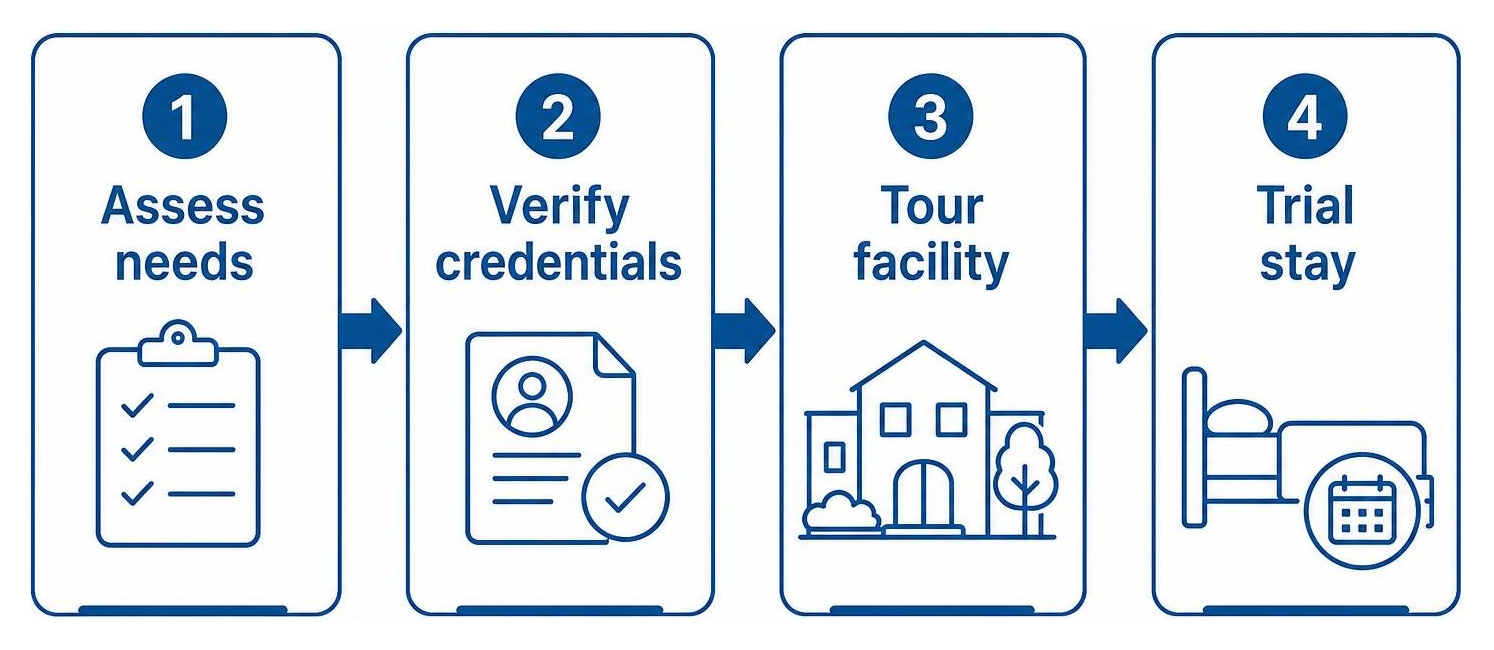
When you begin searching for the right support, finding high-quality providers requires careful evaluation. Whether you are looking at in-home sitters, adult day programs, or residential communities, maintaining strict quality criteria ensures your loved one receives safe, enriching care.
Key evaluation standards to look for include:
- Verified Staff Credentials: Ensure care teams are trained in first aid, CPR, transfer assistance, and personal hygiene management.
- Background Checks and Licensing: Always verify that the agency or residential community conducts thorough background screenings and holds up-to-date state licenses.
- Dementia and Memory Support: If your loved one experiences cognitive decline, look for specialized training in de-escalation, gentle redirecting, and structured engagement.
- Transparent Communication: Choose providers that establish daily updates and clear communication channels with family members.
To help evaluate local providers and navigate public registries, trusted platforms such as Find a Respite Provider | ARCH National Respite Network & Resource Center and Find Respite Care | Beaming Health offer valuable directories for families exploring qualified care solutions across various care needs.
Comparing Short-Term Residential Respite and Memory Care Stays
Choosing the right type of respite care depends largely on your family’s schedule, your budget, and the specific medical or behavioral needs of your loved one.
| Care Model | Best For | Typical Duration | Supervision Level | Key Advantage |
|---|---|---|---|---|
| In-Home Respite Care | Families needing occasional hourly help with errands or appointments | 2 to 8 hours per visit | One-on-one companion or personal aide | Loved one remains in familiar home surroundings |
| Adult Day Programs | Daytime supervision while family caregivers work | Daytime hours (Mon–Fri) | Group supervision with structured daytime staff | Socialization and daytime peer activities |
| Residential Assisted Living Respite | Caregiver vacations, medical recovery, or trial community living | A few days up to several weeks | 24-hour trained care staff and on-site assistance | Full access to meals, housekeeping, and social events |
| Short-Term Memory Care Respite | Seniors with Alzheimer's or dementia requiring secure environments | A few days to several weeks | 24-hour specialized memory care professionals | Secure neighborhood design, sensory programs, and wandering prevention |
Choosing a Residential Respite Stay
For families needing more than a few hours of coverage, short-term residential respite in an assisted living community provides comprehensive peace of mind. During a residential stay, your parent moves into a fully furnished, comfortable suite and enjoys the same amenities, chef-prepared dining, and daily care support as full-time residents.
At La Posada Assisted Living & Memory Care in Whittier, CA, our family-owned, community-focused philosophy ensures that short-term guests are welcomed like lifelong family members. We design holistic programs that nourish the body, mind, and spirit—incorporating gentle movement, musical therapy, art, and vibrant social gatherings. This individualized approach gives family caregivers total peace of mind, knowing their loved one is thriving in a safe, compassionate environment.
Short-Term Residential and Memory Care Community Stays
Caring for someone with progressive memory loss requires specialized vigilance. When family caregivers need to travel or take time off, a standard sitter may not have the expertise needed to manage confusion, sun-downing, or wandering behaviors.
Dedicated short-term memory care stays provide secure, thoughtfully designed environments where residents can move freely without risk. Our specialized memory care neighborhood offers personalized 24-hour care, sensory-rich activities, and structured daily routines that reduce anxiety. Short-term stays also serve as an ideal "trial period," allowing families to experience our compassionate environment before making long-term transitions.
How to Find and Choose Trusted Respite Care Near Me
Finding reliable senior support starts by tapping into established national, state, and local resources. In California, families can connect with their local Area Agency on Aging (AAA) or Aging and Disability Resource Centers (ADRCs), which operate on a "No Wrong Door" model to assist families regardless of income or background.
For families living in Texas or managing care for out-of-state family members, state-sponsored platforms such as Respite Services and the searchable Respite Services directory maintained by the Texas Health and Human Services Commission provide transparent, searchable options categorized by age, service type, and location.
Assessment Steps and Matching Specialized Dementia Needs
Before any residential respite stay begins, a comprehensive pre-admission assessment is conducted. This process ensures the care team can fully accommodate your loved one’s personal preferences, dietary restrictions, mobility level, and medical requirements.
During the assessment, share specific details about:
- Daily Routines: Preferred wake-up times, bathing habits, and meal favorites.
- Medication Management: Exact dosages, administration schedules, and physician orders.
- Behavioral Triggers: Specific calming techniques, familiar music, or soothing activities that help manage moments of disorientation or agitation.
- Mobility and Safety: Fall risks, transfer assistance needs, and assistive equipment used daily.
Navigating Funding, Medicaid, and Financial Assistance for Respite Care Near Me
Paying for respite care requires reviewing private and public resources. While standard health insurance and original Medicare do not cover non-medical residential respite care, several avenues can help offset the cost:
- Private Pay: The majority of short-term residential respite stays are funded out-of-pocket through daily or weekly rates. On platforms like Care.com, the average posted rate for individual hourly caregivers is $22.00/hr, with an overall average hourly rate of $22.80 as of October 2026. Residential stays generally bundle housing, meals, personal care, and activities into an all-inclusive daily fee.
- Veterans Benefits: The Department of Veterans Affairs (VA) provides substantial caregiver support, often offering up to 30 days of respite care per calendar year for eligible veterans.
- Medicaid Home and Community-Based Waivers: In many states, specific Medicaid waiver programs provide vouchers or subsidies for family caregiver relief.
- Long-Term Care Insurance: Certain comprehensive long-term care insurance policies include a respite care rider that reimburses short-term community stays.
- Non-Profit Grants and Caregiver Coalitions: Organizations such as the Alzheimer’s Association and state lifespan respite programs periodically offer respite relief grants for families in financial need.
Planning for Emergencies and Overcoming Caregiver Guilt

Life is unpredictable. If a primary caregiver experiences a sudden illness, family emergency, or acute medical event, having an emergency care plan ready prevents panic and ensures seamless care transitions.
Creating a Crisis Respite Care Action Plan
Do not wait for an unexpected crisis to research local facilities. Establishing a relationship with a local community beforehand makes emergency placement smooth and stress-free.
To prepare an emergency respite binder, gather:
- Up-to-Date Medical Profiles: Physician contact details, complete medication lists, and medical history.
- Legal and Insurance Documents: Power of Attorney forms, advance directives, and insurance cards.
- Personal Comfort Profiles: A written overview of your loved one’s likes, dislikes, communication style, and daily routines.
- Pre-Screened Provider Contacts: Contact information for pre-assessed assisted living communities that offer emergency respite admission.
Shifting Perspectives on Caregiver Self-Care
One of the greatest barriers to utilizing respite care is caregiver guilt. Many adult children believe that seeking outside help represents a personal failure or an abandonment of their responsibilities.
In truth, seeking respite care is an act of love. Studies show that when caregivers take regular, structured breaks, their physical health improves, stress decreases, and the overall quality of the relationship with their loved one deepens. When you are rested and emotionally replenished, you can bring patience, warmth, and joy back to your caregiving role.
Frequently Asked Questions About Respite Care
How much does short-term respite care cost on average?
The cost of respite care varies by location and care level. Hourly in-home respite typically averages between $20 and $30 per hour depending on qualifications, while residential assisted living and memory care respite stays generally range from $150 to $350 per day. This daily rate covers furnished accommodations, 24-hour staffing, all meals, medication management, and daily enrichment activities.
What is the minimum length of stay for residential respite care?
Most senior living communities require a minimum stay ranging from 3 to 14 days for residential respite. This timeframe allows the senior to adjust comfortably to their new surroundings and fully participate in community life while giving the family caregiver sufficient time to rest, travel, or handle personal obligations.
Does Medicare or private insurance pay for senior respite care?
Original Medicare does not cover residential respite care unless a patient is enrolled in the Medicare Hospice Benefit, which covers up to five consecutive days of inpatient respite care at a time. Standard private health insurance generally does not cover custodial short-term stays, though select long-term care insurance policies do include short-term respite benefits.
Conclusion
Caring for an aging parent is a meaningful journey, but you do not have to walk it alone. Taking regular breaks preserves your health, strengthens your family relationships, and ensures your loved one receives attentive, joyful support.
At La Posada Assisted Living & Memory Care, we proudly support Whittier families with compassionate short-term respite and memory care stays in a warm, family-owned setting. Reach out to our team today to schedule a tour, meet our dedicated caregivers, and discover how our community can support your family's caregiving journey.