

How to Choose Senior Living Activities That Matter
Start with the person, not the calendar. Ask what your loved one enjoys, what they can do comfortably, and when they feel most at ease. Then look for a mix of movement, music, games, creative projects, and time with others. Activities should be easy to adapt, especially when someone needs help with mobility or memory.
For a parent who needs daily care, a full activity calendar is not enough. The goal is to offer familiar routines and meaningful choices while making room for connection and joy. This guide shows how to plan activities across different levels of care, drawing on person-centered approaches recommended by organizations such as the National Institute on Aging.
Core Dimensions of Meaningful Senior Living Activities

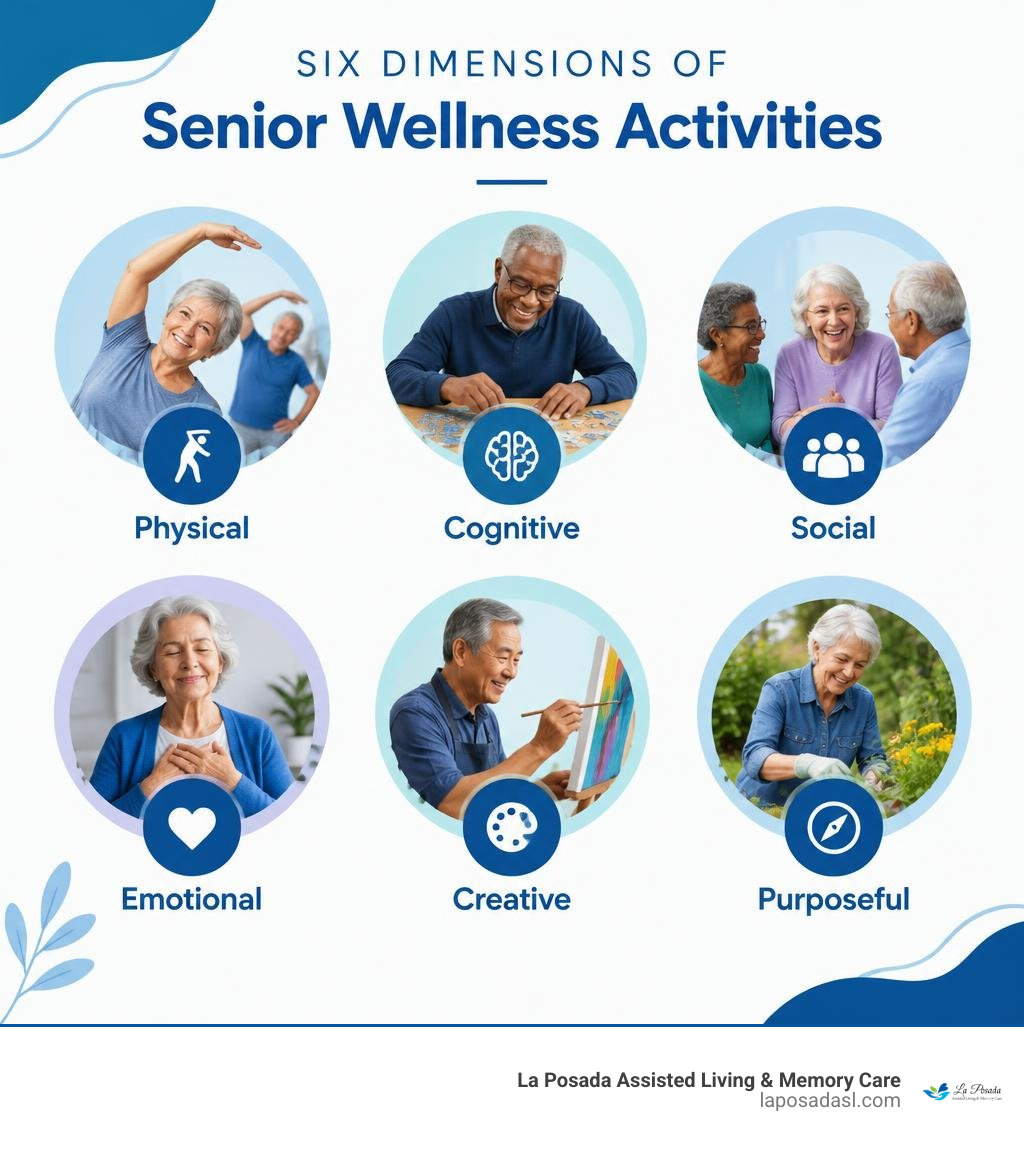
When we plan senior living activities, our goal goes far beyond filling empty hours on a calendar. Meaningful programming nurtures the whole person—body, mind, and spirit. By focusing on person-centered care, we create an environment where every individual feels seen, valued, and empowered to participate at their own pace.
A well-rounded life enrichment calendar integrates multiple dimensions of wellness:
- Physical Vitality: Supporting mobility, flexibility, cardiovascular health, and hand-eye coordination.
- Cognitive Sharpness: Challenging memory, problem-solving, language, and executive function.
- Social Connection: Fostering genuine friendships, intergenerational bonding, and a sense of belonging.
- Emotional and Spiritual Health: Providing peaceful reflection, validation, emotional processing, and purpose.
- Creative Expression: Encouraging self-expression through music, visual arts, storytelling, and culinary exploration.
When these dimensions intersect, residents do not just attend events—they thrive. Cool never gets old, and maintaining a vibrant, curious mindset is essential at every stage of life.
Cognitive and Physical Senior Living Activities
Physical movement and mental agility work hand in hand. Exercise boosts blood flow to the brain, which in turn enhances focus and memory retention.
Physical Engagement
To ensure safety and accessibility, we emphasize adaptable physical routines:
- Seated Fitness & Chair Yoga: Gentle stretching, resistance band work, and deep breathing exercises improve posture and core stability without fall risk.
- Tai Chi & Balance Classes: Slow, deliberate movements help maintain equilibrium and joint flexibility.
- Walking Clubs & Garden Strolls: Light cardiovascular exercise paired with fresh air and social conversation.
- Lawn Games & Active Play: Modified bocce ball, beanbag toss, and balloon volleyball build hand-eye coordination while keeping the energy lighthearted.
Cognitive Stimulation
Brain health requires regular, engaging workouts that remain fun rather than frustrating:
- Trivia Challenges & Word Games: Themed trivia, crossword puzzles, and word association games spark recall and lively debate.
- Brain Aerobics & Strategy Games: Chess, checkers, bridge, and custom logic puzzles keep executive functioning sharp.
- Sensory Stimulation: Tactile guessing games, aromatherapy matching, and sound identification awaken neural pathways.
- Tech Discovery: Introductory tablet sessions where residents explore digital puzzles, virtual museum tours, and family video calls.
Creative and Social Senior Living Activities
Creativity and social interaction are vital antidotes to isolation. Creative outlets provide emotional release, while shared social experiences build community resilience.
Creative Expression
- Art Therapy & Collaborative Painting: Watercolor sessions, pottery, and group murals allow residents to express feelings that words sometimes cannot capture.
- Music Programs & Choral Groups: Group singing, handbell choirs, and drum circles tap into deep musical memory, uplifting spirits instantly.
- Culinary Demonstrations & Baking Clubs: Working with familiar recipes evokes comforting sensory memories through the sights, smells, and tastes of homestyle cooking.
Social Connection
- Intergenerational Mixers: Partnering with local schools, youth groups, or preschools for reading buddies, holiday crafts, and shared storytelling creates pure magic for both generations.
- Cultural Celebrations & Happy Hours: Themed parties celebrating heritage, international holidays, and milestone events bring neighbors together over music and festive refreshments.
- Storytelling Circles: Guided reminiscing prompts encourage residents to share life lessons, travel tales, and cherished family traditions.
Adapting Programming Across Different Levels of Care

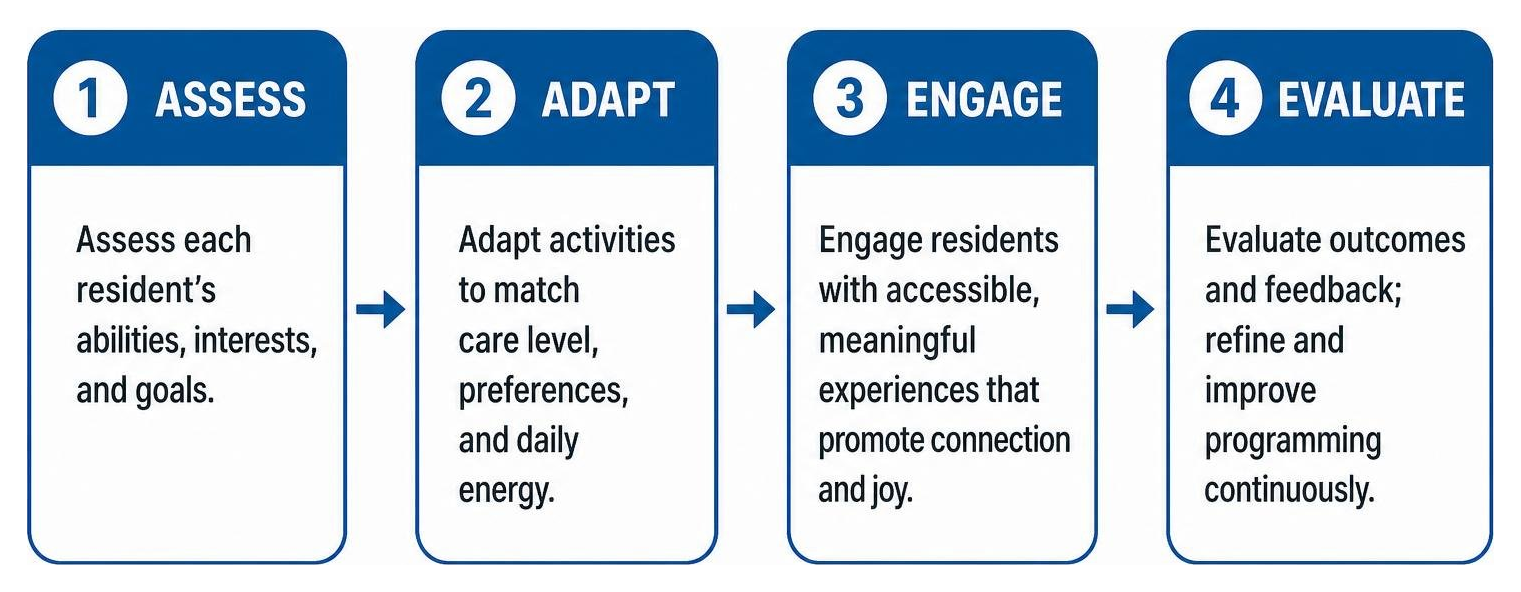
Every resident enters senior living with a unique history, personal preferences, and specific physical or cognitive capabilities. An activity that delights an independent resident might overwhelm someone navigating middle-stage dementia, while a high-stimulus group game might tire an individual recovering from an illness.
Effective life enrichment meets people exactly where they are through thoughtful accessibility design.
Independent and Assisted Living Programming
Residents in independent and assisted living settings typically seek autonomy, personal growth, and dynamic social circles.
- Resident-Led Interest Clubs: Book clubs, gardening societies, knitting circles, and investment discussion groups give residents ownership over their daily schedules.
- Community Excursions: Outings to local theaters, botanical gardens, museums, and sporting events keep residents actively connected to the broader local neighborhood.
- Lifelong Learning Lectures: Guest speakers, historical presentations, and university-level discussions satisfy intellectual curiosity.
- Active Recreation & Wellness Workshops: Structured fitness programs, dance classes, and mindfulness sessions support personal health goals.
In assisted living, coordinators provide discreet support—such as gentle reminders, escorting residents to activity rooms, or offering modified tools—so everyone participates with dignity and confidence.
Specialized Memory Care and Sensory Engagement
In memory care, our focus shifts toward sensory comfort, emotional validation, and low-stress routine. People living with Alzheimer's or other forms of dementia benefit from structured, soothing environments that reduce anxiety and foster success.
- Sensory Stations: Tactile boards featuring soft fabrics, hardware latches, textured ribbons, and aromatic herbs ground residents during moments of restlessness.
- Music Reminiscence: Playing personalized playlists from a resident’s youth (typically ages 15–25) frequently unlocks joyful memories, calms agitation, and inspires spontaneous dancing or singing.
- Structured Daily Routines: Predictable schedules—such as morning stretch, midday music, afternoon sensory crafts, and evening wind-down sessions—provide a comforting rhythm that helps mitigate sundowning.
- Tactile Crafts & Life-Skills Stations: Folding warm towels, sorting colorful buttons, arranging faux flowers, and rolling dough provide familiar, purposeful engagement without right or wrong outcomes.
- Validation and Reminiscence Therapy: Gentle guided conversations centered on past careers, hometowns, and family life affirm each individual’s identity.
Activity Adaptations Across Care Levels
| Wellness Dimension | Independent Living | Assisted Living | Memory Care |
|---|---|---|---|
| Physical | Aerobics, walking tours, pickleball | Chair yoga, seated strength, assisted walking clubs | Balloon batting, gentle stretching, guided hand movements |
| Cognitive | Current events debate, strategy games | Themed trivia, crossword circles, digital brain games | Reminiscence picture cards, tactile puzzles, matching games |
| Creative | Independent studio art, choir performance | Guided watercolor, structured craft projects | Watercolor wash, texture collage, hand drumming |
| Social | Resident committee, community outings | Happy hour socials, intergenerational visits | Small-group sing-alongs, one-on-one companion chats |
| Purpose-Driven | Volunteer projects, mentoring | Assembling charity kits, tending patio herb gardens | Folding laundry, flower arranging, sorting materials |
Best Practices for Planning and Sustaining Activity Programs
Developing a vibrant activity program requires ongoing organization, empathy, and creativity. To keep programming engaging month after month, life enrichment directors rely on foundational best practices:
- Incorporate Fresh Monthly Themes: Themed programming—such as "Around the World," "Decades of Rock & Roll," or "Harvest Traditions"—keeps calendars exciting, prevents monotony, and gives residents upcoming events to anticipate.
- Design Balanced Daily Schedules: Ensure each day includes a thoughtful mix of physical exertion, mental focus, quiet relaxation, and social time.
- Actively Solicit Resident Feedback: Form resident welcoming and activity committees to review what works and suggest new ideas.
- Prevent Staff Burnout: Equipping team members with ready-to-use resources ensures they spend less time buried in administrative paperwork and more time building relationships with residents.
- Celebrate Seasonal Traditions: Seasonal festivals, holiday banquets, and birthday recognitions reinforce community bonds.
Essential Tools and Ready-to-Use Resources for Life Enrichment Teams
Running a high-caliber life enrichment department involves significant preparation. Today's activity directors leverage specialized resources to streamline workflows:
- Calendar Builders & Templates: Digital scheduling platforms allow directors to build, format, and print clear, large-print daily and monthly calendars in minutes.
- Printable Activity Kits: Pre-assembled packages with trivia sheets, word searches, discussion prompts, and craft patterns eliminate hours of prep time.
- Digital Games and Tools: Interactive online trivia platforms and automated bingo callers keep group games lively and organized.
- Continuing Education (CE) & Idea Exchanges: Life enrichment teams benefit greatly from ongoing professional webinars and peer forums, sharing innovative approaches across thousands of eldercare communities worldwide.
By reducing administrative burden, staff can focus on what matters most: direct, compassionate resident interaction.
Balancing Budget, Staff Retention, and Family Satisfaction
Great programming does not require an extravagant budget. With scalable activity resources, comprehensive digital toolkits, and curated libraries available for less than the price of a daily cup of coffee, senior living communities can deliver extraordinary experiences cost-effectively.
When families see their loved ones smiling, creating art, and participating in dynamic events, their peace of mind grows. Meaningful activity programs directly boost staff morale, improve resident retention, and build an exceptional community reputation.
Frequently Asked Questions About Activity Programming
How do structured activities improve cognitive health in seniors?
Structured activities stimulate neuroplasticity—the brain's ability to adapt and form new neural connections. Engaging in novel tasks, solving puzzles, and participating in lively discussions strengthen cognitive reserves, support memory retention, and slow cognitive decline. In addition, the predictable routine of scheduled activities reduces chronic stress and anxiety, creating an optimal environment for mental sharpness.
How can activity directors balance quality programming with tight budgets?
Communities can maintain world-class programming affordably by utilizing ready-to-use subscription resources, downloadable kits, and scalable templates. Partnering with local community organizations, high school music ensembles, library reading programs, and civic volunteer groups also brings rich, diverse programming into the community at virtually no direct cost.
What strategies keep residents with mobility limitations engaged?
Inclusivity is achieved through adaptive modifications. Every physical activity can be adjusted for a seated position, using resistance bands, lightweight balls, or adaptive art tools with thick grips. Coordinators should also emphasize sensory experiences—such as live musical performances, audiobooks, garden aromatics, and personalized one-on-one visits—ensuring residents with physical challenges remain active and valued participants.
Conclusion
A truly fulfilling senior living experience is defined by purpose, laughter, and genuine connection. At La Posada Assisted Living & Memory Care, our family-owned community in Whittier, CA, is dedicated to holistic wellbeing for body, mind, and spirit. Through compassionate 24-hour care and thoughtful, individualized programming, we ensure every resident discovers joy and belonging every single day.