

How to Find Senior Puzzle Groups
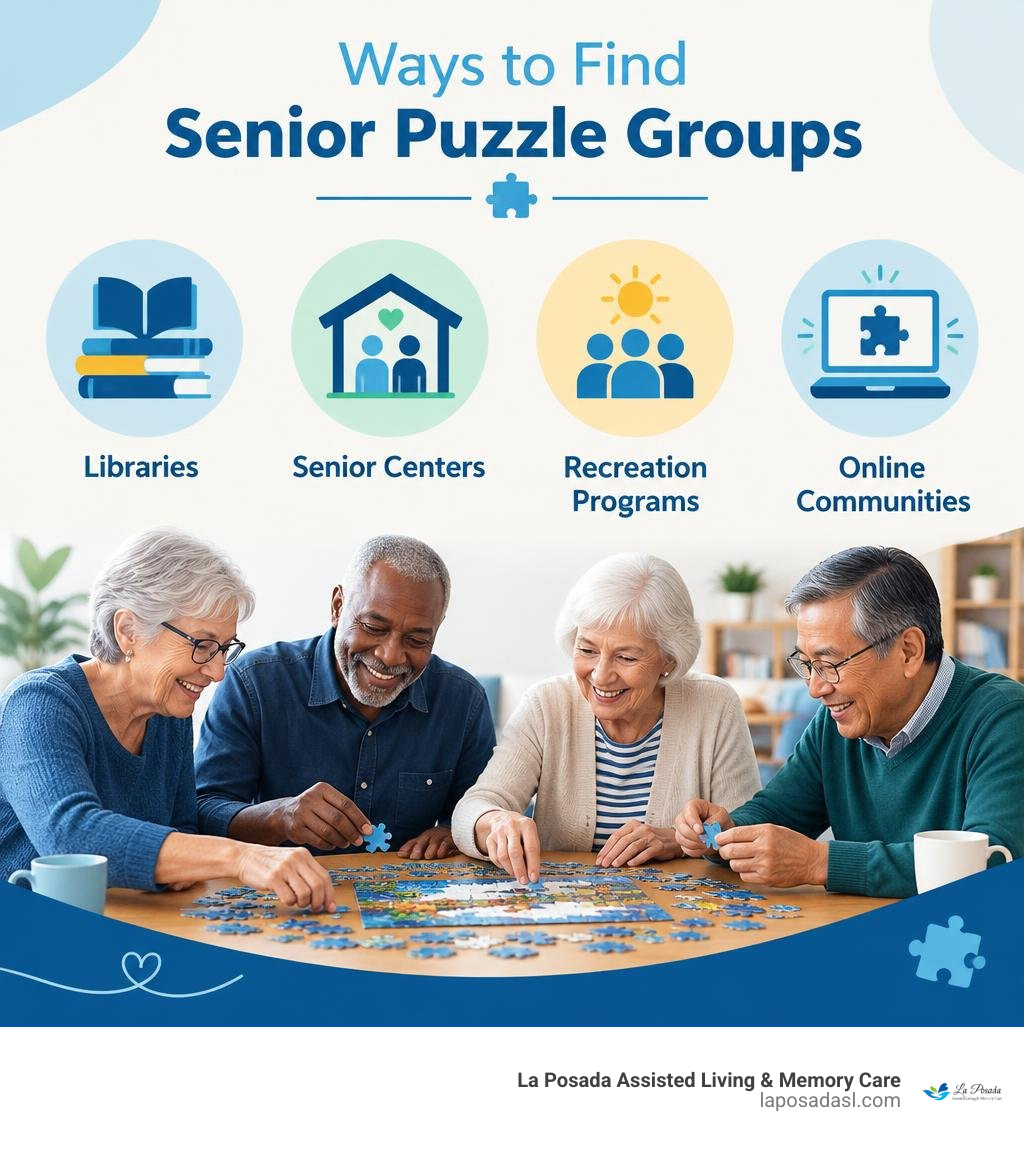
Start with your local library, senior center, or community recreation program. Check their activity calendars for puzzle clubs and swaps, then call to ask about meeting times, costs, and accessibility. If nothing nearby fits, look for an online puzzle community or invite a few neighbors to meet at a shared table.
A good group makes room for different skill levels. Members can work on a jigsaw together, solve crosswords, or simply enjoy the conversation. For an older adult who needs support, ask whether a caregiver can attend and whether the space meets their needs.
Why Senior Puzzle Groups Boost Cognitive and Social Wellbeing
Aging vibrantly is about finding everyday joy that challenges the brain while nurturing relationships. Puzzling offers a hands-on, screen-free way to unwind. When working on a physical puzzle, your eyes, hands, and brain communicate continuously.
Placing each piece delivers a tiny spark of accomplishment: a natural release of dopamine, the brain chemical linked to learning, memory, and positive mood. Over time, these small triumphs build a sense of momentum. For older adults looking to stay sharp and socially engaged, joining senior puzzle groups creates regular opportunities to exercise spatial reasoning, reinforce visual memory, and share meaningful conversation around a table.
Mental Wellness and Focus Through Collaborative Play
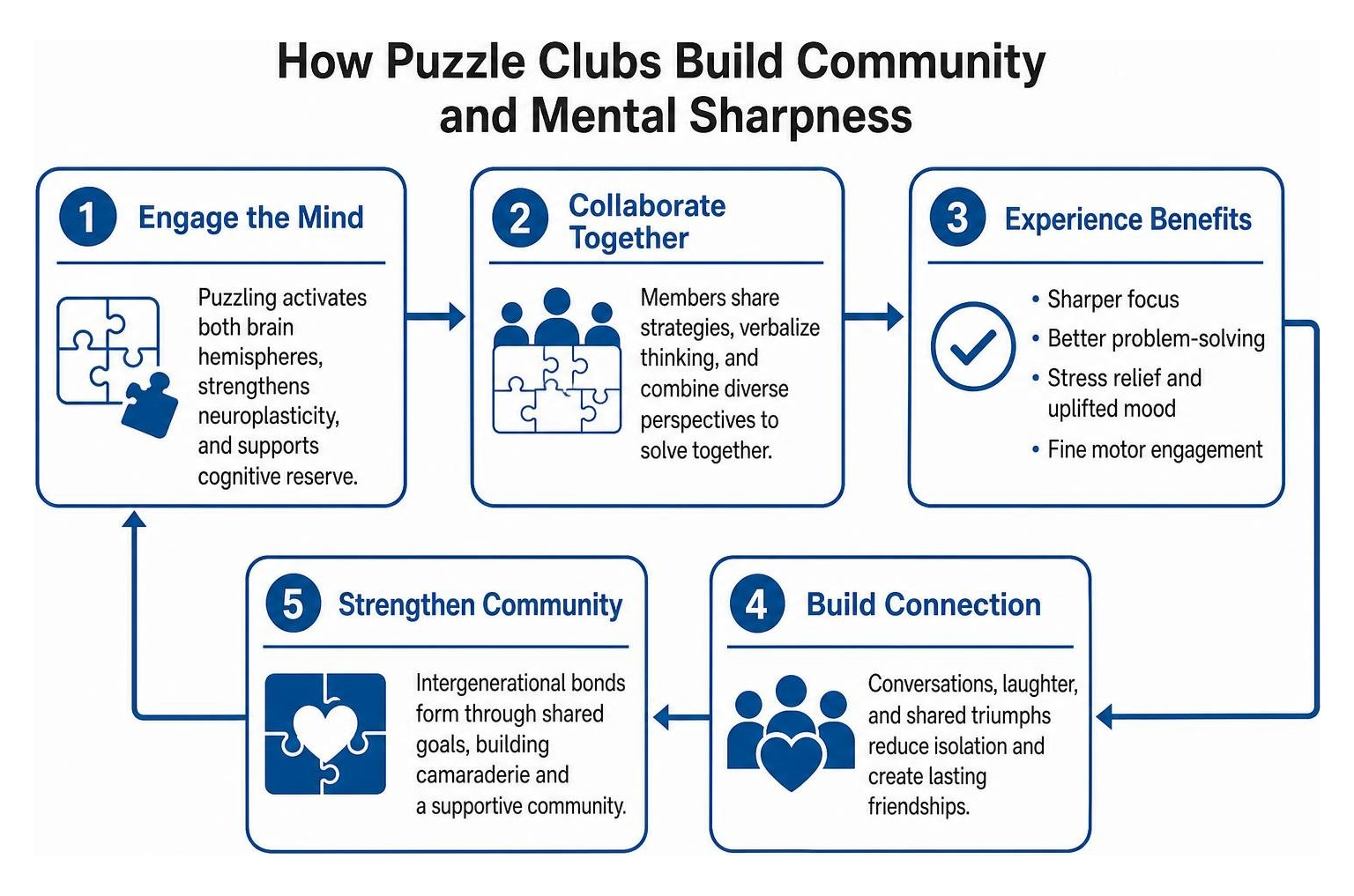
Puzzling engages both cerebral hemispheres at once. The left side sorts shapes, categorizes border edges, and analyzes color gradients using linear logic. Meanwhile, the right hemisphere visualizes the complete picture and processes spatial relationships intuitively.
This dual-brain exercise strengthens neuroplasticity—the brain’s ability to form new neural connections. Regular mental stimulation supports cognitive reserve, which helps preserve everyday problem-solving skills and working memory.
Collaborative problem-solving also offers unique mental health benefits compared to working in isolation:
| Cognitive & Emotional Area | Solo Puzzling | Group Puzzling |
|---|---|---|
| Problem-Solving Dynamics | Self-directed; single strategy approach | Collaborative; diverse sorting strategies and perspectives |
| Cognitive Pace | Quiet, introspective, independent focus | Interactive; verbalizes spatial reasoning and logic |
| Stress & Mood | Calming, meditative solitary escape | Laughter, shared triumphs, mutual encouragement |
| Fine Motor Engagement | Individual piece manipulation | Shared workspace navigation and tactile coordination |
| Social Engagement | Limited external communication | Continuous conversational exchange and active listening |
Combating Social Isolation in Older Adults
Social isolation presents real challenges to long-term health, increasing the risk of depression and cognitive decline. Joining a tabletop hobby group offers an easy, low-pressure way to build friendships.
Unlike social mixers that may feel overwhelming, a puzzle table offers a natural conversational rhythm. Members can talk while searching for matching borders, take quiet pauses to examine pieces, or trade stories sparked by the puzzle artwork.
These shared moments bridge generational divides. Grandparents, adult children, and neighborhood friends can bond over a charming illustration or an intricate geometric design. Achieving a shared goal—placing that final corner piece—creates lasting camaraderie and mutual pride.
Where to Find Local and Online Puzzling Communities
Discovering local puzzle gatherings is simpler than you might think. Many community organizations, hobby shops, and senior-focused networks host regular meetups designed for older adults.

Finding Active Senior Puzzle Groups Near You
Begin by checking the places you visit most often:
- Local Public Libraries: Many community branches host open puzzle tables near reading areas or organize monthly swap meets.
- Parks and Recreation Programs: Municipal programs frequently organize active aging activities. For example, community departments such as FAB - City of Roseville coordinate dedicated puzzle tournaments and casual social mixers.
- National Senior Communities: Organizations like AARP host interest-based networks. You can explore active senior community groups to find local game tables or connect with online hobby circles.
- Local Cafes and Board Game Parlors: Many neighborhood gathering spots host themed senior socials. Events like 🧩 (FULL) It's a Puzzle & Lunch Party! -- The Game Parlour, Fri, Aug 28, 2026, 11:00 AM | Meetup combine casual dining with tabletop puzzles.
- Regional Puzzle Meetups: Global puzzle communities hold events around the world, from local recreation center mixers to international gatherings like Bangalore Puzzle Pals with Playful Pursuits and Jigsaw Junkies by Playful Pursuits.
Joining Online Platforms and Virtual Swap Exchanges
If homebound or living in an area without nearby meetups, virtual communities provide a steady stream of new challenges and friendly discussions.
Online communities allow you to share tips, solve digital jigsaws, and swap boxed sets through the mail. The Jigsaw Puzzle Swap Exchange is a prime example: it holds over 5,000 puzzles in its virtual library, with around 100 boxes in transit between members at any given time and more than 13,000 completed swaps to date.
Members select designs from the library, solve them at home, and forward them to fellow puzzlers. Tracking a puzzle's journey across cities adds an extra layer of delight to the hobby.
How to Organize and Launch Your Own Puzzle Club
If there are no active clubs in your neighborhood, starting your own is straightforward. With a clear plan, an inviting space, and a starter collection of puzzles, you can launch a gathering that brings people together.
- Choose an Accessible Space: Look for rooms with bright, glare-free lighting and large tables that comfortably seat 4 to 6 people. Ensure comfortable chairs with back support and clear walkways for walkers or wheelchairs.
- Set a Consistent Schedule: Weekly or bi-weekly gatherings lasting 90 minutes to two hours work best. This leaves ample time for progress without causing visual fatigue.
- Curate a Starter Collection: Start with three to five varied puzzles. Choose subjects with high contrast and clear colors, such as landscapes, vintage advertisements, or folk art.
- Prepare Helpful Accessories: Supply felt sorting trays, shallow bowls, and roll-up puzzle mats so partially completed projects can be safely stored between sessions.
- Spread the Word: Post flyers on community boards, at local recreation centers, in neighborhood newsletters, and on community platforms like Nextdoor.
- Provide Clean, Easy Refreshments: Offer coffee, herbal teas, water, and finger foods that keep fingers clean (avoid greasy snacks that might stain puzzle pieces).
Essential Puzzle Formats for Senior Puzzle Groups
Varying the types of challenges keeps club meetings fresh and accommodates different physical abilities:
- 250 to 500-Piece Cardboard Jigsaws: Perfect for a single 90-minute to two-hour team session.
- Large-Piece (Easy-Grip) Puzzles: Larger piece sizes are easier to see and manipulate for individuals with arthritis or mild visual impairments.
- Heirloom Wooden Jigsaw Puzzles: Precision-cut wooden puzzles offer a satisfying, sturdy fit and tactile warmth. The unique "whimsy" shapes (pieces cut into birds, leaves, or instruments) serve as delightful conversation starters.
- Word Searches and Large-Print Crosswords: Great supplemental activities for members who prefer word games over visual-spatial puzzles.
- Team Sudoku Challenges: Print oversized Sudoku grids on a whiteboard for group solving.
Group Etiquette and Best Practices for Smooth Gatherings
Clear, considerate guidelines keep every gathering welcoming and stress-free:
- Sort Before Assembling: Dedicate the first 15 minutes to flipping pieces face-up and sorting edge pieces into trays.
- Protect the Pieces: Handle puzzles with clean, dry hands and avoid placing open drinks directly next to working trays.
- Label Missing Pieces: If a piece is lost, mark the box lid with a small sticky note so future puzzlers know in advance.
- Encourage Equal Participation: Ensure every member has a dedicated section or tray to work on so nobody feels left out.
- Keep Communication Uplifting: Focus on shared enjoyment rather than racing against the clock.
Hosting Puzzle Swaps and Managing Donations
As members finish puzzles, storage space can run out quickly. Organizing a community puzzle swap is an eco-friendly, cost-free way to keep fresh challenges circulating. The broader market for specialized hobbies and puzzle subscription boxes was valued between $30 and $39 billion in 2024 and is projected to surpass $113 billion by 2033, showing how popular home puzzling continues to be. Swaps offer all that variety without the recurring expense.
How to Run an Organized Swap
- Screen for Quality: Ensure all traded puzzles are complete, clean, and stored inside secure, resealable zip-top bags within their original boxes.
- Use a Token System: Give participants a ticket for every puzzle they bring, which they can redeem for a "new-to-them" box on the trade tables.
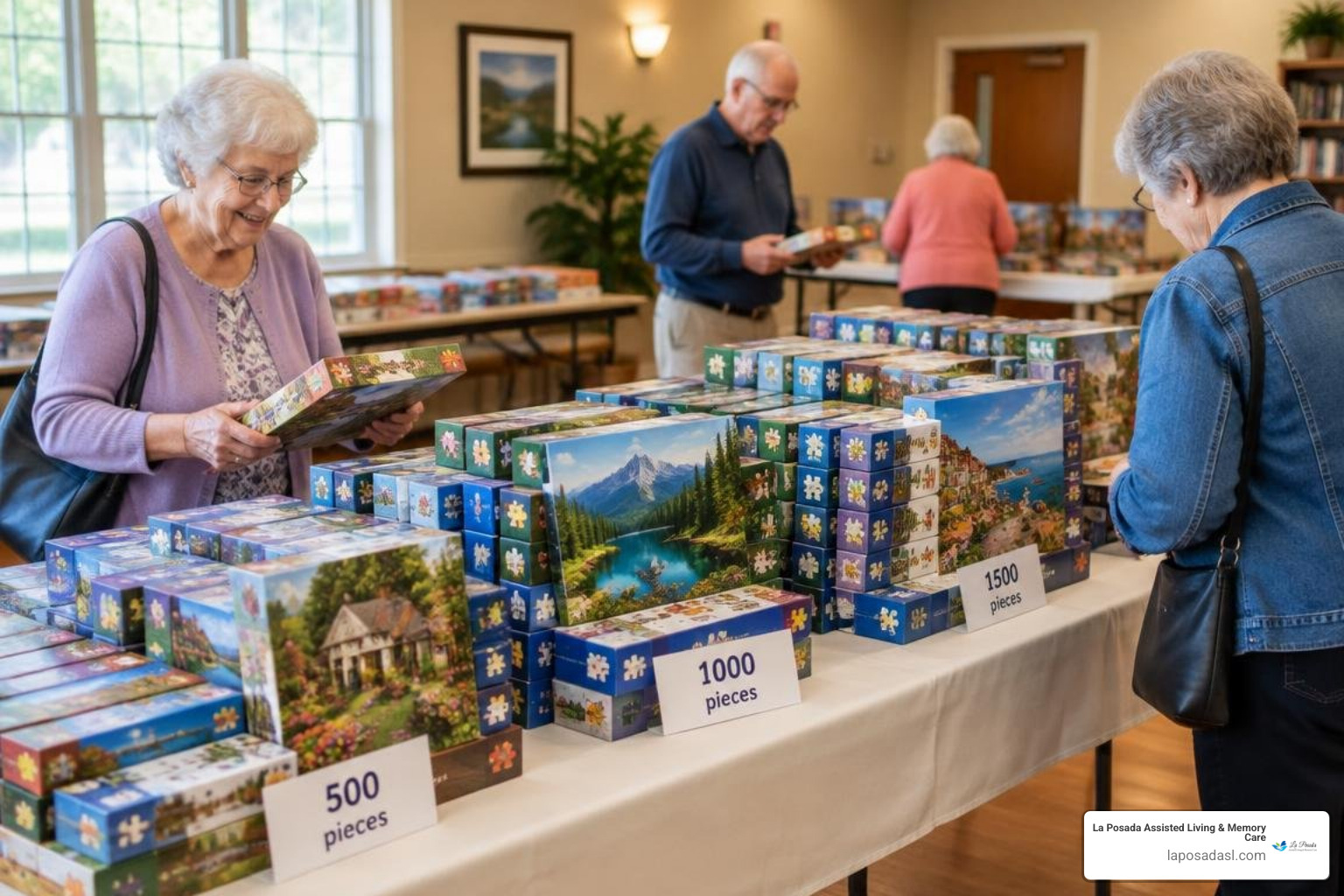
- Categorize by Difficulty: Organize tables by piece count (e.g., under 300 pieces, 500 pieces, 1,000 pieces, and large-format) so members find appropriate challenge levels quickly.
- Donate the Surplus: Partner with local senior centers, daycares, or community libraries to donate remaining boxes at the end of the event.
How Senior Living Communities Incorporate Puzzle Activities
Modern senior living environments frequently feature creative puzzle stations to encourage active minds and social connections. Dedicated lounge tables invite residents to place a few pieces while passing through common areas, sparking spontaneous, friendly interactions throughout the day.
Communities often schedule weekly "Puzzle & Tea" socials, organize themed speed-solving challenges, and arrange intergenerational afternoons where residents solve puzzles alongside visiting youth groups. For residents in memory care neighborhoods, activity teams select high-contrast, tactile wooden puzzles with fewer pieces, celebrating each completed section to foster confidence and calm focus.
Frequently Asked Questions About Senior Puzzle Clubs
What puzzle size is ideal for a senior group meeting?
For a standard 90-minute to two-hour gathering, puzzles containing 250 to 500 pieces are ideal. They offer satisfying detail and a healthy cognitive challenge without feeling overwhelming or exhausting.
How can older adults participate in puzzle swaps safely and affordably?
Older adults can join local public library exchanges, attend neighborhood recreation swap meets, or sign up for verified mail-based lending libraries. Swapping locally eliminates shipping costs and turns puzzle exchanges into fun social outings.
What are the main cognitive benefits of puzzling for older adults?
Puzzling exercises visual-spatial reasoning, strengthens short-term memory, and reinforces fine motor dexterity. The mental focus needed to match patterns also promotes a calm, meditative state that helps reduce stress and elevate mood.
Conclusion
Engaging in regular puzzle activities is a wonderful way to keep your mind sharp, your hands nimble, and your social life vibrant. Whether you join an existing neighborhood club, trade favorites through a swap exchange, or solve crosswords with good friends over lunch, the simple joy of finding the right fit never fades.
At La Posada Assisted Living & Memory Care in Whittier, CA, we see daily how creative, collaborative activities nurture the mind, body, and spirit. Through personalized 24-hour support, welcoming shared spaces, and engaging life-enrichment programs, our family-owned community helps older adults stay connected, active, and inspired every single day.